
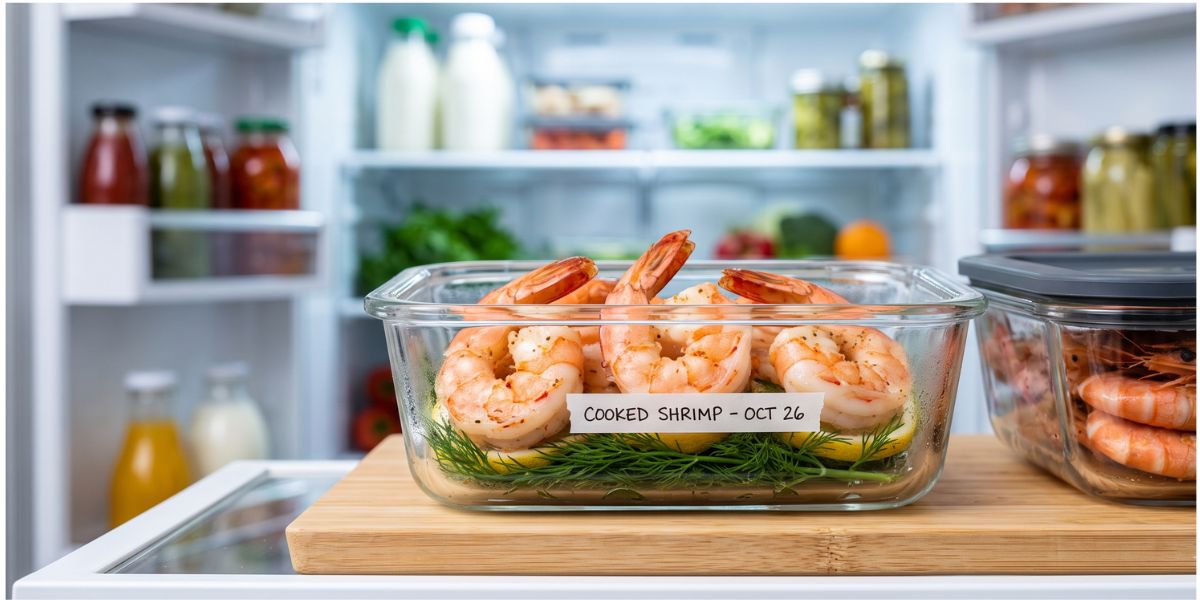
Shrimp is one of the easiest seafood options to cook, store, and turn into quick meals. You can add it to pasta, rice bowls, salads, tacos, and meal prep containers without much effort. But because shrimp is highly perishable, storage matters a lot. One of the most common food-safety questions people ask is this: how long can cooked shrimp stay in the fridge?
The clear answer is that cooked shrimp can usually stay in the refrigerator for 3 to 4 days when stored properly at 40°F (4°C) or below. That matches general USDA guidance for cooked leftovers and seafood storage. If cooked shrimp sits out too long before refrigeration, that safe window gets shorter.
This matters for two reasons. First, good storage helps protect you from foodborne illness. Second, it helps shrimp keep a better texture and flavor for the short time it is in the fridge. Shrimp can go from tender and fresh to rubbery, mushy, or off-smelling fairly quickly if it is not chilled and sealed the right way. USDA and FDA guidance both stress keeping perishable foods cold, getting leftovers into the fridge promptly, and avoiding the temperature “danger zone” where bacteria grow faster.
In this guide, you will learn exactly how long cooked shrimp can stay in the fridge, what affects its shelf life, how to store it properly, how to tell when it has gone bad, and when freezing is the better option. The goal is simple: help you keep leftovers safe without guessing.
How Long Can Cooked Shrimp Stay in the Fridge?
Let’s start with the direct answer. Cooked shrimp stays safe in the fridge for about 3 to 4 days when it is refrigerated promptly and kept at 40°F (4°C) or below. USDA food-safety guidance gives that time frame for cooked seafood and leftovers, while FDA guidance stresses that refrigerators should hold a steady temperature of 40°F or colder.
That means the countdown starts once the shrimp has been cooked and cooled down enough to be stored safely. It does not mean “3 to 4 days after you remember it is in the fridge.” If you cooked shrimp on Monday night and stored it correctly, the safest window usually runs through Thursday or Friday. After that, the risk goes up even if the shrimp still looks acceptable.
Another important point is timing after the meal. Perishable food should not stay at room temperature for more than 2 hours, or more than 1 hour if the temperature is above 90°F. So if cooked shrimp sat on the counter all Perfect Basmati Rice Every Time evening before going into the fridge, the “3 to 4 day” guideline no longer applies the same way. Once food spends too long in the danger zone, refrigeration does not undo that exposure.
In practical terms, the safest habit is this: cook the shrimp, serve it, and put leftovers away quickly in shallow containers. That one step does a lot to protect both safety and quality.
Factors That Affect How Long Cooked Shrimp Lasts
Even though the standard answer is 3 to 4 days, actual storage life depends on several conditions. These factors can shorten that window, and in some cases they can make shrimp unsafe sooner than expected.
1. Storage Temperature
Temperature is the biggest factor. Cooked shrimp should stay in a refrigerator that holds 40°F (4°C) or below. FDA recommends using an appliance thermometer because many fridges run warmer than people think. If the temperature rises above 40°F for too long, bacteria can multiply faster and the shrimp may need to be discarded.
This is why the coldest part of the fridge is usually better than the door. The door warms up every time it opens. A stable shelf inside the refrigerator keeps the temperature more consistent, which helps protect leftovers. FDA guidance also notes that even during power outages, perishable refrigerated foods become unsafe after extended time above safe temperatures.
2. Storage Method
How you pack the shrimp also matters. Cooked shrimp lasts best in a shallow, airtight container or a tightly sealed food-safe bag. USDA and FDA guidance repeatedly emphasize shallow containers for quick cooling and prompt chilling of leftovers. A sealed container also helps reduce moisture loss, odor transfer, and contamination from other foods in the fridge.
A container that is too deep can trap heat longer, which slows cooling. Slow cooling gives bacteria more time in the danger zone. That is why it is better to divide a large batch into smaller portions before refrigerating it.
3. Freshness Before Cooking
The quality of the shrimp before cooking affects how well it holds up afterward. USDA notes that raw fish and shellfish should generally be refrigerated only 1 to 2 days before cooking or freezing. So if the shrimp was already near the end of its raw storage life when you cooked it, you should be extra cautious with leftovers. Cooking improves safety when done properly, but it does not turn old seafood into long-lasting food.
This is one reason two containers of cooked shrimp may not age the same way. Freshly bought shrimp cooked the same day usually holds quality better than shrimp that spent too long in the fridge before cooking.
4. Time Left at Room Temperature
Cooked shrimp should not sit out for more than 2 hours, or 1 hour in hot weather above 90°F. FDA and USDA are very consistent on this point. Seafood is a perishable food, and once it stays too long between 40°F and 140°F, bacterial growth becomes a real concern.
So if you are asking whether shrimp is still good after sitting out through a long dinner, party, buffet, or takeout delay, it is safer to go by the clock first and appearance second. Food can be risky before it smells obviously bad.
How to Store Cooked Shrimp Properly in the Fridge
If you want your shrimp leftovers to stay safe for the full 3 to 4 days, proper storage is not optional. A few small habits make a big difference.
First, let the shrimp cool slightly so steam is not trapped heavily inside the container, but do not leave it out too long. FDA explicitly says hot leftovers can go into the refrigerator, and smaller containers help them cool faster. The old idea that hot food should stay on the counter for a long time before refrigeration is not the safer approach.
Next, place the shrimp in a shallow airtight container. Shallow containers cool more quickly than deep bowls or large pots. If you cooked a big batch, split it into a few smaller portions instead of refrigerating it all in one thick pile.
Then store it on a shelf in the coldest part of the refrigerator, not the door. Keep the fridge at 40°F or below, and use a refrigerator thermometer if you are not sure how cold your appliance runs.
It is also smart to label the container with the cooking date. That way you are not relying on memory three days later. Food safety gets easier when you remove the guesswork. USDA leftover guidance is simple: use cooked leftovers within 3 to 4 days or freeze them sooner.
One more tip: keep cooked shrimp away from raw seafood, raw meat, and raw juices in the fridge. FDA warns against cross-contamination and also advises not to place cooked food back on surfaces or plates that held raw seafood unless they have been washed properly.
Signs Cooked Shrimp Has Gone Bad
Even within the 3 to 4 day window, you should still check the shrimp before eating it. Time and temperature matter most, but visible spoilage signs can help confirm that shrimp should be thrown out. FDA also notes that appearance and odor are not perfect safety tests, so when the timing is questionable, it is safer to discard the food rather than gamble on it.
Bad Smell
Fresh cooked shrimp should smell mild, not harsh. If it smells sour, overly fishy, strong, or ammonia-like, that is a strong sign it should be discarded. Odor changes do not catch every unsafe situation, but a bad smell is an easy warning sign that something is wrong.
Texture Changes
Cooked shrimp should feel firm and moist, not sticky, slimy, or mushy. A slippery coating or odd surface feel can signal spoilage. Texture changes are especially concerning when they appear together with a bad smell or the shrimp has been in the fridge too long.
Color Changes
Cooked shrimp should keep a normal cooked appearance. If it turns dull, grayish, discolored, or develops unusual spots, it is better not to eat it. Color alone does not prove safety, but strange changes are a reasonable sign to stop and reassess. FDA specifically warns that color is not a reliable safety test by itself, which is why storage time still matters.
Off Taste
If shrimp already smells wrong or looks wrong, do not taste it to test it. That is not a safe method. The better rule is simple: when the smell, texture, color, or storage history seems off, throw it out. Food safety experts consistently advise using time and temperature guidance, not risky taste tests, to judge perishables.
Can You Eat Cooked Shrimp After 5 Days?
In most cases, it is not recommended. USDA guidance for cooked seafood and leftovers is 3 to 4 days, not 5 days. Once shrimp passes that window, the safest advice is to discard it.
This is the part many people struggle with, because the shrimp may still look fine. But food safety is not based only on appearance. FDA notes that you cannot always rely on smell or looks to tell whether food is safe. Harmful bacteria may be present even when leftovers seem normal.
So when people ask, “Can I eat cooked shrimp after 5 days if it smells okay?” the cautious answer is still no. If it matters enough to ask, it is already wiser to skip it. Saving a few leftovers is not worth the risk of foodborne illness.
Can You Freeze Cooked Shrimp Instead?
Yes. Freezing is the best option if you know you will not eat the shrimp within the refrigerator window. USDA says leftovers can be frozen, and USDA FoodKeeper data indicates cooked shellfish is best used within about 1 to 3 months in the freezer for quality. Frozen food remains safe longer, but texture and flavor can decline over time.
For best results, freeze cooked shrimp as soon as you know you will not use it in time. Do not wait until day four and then hope freezing fixes borderline leftovers. Freezing earlier is better for both taste and safety management.
To freeze it well, let the shrimp cool, place it in an airtight freezer-safe bag or container, remove as much air as possible, and label it with the date. Freezing in smaller portions makes thawing easier later.
When you are ready to use it, thaw frozen shrimp safely in the refrigerator, in cold water, or in the microwave if you will cook it immediately. USDA identifies those as the safe thawing methods. Do not thaw shrimp on the counter at room temperature.
If you reheat leftover shrimp, How Long Does Shrimp Last in the Fridge heat it thoroughly. USDA says leftovers should reach 165°F when reheated. That helps reduce risk and improves consistency when reheating seafood dishes, soups, pasta, or casseroles.
Best Tips to Keep Cooked Shrimp Fresh Longer
The safest way to keep cooked shrimp fresh is to follow a few simple habits every time:
Refrigerate it promptly. Do not let it sit out for hours after dinner. The two-hour rule matters.
Use airtight storage. Sealed containers protect texture and reduce exposure to odors and contamination.
Keep your fridge cold and stable. Use a thermometer if needed and aim for 40°F or below.
Store leftovers in shallow portions. Smaller portions cool faster and are easier to reheat safely.
Avoid repeated reheating. Each round of warming and cooling adds quality loss and creates more chances for time in the danger zone. A cautious rule is to reheat only the portion you plan to eat. This is a practical food-safety approach based on USDA/FDA temperature guidance.
Freeze leftovers early if unsure. If you do not think you will eat the shrimp within the safe fridge window, freeze it sooner rather than later.
Frequently Asked Questions
How long can cooked shrimp stay in the fridge after reheating?
As a cautious rule, count from the original cooking date, not from the reheating date. General USDA leftover guidance still points to using cooked leftovers within 3 to 4 days total. So if shrimp was cooked on Monday and reheated on Wednesday, it should still be treated as Monday leftovers, not “new” leftovers.
Can cooked shrimp stay in the fridge for a week?
No. A week is usually too long. Official guidance for cooked seafood and leftovers is 3 to 4 days in the refrigerator, assuming proper storage at 40°F or below.
How do you know if refrigerated shrimp is still safe to eat?
Start with the storage time. If it is past 3 to 4 days, throw it out. Then check for obvious warning signs like a sour or ammonia-like smell, slimy texture, or unusual discoloration. But remember, looks and smell alone are not perfect safety tests, so timing and temperature are still the best guide.
Can cooked shrimp be meal prepped?
Yes. Cooked shrimp can work well for meal prep, as long as you refrigerate it promptly, keep it at 40°F or below, and eat it within the safe 3 to 4 day window. If you prep more than that, freeze part of the batch instead of storing all of it in the fridge.
Conclusion
So, how long can cooked shrimp stay in the fridge? The safest answer is about 3 to 4 days, as long as it is stored properly at 40°F (4°C) or below and refrigerated within 2 hours of cooking or serving. Those numbers come straight from standard USDA and FDA food-safety guidance for leftovers and seafood.
The rest comes down to good habits: cool leftovers promptly, use shallow airtight containers, keep your fridge cold, label the date, and do not stretch shrimp past the safe window just because it still looks okay. When in doubt, throw it out. That is the easiest rule to remember and the safest one to follow.
If you know you will not eat it in time, freeze it. That gives you a better chance of keeping both safety and quality on your side. In the end, proper shrimp storage is simple. A little care now saves you from waste, guesswork, and unnecessary risk later.