
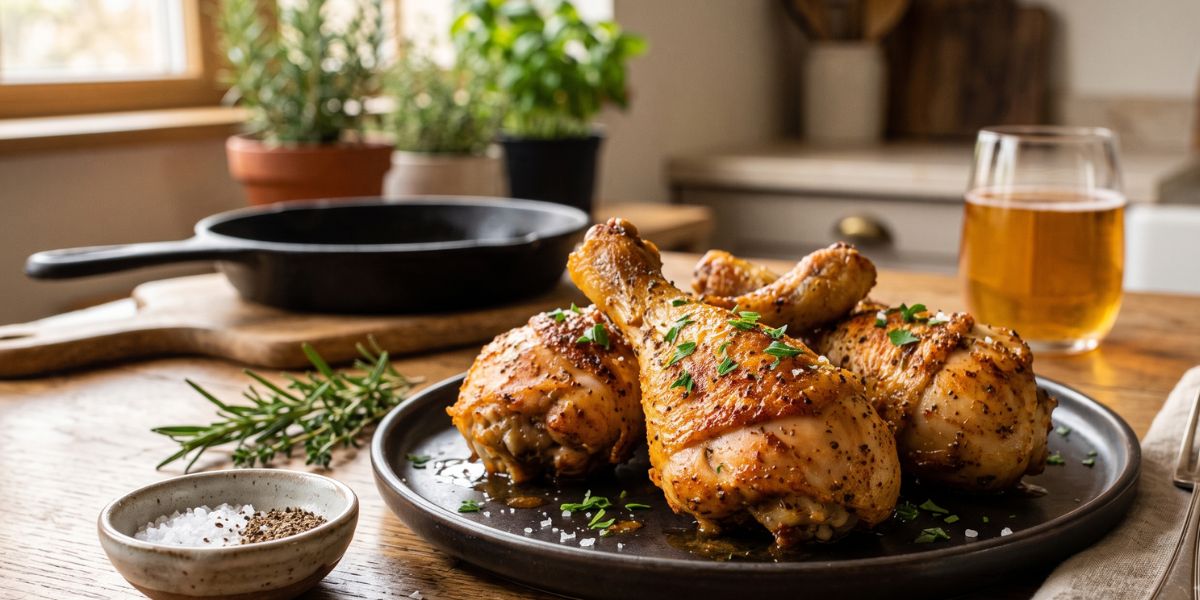
Chicken legs are one of the easiest dinners you can make at home. They are affordable, full of flavor, and perfect for busy weeknights. You do not need fancy ingredients or special cooking skills. With a baking sheet, a few seasonings, and the right oven temperature, you can make juicy chicken legs with crispy golden skin.
If you have ever wondered how to cook chicken legs in the oven, this guide will walk you through the full process. You will learn how to prepare the chicken, what temperature to use, how long to bake it, and how to tell when it is done.
Oven-baked chicken legs are also very flexible. You can keep the seasoning simple with salt, pepper, garlic powder, and paprika. You can also add herbs, lemon, barbecue sauce, or spicy seasoning if you want more flavor. This makes baked chicken legs a great meal for families, meal prep, potlucks, and casual dinners.
The best part is that chicken legs are forgiving. Dark meat stays juicy better than chicken breast, even when cooked a little longer. That means you have a better chance of getting tender meat and crispy skin without drying it out.
In this recipe-style guide, you will learn a simple method that works again and again. Once you understand the basic steps, you can change the flavors to match your taste.
Ingredients You’ll Need
You only need a few basic ingredients to make oven-baked chicken legs. Most of them are pantry staples, so this is a recipe you can make without much planning.
Chicken Legs or Drumsticks
You can use whole chicken legs or chicken drumsticks. A whole chicken leg usually includes the thigh and drumstick together. A drumstick is only the lower part of the leg.
Both work well in the oven. Drumsticks usually cook a little faster because they are smaller. Whole chicken legs may need a few more minutes because they are larger and have more meat.
Choose chicken pieces that are close in size. This helps them cook evenly. If some pieces are much larger than others, the smaller ones may finish first.
Olive Oil or Melted Butter
Oil helps the seasoning stick to the chicken. It also helps the skin brown in the oven.
Olive oil is a good everyday choice. It gives the chicken a light flavor and helps the skin crisp. Melted butter can also be used if you want a richer taste.
You do not need a lot. A light coating is enough. Too much oil can make the chicken greasy instead of crisp.
Salt and Black Pepper
Salt is important because it brings out the natural flavor of the chicken. It also helps season the meat under the skin.
Black pepper adds mild heat and balance. Use freshly ground black pepper if you have it, but regular ground pepper also works.
Garlic Powder
Garlic powder gives the chicken a savory flavor. It is easier to use than fresh garlic for oven baking because it spreads evenly over the chicken.
Fresh garlic can burn at high heat, especially if it sits on the outside of the chicken. Garlic powder is a safer choice for this method.
Onion Powder
Onion powder adds depth. It works well with garlic powder and paprika. Together, they create a simple seasoning blend that tastes good with almost any side dish.
Paprika
Paprika gives the chicken a warm color and mild flavor. It helps make the skin look golden and appetizing.
You can use regular paprika, smoked paprika, or sweet paprika. Smoked paprika gives the chicken a deeper, smoky taste.
Optional Herbs
Herbs are optional, but they can make the chicken taste more homemade. Good choices include thyme, oregano, rosemary, or parsley.
Dried herbs are easy to use. Fresh herbs can also be added, but they may brown quickly in a hot oven. If using fresh herbs, you can sprinkle them on after baking for a fresher taste.
Simple Ingredient List
For about 6 chicken legs or drumsticks, you can use:
- 6 chicken legs or drumsticks
- 2 tablespoons olive oil or melted butter
- 1 teaspoon salt
- 1 teaspoon black pepper
- 1 teaspoon garlic powder
- 1 teaspoon onion powder
- 1 teaspoon paprika
- 1 teaspoon dried thyme, oregano, or rosemary, optional
You can adjust the seasoning to your taste. If you like bold flavor, add a little more paprika, garlic powder, or herbs. If you like heat, add cayenne pepper or chili powder.
How to Prepare Chicken Legs for Baking
Good preparation makes a big difference. The steps are simple, but each one helps the chicken cook better.
Pat the Chicken Dry
Start by patting the chicken legs dry with paper towels. This is one of the most important steps for crispy skin.
Chicken often has extra moisture on the Baked Chicken Legs surface. If that moisture stays on the skin, the chicken may steam instead of roast. Steamed skin turns soft. Dry skin browns better and gets crispier.
Place the chicken on a clean plate or cutting board. Use paper towels to blot all sides of each piece. You do not need to rinse the chicken. In fact, rinsing raw chicken can spread bacteria around the sink and nearby surfaces.
Coat with Oil
After drying the chicken, place it in a large bowl. Drizzle the olive oil or melted butter over the chicken.
Use clean hands or tongs to turn the pieces until they are lightly coated. The oil helps the seasoning stick. It also helps the chicken brown in the oven.
Make sure each piece has a thin layer of oil. The chicken should look lightly shiny, not soaked.
Season Evenly
Sprinkle the seasoning over the chicken. Turn the pieces so every side gets coated.
Try to season the top, bottom, and sides. If you are using whole chicken legs, season around the joint area too.
Even seasoning gives every bite flavor. It also helps create a more balanced crust on the outside.
Let the Chicken Sit Briefly
If you have time, let the seasoned chicken sit for 10 to 20 minutes before baking. This gives the salt and spices a little time to settle into the meat.
Do not leave raw chicken at room temperature for a long time. A short rest while the oven preheats is enough.
If you want to season the chicken ahead of time, cover it and keep it in the refrigerator. You can season it a few hours ahead or even the night before. This can give the chicken deeper flavor.
Best Temperature to Cook Chicken Legs in the Oven
The best oven temperature for chicken legs is usually 400°F / 200°C. This temperature is hot enough to brown the skin, but not so hot that the outside burns before the inside cooks.
At 400°F, chicken legs usually turn golden on the outside and juicy on the inside. The skin has time to crisp, while the dark meat becomes tender.
You can bake chicken legs at lower temperatures, such as 350°F / 175°C, but the skin may not get as crisp. You can also bake them at higher temperatures, such as 425°F / 220°C, but you need to watch them closely to prevent burning.
For most home cooks, 400°F is the best balance.
The oven should be fully preheated before the chicken goes in. If the oven is not hot enough at the start, the chicken may release more moisture and the skin may turn soft.
How Long to Cook Chicken Legs in the Oven
Chicken legs usually take 35 to 45 minutes in a 400°F / 200°C oven. The exact time depends on the size of the chicken pieces and your oven.
Small drumsticks may be done closer to 35 minutes. Large drumsticks or whole chicken legs may need 40 to 45 minutes. Very large pieces may need a few minutes more.
The safest way to check is with a meat thermometer. Chicken should reach a safe minimum internal temperature of 165°F / 74°C, according to USDA food safety guidance. The USDA also notes that color alone is not a reliable way to know if chicken is safe, so a thermometer is the best tool.
For chicken legs, many cooks prefer to take How to Cook Chicken Legs in the Oven the dark meat a little higher, around 175°F to 185°F / 79°C to 85°C. This can make the meat more tender because chicken legs have more connective tissue than chicken breast. The meat should still be juicy because dark meat handles longer cooking well.
When checking the temperature, insert the thermometer into the thickest part of the meat. Do not touch the bone, because the bone can give an inaccurate reading.
Step-by-Step Instructions
This method is simple and reliable. Follow these steps for crispy baked chicken legs.
Step 1: Preheat the Oven
Preheat your oven to 400°F / 200°C.
While the oven heats, prepare your baking sheet. Line it with foil or parchment paper for easier cleanup. If you want crispier skin, place a wire rack on top of the baking sheet.
The wire rack lifts the chicken off the pan. This allows hot air to move around the chicken. It also keeps the bottom from sitting in juices.
If you do not have a wire rack, you can still bake the chicken directly on the pan. The skin may be slightly less crisp on the bottom, but it will still taste good.
Step 2: Season the Chicken Legs
Pat the chicken dry with paper towels. Place the chicken in a large bowl.
Add olive oil or melted butter. Toss until the chicken is lightly coated.
In a small bowl, mix the salt, black pepper, garlic powder, onion powder, paprika, and optional herbs. Sprinkle the seasoning over the chicken.
Turn the chicken until all sides are coated. Make sure the seasoning is spread evenly.
For extra flavor, gently lift the skin and rub a small amount of seasoning underneath. Be careful not to pull the skin off completely. This helps flavor the meat, not just the outside.
Step 3: Arrange on a Baking Sheet
Place the chicken legs on the prepared baking sheet or wire rack.
Leave space between each piece. Do not overcrowd the pan. If the chicken pieces are too close together, they will steam instead of roast.
The skin side should face up. This helps the top get golden and crisp.
If you are cooking a large batch, use two baking sheets instead of crowding one pan. Rotate the pans halfway through cooking if your oven has hot spots.
Step 4: Bake Until Golden and Crispy
Place the baking sheet in the oven. Bake the chicken legs for 35 to 45 minutes.
After about 30 minutes, check the chicken. The skin should be turning golden. Some juices may collect in the pan.
Continue baking until the chicken reaches at least 165°F / 74°C in the thickest part. For more tender dark meat, you can let it cook until it reaches about 175°F to 185°F / 79°C to 85°C.
If the chicken is fully cooked but the skin is not crisp enough, turn on the broiler for the last 2 to 3 minutes. Watch it closely. The skin can go from golden to burned very quickly under the broiler.
Step 5: Rest Before Serving
Remove the chicken from the oven and let it rest for 5 minutes before serving.
Resting helps the juices settle. If you cut into the chicken right away, more juice may run out onto the plate.
After resting, serve the chicken hot with your favorite sides.
Tips for Crispy Oven-Baked Chicken Legs
Crispy skin is one of the best parts of baked chicken legs. These tips will help you get better results.
Use a Wire Rack
A wire rack helps air move around the chicken. This makes the skin crispier on all sides.
Without a rack, the bottom of the chicken sits in its own juices. That can make the bottom softer. The chicken will still taste good, but the texture may not be as crisp.
If you make baked chicken often, a wire rack is worth using.
Do Not Overcrowd the Pan
Chicken needs space to roast. If the pieces touch each other, steam gets trapped between them.
Steam makes the skin soft. Space helps the heat reach each piece evenly.
Leave at least a little room between the chicken legs. Use two pans if needed.
Pat the Skin Dry
Dry chicken skin browns better. This step takes less than a minute, but it matters.
Before adding oil and seasoning, blot the chicken well with paper towels. Pay attention to folds in the skin, where moisture can hide.
This is especially important if the chicken was packaged with liquid.
Bake at High Heat
A 400°F oven gives the chicken a good balance of crisp skin and juicy meat.
Lower heat can cook the chicken, but the skin may stay pale and soft. Higher heat can work, but it can also brown the outside too quickly.
For an easy method, 400°F is the most reliable choice.
Broil at the End
If the chicken is cooked but the skin needs Best Air Fryer Chicken Wings more color, use the broiler for a short time.
Broil for 2 to 3 minutes. Keep the oven door slightly open if your oven allows it, and watch carefully.
Do not walk away. Broiling is fast, and the skin can burn in seconds.
Avoid Too Much Sauce Early
Sauces with sugar can burn in the oven. This includes barbecue sauce, honey glaze, and sweet chili sauce.
If you want saucy chicken legs, bake them plain or lightly seasoned first. Brush the sauce on during the last 10 minutes of baking.
This gives the sauce time to thicken without burning.
Flavor Variations
Once you know how to cook chicken legs in the oven, you can change the flavor easily.
Garlic Herb Chicken Legs
Use garlic powder, onion powder, thyme, rosemary, salt, and pepper. Add a squeeze of lemon juice after baking.
This version tastes fresh and classic.
Smoky Paprika Chicken Legs
Use smoked paprika, garlic powder, onion powder, black pepper, and a little chili powder.
This gives the chicken a warm, smoky flavor without using a grill.
Spicy Chicken Legs
Add cayenne pepper, chili powder, or crushed red pepper flakes to the seasoning mix.
Start with a small amount if you are not sure how spicy you want it. You can always add hot sauce later.
BBQ Chicken Legs
Bake the chicken with simple seasoning first. During the last 10 minutes, brush with barbecue sauce.
For a sticky finish, brush with more sauce after baking.
Lemon Pepper Chicken Legs
Use lemon pepper seasoning, garlic powder, and a little paprika. Add fresh lemon zest or lemon juice after baking.
This version is bright and simple.
What to Serve with Baked Chicken Legs
Baked chicken legs go well with many side dishes. You can make the meal simple or hearty.
Mashed Potatoes
Mashed potatoes are a classic choice. They are creamy, filling, and perfect with juicy chicken.
You can serve them with gravy, butter, or roasted garlic.
Rice
Rice is easy and budget-friendly. White rice, brown rice, garlic rice, or seasoned rice all work well.
The rice soaks up the chicken juices and makes the meal more satisfying.
Roasted Vegetables
Roasted vegetables are a great match for oven-baked chicken legs. Try carrots, broccoli, Brussels sprouts, potatoes, zucchini, or green beans.
You can roast vegetables on a separate pan while the chicken cooks.
Salad
A fresh salad balances the richness of the chicken. Use lettuce, cucumber, tomatoes, onions, and a simple dressing.
A crisp salad is especially good if you are serving chicken legs in warm weather.
Cornbread
Cornbread adds a slightly sweet flavor that goes well with savory chicken.
Serve it warm with butter for a comforting meal.
Mac and Cheese
Mac and cheese makes the meal extra hearty. It is a family-friendly side that works well with crispy baked chicken.
This is a good choice for weekends, potlucks, or casual dinners.
Other Easy Side Ideas
You can also serve baked chicken legs with coleslaw, baked beans, pasta salad, steamed vegetables, potato wedges, or dinner rolls.
How to Store Leftovers
Leftover baked chicken legs are easy to store. Let the chicken cool first, but do not leave it out for too long.
Place the chicken in an airtight container. Store it in the refrigerator for up to 3 to 4 days. For longer storage, freeze it.
To freeze chicken legs, wrap them well or place them in a freezer-safe container. They can usually be frozen for up to 2 to 3 months for best quality.
Label the container with the date. This helps you remember how long the chicken has been stored.
How to Reheat Baked Chicken Legs
The best way to reheat chicken legs is in the oven or air fryer. These methods help keep the skin crisp.
Reheating in the Oven
Preheat the oven to 350°F / 175°C. Place the chicken on a baking sheet. Heat for about 15 to 20 minutes, or until warmed through.
If the chicken seems dry, cover it loosely with foil for part of the reheating time. Remove the foil near the end to help the skin crisp again.
Reheating in the Air Fryer
An air fryer is great for reheating chicken legs. Heat at 350°F / 175°C for about 5 to 8 minutes, depending on size.
Check that the chicken is hot in the center before serving.
Reheating in the Microwave
The microwave is fast, but it will not keep the skin crisp. Use it only when you need a quick option.
Place the chicken on a microwave-safe plate. Cover loosely and heat in short intervals until warm.
Common Mistakes to Avoid
Even though baked chicken legs are easy, a few mistakes can affect the final result.
Baking at Too Low a Temperature
A low oven temperature can make the chicken skin soft. The meat may cook through, but the outside will not brown well.
For crispy skin, use 400°F / 200°C. This gives the chicken enough heat to roast properly.
Not Drying the Chicken
Wet chicken skin does not crisp well. Always pat the chicken dry before adding oil and seasoning.
This one step can make a big difference in texture.
Removing the Chicken Too Early
Do not guess when chicken is done. Use a meat thermometer.
Chicken must reach at least 165°F / 74°C for food safety. A thermometer helps you avoid undercooked chicken and also helps prevent overcooking.
Overcrowding the Baking Sheet
Too much chicken on one pan creates steam. This makes the skin softer.
Give each piece some space. Use two pans if needed.
Adding Sweet Sauce Too Soon
Sweet sauces can burn during a long bake. Add barbecue sauce, honey, or glaze near the end of cooking.
This gives you better flavor and a better-looking finish.
Skipping the Resting Time
Resting helps keep the chicken juicy. You only need about 5 minutes.
This short wait gives the meat a better texture when you bite into it.
How to Know When Chicken Legs Are Done
The most reliable way to know chicken legs are done is to use a meat thermometer.
Insert the thermometer into the thickest part of the meat. Avoid touching the bone. The chicken is safe to eat when it reaches 165°F / 74°C. FoodSafety.gov also lists 165°F as the safe minimum temperature for chicken, turkey, and other poultry.
You can also look for visual signs, but they should not replace the thermometer. The juices may run clear. The meat may pull away from the bone slightly. The skin should be golden and crisp.
Still, color can be misleading. Some chicken may look slightly pink even when it is safe. Some chicken may look white before it has reached the right temperature. That is why a thermometer is the best choice.
Frequently Asked Questions
Do You Cover Chicken Legs When Baking?
No, you usually do not need to cover chicken legs when baking. Leaving them uncovered helps the skin get crispy.
If you cover the chicken with foil, the steam will stay trapped. This can make the skin soft.
You may cover the chicken loosely if it is browning too fast before the inside is cooked. Remove the foil near the end so the skin can crisp again.
Should I Flip Chicken Legs in the Oven?
You do not have to flip chicken legs if they are on a wire rack. The rack lets heat move around the chicken.
If you are baking them directly on a pan, you can flip them once halfway through cooking. This helps both sides brown more evenly.
For the crispiest top skin, finish with the skin side up.
How Do I Know When Chicken Legs Are Done?
Use a meat thermometer. The thickest part of the chicken should reach at least 165°F / 74°C.
For tender dark meat, many cooks prefer chicken legs closer to 175°F to 185°F. The meat should be juicy, tender, and easy to pull from the bone.
Do not rely only on color. A thermometer is safer and more accurate.
Can I Use the Same Method for Chicken Thighs?
Yes, you can use the same method for chicken thighs. Bone-in, skin-on thighs bake very well at 400°F / 200°C.
Chicken thighs may take about 35 to 45 minutes, depending on size. Like chicken legs, they should reach at least 165°F / 74°C.
Dark meat thighs also become tender when cooked a little higher.
Can I Use Frozen Chicken Legs?
It is best to thaw chicken legs before baking. Thawed chicken cooks more evenly and seasons better.
If you bake chicken from frozen, the outside may cook before the inside is done. It will also take longer.
For best results, thaw frozen chicken legs in the refrigerator overnight. Then pat them dry and season them before baking.
Can I Marinate Chicken Legs Before Baking?
Yes, chicken legs are great with marinade. You can marinate them for 30 minutes or up to overnight in the refrigerator.
Good marinade ingredients include oil, lemon juice, vinegar, garlic, herbs, spices, soy sauce, or yogurt.
Before baking, let extra marinade drip off. Too much liquid on the chicken can make the skin less crisp.
Why Are My Chicken Legs Not Crispy?
The most common reason is too much moisture. Pat the chicken dry before seasoning.
Another reason is overcrowding the pan. Give the chicken space so it roasts instead of steams.
You can also use a wire rack and broil the chicken for the last few minutes to improve crispiness.
Can I Make This Recipe Ahead of Time?
Yes. You can season the chicken ahead and keep it covered in the refrigerator until ready to bake.
You can also bake the chicken, store it, and reheat it later. For the best texture, reheat it in the oven or air fryer.
Can I Use Boneless Chicken?
You can, but the cooking time will be different. Boneless chicken cooks faster than bone-in chicken legs.
Check the temperature early so it does not overcook.
This guide is best for bone-in chicken legs or drumsticks.
Helpful Cooking Notes
Cooking chicken legs in the oven is simple, but small details matter.
Use a hot oven. Dry the skin. Season generously. Give the chicken space on the pan. Check the internal temperature with a thermometer.
These steps help you get the best result: crispy outside, juicy inside, and safe to eat.
Chicken legs are also budget-friendly. They are often cheaper than chicken breast, and they have more natural flavor. This makes them a smart choice for family meals.
They are also great for meal prep. You can bake a batch at the start of the week and use leftovers for lunches, rice bowls, salads, wraps, or quick dinners.
Easy Baked Chicken Legs Recipe Summary
Here is the simple method in one place.
Preheat the oven to 400°F / 200°C. Pat the chicken legs dry. Coat them lightly with olive oil or melted butter. Season with salt, pepper, garlic powder, onion powder, paprika, and herbs if using.
Place the chicken on a baking sheet, preferably on a wire rack. Bake for 35 to 45 minutes, or until the thickest part reaches at least 165°F / 74°C.
For extra tender dark meat, cook closer to 175°F to 185°F. Broil for 2 to 3 minutes at the end if you want crispier skin. Rest for 5 minutes before serving.
That is all you need for a reliable baked chicken dinner.
Conclusion
Now you know how to cook chicken legs in the oven with simple ingredients and easy steps. The key is to bake them at 400°F / 200°C, season them well, give them space on the pan, and check the internal temperature before serving.
This method gives you chicken legs that are juicy on the inside and golden on the outside. It is a simple recipe you can use for weeknight dinners, family meals, or meal prep.
Once you master the basic method, you can change the seasonings any way you like. Try garlic herb, smoky paprika, spicy, barbecue, or lemon pepper. Serve the chicken with mashed potatoes, rice, roasted vegetables, salad, cornbread, or mac and cheese.
Oven-baked chicken legs are easy, affordable, and full of flavor. Keep this method handy, and you will always have a dependable chicken dinner ready to make.