
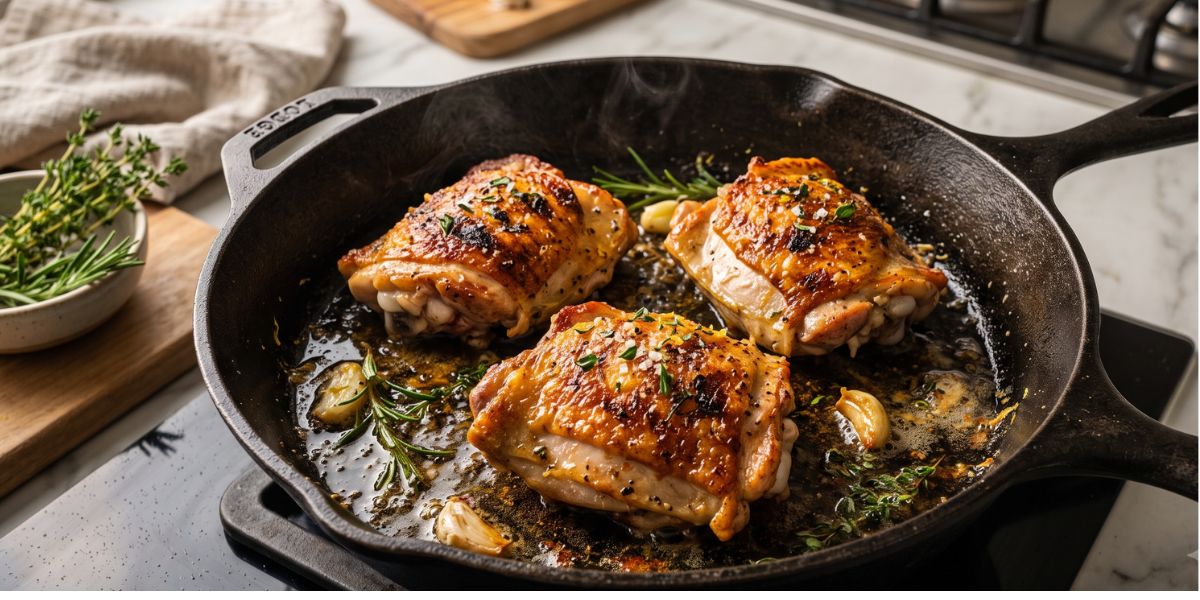
Chicken thighs are one of the best cuts of chicken to cook on the stove. They are flavorful, juicy, affordable, and much more forgiving than chicken breasts. Because thighs contain more fat and connective tissue, they stay tender even if they cook a little longer than planned. That makes them a great choice for quick weeknight dinners, meal prep, skillet meals, and simple family recipes.
Still, one of the most common questions home cooks ask is: how long to cook chicken thighs on stove? The answer depends on the type of chicken thighs you are using. Boneless chicken thighs cook faster than bone-in thighs. Skin-on thighs need enough time to crisp the skin. Skinless thighs brown quickly but can dry out if cooked over heat that is too high.
In general, chicken thighs take about 12 to 30 minutes to cook on the stove. Boneless chicken thighs usually take 6 to 8 minutes per side, while bone-in chicken thighs often take 10 to 15 minutes per side. The most important rule is not just the time, though. Chicken thighs are done when the thickest part reaches a safe internal temperature of 165°F. The USDA’s safe minimum internal temperature chart lists poultry at 165°F, and USDA guidance also notes that color alone is not a reliable way to know chicken is safe; a food thermometer is the best method.
This guide explains exactly how long to cook chicken thighs on the stove, how to cook boneless, bone-in, and skin-on thighs, how to tell when they are done, and how to keep them juicy every time.
How Long to Cook Chicken Thighs on Stove?
For a quick answer, chicken thighs usually take 12 to 30 minutes total on the stove, depending on the cut.
Boneless chicken thighs usually take about 6 to 8 minutes per side over medium to medium-high heat. This means they are often ready in about 12 to 16 minutes total.
Bone-in chicken thighs take longer Bone-In Chicken Thighs because the bone slows down the cooking process. They usually need about 10 to 15 minutes per side, or about 20 to 30 minutes total.
Skin-on chicken thighs need enough time for the skin to become golden and crisp. Start them skin-side down and let the skin sear well before flipping. After that, lower the heat if needed so the inside can finish cooking without burning the outside.
No matter which type you cook, the safest way to check doneness is with a meat thermometer. Insert it into the thickest part of the thigh, away from the bone. The chicken is safe to eat when it reaches 165°F throughout.
Cooking Time by Type of Chicken Thigh
Different chicken thighs need different cooking times. A thin boneless thigh may cook in less than 15 minutes, while a thick bone-in thigh may need close to 30 minutes. The size, thickness, pan temperature, and whether the chicken is covered all affect the final cooking time.
Boneless Skinless Chicken Thighs
Boneless skinless chicken thighs are the fastest type to cook on the stove. Since there is no bone, heat moves through the meat more quickly. Since there is no skin, you also do not need extra time to crisp the outside.
Most boneless skinless chicken thighs take about 6 to 8 minutes per side. If they are very small or thin, they may be done closer to 5 or 6 minutes per side. If they are large and thick, they may need 8 to 10 minutes per side.
The best heat level is usually medium-high heat at the start, then medium heat if the outside is browning too quickly. You want a good sear on the outside, but you do not want the pan so hot that the chicken burns before the center cooks.
To avoid drying out boneless thighs, do not cook them over high heat the whole time. Also, avoid cutting into them while they are still in the pan. Cutting the chicken too early releases juices and can make the meat less tender. Let the thighs cook, check them with a thermometer, and rest them for a few minutes before slicing.
A simple method is to heat oil in a skillet, add the seasoned chicken, cook for 6 to 8 minutes, flip, and cook another 6 to 8 minutes. When the internal temperature reaches 165°F, move the chicken to a plate and let it rest.
Bone-In Chicken Thighs
Bone-in chicken thighs take longer to cook on the stove. The bone helps the meat stay juicy, but it also slows down the cooking process. This is why bone-in thighs need more patience.
Most bone-in chicken thighs take about 10 to 15 minutes per side on the stove. Smaller thighs may be done in about 20 minutes total, while large thighs can take up to 30 minutes.
For best results, sear bone-in How to Cook a London Broil thighs first. Place them in a hot skillet and brown both sides. If they are skin-on, start with the skin-side down. Once the outside is browned, reduce the heat to medium-low and cover the pan. Covering the skillet traps heat and helps the inside cook more evenly.
This is especially useful for bone-in thighs because the middle takes longer to reach the right temperature. Without a lid, the outside may darken too much before the inside is finished.
When checking doneness, place the thermometer into the thickest part of the thigh without touching the bone. The area near the bone is often the slowest part to cook. If the chicken is still below 165°F, cover the pan and cook a few more minutes.
Skin-On Chicken Thighs
Skin-on chicken thighs are perfect when you want crispy, golden chicken from the stove. The key is to start with dry skin and give it enough time in the pan.
Before cooking, pat the chicken very dry with paper towels. Moisture prevents browning and makes the skin steam instead of crisp. Season both sides well, then heat a little oil in a skillet.
Place the chicken skin-side down first. Let it cook without moving it too much. This helps the fat render and the skin become crisp. Skin-on thighs usually need about 8 to 12 minutes skin-side down, depending on size and heat level.
After the skin is golden, flip the thighs and cook the other side. If the chicken is bone-in, lower the heat and cover the skillet so the inside finishes cooking. If the chicken is boneless, it may only need a few more minutes after flipping.
The best way to avoid burnt skin is to control the heat. Start with medium-high heat to sear, then reduce to medium or medium-low as needed. Crispy skin takes time, but it should not be rushed over very high heat.
How to Cook Chicken Thighs on the Stove
Cooking chicken thighs on the stove is simple once you know the basic process. You do not need a complicated recipe. You only need chicken thighs, seasoning, oil, a skillet, and a thermometer.
1. Pat the Chicken Dry
Start by drying the chicken thighs with paper towels. This step is important because dry chicken browns better. If the surface is wet, the chicken will steam in the pan instead of searing.
This is especially important for skin-on chicken thighs. Dry skin is the first step to crisp skin.
2. Season Both Sides
Season the chicken well on both sides. A basic seasoning mix can include salt, black pepper, garlic powder, onion powder, paprika, and dried herbs. You can also use lemon pepper, Cajun seasoning, Italian seasoning, taco seasoning, or your favorite chicken rub.
Do not season only the top side. Chicken thighs are thick and flavorful, so they can handle bold seasoning.
3. Heat Oil in a Skillet
Place a large skillet over medium-high heat and add oil. Use an oil that can handle stovetop heat, such as avocado oil, canola oil, vegetable oil, or light olive oil.
Let the oil heat before adding the chicken. If the pan is not hot enough, the chicken may stick and will not brown properly.
4. Sear the Chicken Thighs
Add the chicken thighs to the skillet in a single layer. Do not overcrowd the pan. If the pieces are too close together, they will release moisture and steam instead of sear.
For skin-on thighs, place them skin-side down first. For boneless skinless thighs, place the smoother side down first if possible.
Let the chicken cook without moving it too much. This helps build a golden crust.
5. Flip and Continue Cooking
Once the first side is browned, flip the chicken. Continue cooking until the second side is browned and the inside reaches 165°F.
Boneless thighs usually cook quickly after flipping. Bone-in thighs usually need more time. If the outside is browning too fast, lower the heat.
6. Cover If Needed
If you are cooking bone-in thighs or very thick boneless thighs, covering the skillet can help. A lid traps heat and helps the inside cook through without drying out the outside.
You do not need to cover the pan the entire time. Sear the chicken first, then cover it after flipping or after both sides have browned.
7. Rest Before Serving
After the chicken reaches 165°F, remove it from the pan and let it rest for about 5 minutes. Resting allows the juices to settle back into the meat.
If you cut the chicken immediately, the juices may run out onto the plate. A short rest helps keep each bite moist and tender.
How to Tell When Chicken Thighs Are Done
The most reliable way to tell when chicken thighs are done is to use a meat thermometer. Time is helpful, but it is not perfect. Chicken thighs come in different sizes and thicknesses. Stoves and pans also heat differently.
Insert the thermometer into the thickest Best Cast Iron Pans For Cooking part of the thigh. For bone-in thighs, make sure the thermometer does not touch the bone. The chicken is done when it reaches 165°F.
You can also look for other signs. The juices should run clear, the meat should feel tender, and there should be no raw-looking pink area near the bone. However, visual signs should not replace a thermometer. USDA food safety guidance explains that color is not a dependable safety test for chicken; temperature is the accurate check.
Chicken thighs are dark meat, so they may still look slightly darker than chicken breast even when fully cooked. This is normal. Some cooks also prefer thighs cooked a little beyond 165°F because dark meat becomes more tender as connective tissue breaks down. But for food safety, 165°F is the key minimum temperature.
Tips for Juicy Stovetop Chicken Thighs
Chicken thighs are naturally juicy, but a few simple tips make them even better.
Do Not Overcrowd the Pan
Give the chicken space in the skillet. If the pan is crowded, the chicken releases moisture and steams. This prevents browning and can make the texture less appealing.
If you are cooking many thighs, cook them in batches. It may take a little longer, but the result will be much better.
Use Medium to Medium-High Heat
Medium-high heat is good for getting a nice sear at the beginning. After that, medium heat is often better for finishing the chicken.
If the heat is too high, the outside can burn while the inside stays undercooked. If the heat is too low, the chicken may not brown well.
Let the Chicken Rest
Resting is a small step that makes a big difference. After cooking, move the chicken to a plate and let it sit for about 5 minutes. This helps the juices stay in the meat.
Add Butter, Garlic, or Herbs Near the End
For extra flavor, add a small amount of butter, minced garlic, rosemary, thyme, or parsley near the end of cooking. Spoon the melted butter over the chicken for a rich, savory finish.
Do not add garlic too early because it can burn. Add it in the last few minutes when the heat is lower.
Avoid Flipping Too Often
Let each side cook long enough to brown. Flipping too often can stop the crust from forming. For most chicken thighs, one good flip is enough.
Use a Heavy Skillet
A cast iron skillet or stainless steel pan works very well for stovetop chicken thighs. These pans hold heat and help create a better sear.
A nonstick skillet can also work, especially for beginners, but the browning may not be as deep.
Common Mistakes to Avoid
Even though chicken thighs are easy to cook, a few mistakes can affect the final result.
Cooking on Heat That Is Too High
High heat may seem like a faster option, but it can burn the outside before the inside is cooked. This is especially common with bone-in or skin-on thighs.
Start with medium-high heat for browning, then reduce the heat if needed.
Not Drying the Chicken Before Searing
Wet chicken does not brown well. Always pat the thighs dry before seasoning. This step only takes a minute and helps create better texture.
Skipping the Thermometer
Guessing can lead to undercooked or overcooked chicken. A thermometer gives you the most accurate result. Since poultry should reach 165°F for safety, checking the temperature is the best way to cook with confidence.
Cutting Into the Chicken Too Soon
Cutting into chicken while it is still cooking releases juices. It can also make the chicken look less appealing. Use a thermometer instead of slicing it open.
Using the Same Cooking Time for Every Type
Boneless and bone-in thighs do not cook at the same speed. Skin-on and skinless thighs also need slightly different methods. Always adjust the cooking time based on the cut, size, and thickness.
What to Serve with Stovetop Chicken Thighs
Stovetop chicken thighs go with many side dishes. Because they are savory and juicy, they work well with both simple and hearty sides.
Rice is one of the easiest options. White rice, brown rice, garlic rice, or rice pilaf all pair well with skillet chicken. The rice also soaks up any pan juices or sauce.
Mashed potatoes are another classic choice. Creamy potatoes balance the crisp edges and rich flavor of the chicken.
Roasted vegetables are great if you want a colorful plate. Try carrots, broccoli, Brussels sprouts, zucchini, onions, or bell peppers.
A fresh salad can make the meal feel lighter. A green salad with lemon dressing, cucumber salad, or tomato salad works well.
Pasta is also a good choice. Serve sliced chicken thighs over buttered noodles, garlic pasta, creamy pasta, or tomato pasta.
Steamed greens are simple and healthy. Spinach, kale, green beans, asparagus, and broccoli are all good options.
You can also serve chicken thighs with flatbread, couscous, quinoa, macaroni and cheese, cornbread, or a simple soup.
Frequently Asked Questions
How long do boneless chicken thighs take on the stove?
Boneless chicken thighs usually take about 6 to 8 minutes per side on the stove. The total cooking time is usually about 12 to 16 minutes. Very thick pieces may need a few extra minutes.
The chicken is done when the thickest part reaches 165°F.
How long do bone-in chicken thighs take on the stove?
Bone-in chicken thighs usually take about 10 to 15 minutes per side. The total cooking time is often 20 to 30 minutes.
Because the bone slows cooking, it is best to sear the chicken first and then cover the skillet to help the inside cook evenly.
Should I cover chicken thighs while cooking on the stove?
You do not always need to cover chicken thighs, but it can help. Covering the pan is useful for bone-in thighs or thick thighs because it traps heat and helps the center cook through.
For crispy skin, do not cover the pan at the beginning. Sear the skin first, then cover later if the inside needs more time.
What temperature should chicken thighs be cooked to?
Chicken thighs should be cooked to a safe internal temperature of 165°F. Use a meat thermometer and check the thickest part of the thigh. For bone-in thighs, avoid touching the bone with the thermometer because that can give an inaccurate reading. USDA and FoodSafety.gov list 165°F as the safe minimum internal temperature for chicken and other poultry.
Can I cook frozen chicken thighs on the stove?
It is better to thaw chicken thighs before cooking them on the stove. Frozen chicken can cook unevenly in a skillet. The outside may brown while the inside stays too cold.
If you only have frozen chicken, thaw it safely first. Once thawed, pat it dry, season it, and cook it as usual. Always check the internal temperature before serving.
Why are my chicken thighs tough?
Chicken thighs can become tough if they are cooked too fast over very high heat or cut too soon after cooking. Bone-in thighs can also seem tough if they are not cooked long enough for the meat near the bone to become tender.
Use steady heat, check the temperature, and let the chicken rest before serving.
Why are my chicken thighs not browning?
The most common reasons are too much moisture, a crowded pan, or a pan that is not hot enough. Pat the chicken dry, cook in batches, and let the oil heat before adding the thighs.
Can I use this method for chicken breasts?
You can use a similar stovetop method for chicken breasts, but the timing will be different. Chicken breasts are leaner and can dry out faster. Chicken thighs are more forgiving because they contain more fat and moisture.
Conclusion
So, how long to cook chicken thighs on stove? The simple answer is that boneless chicken thighs usually take about 6 to 8 minutes per side, while bone-in chicken thighs usually take about 10 to 15 minutes per side. Total stovetop cooking time is usually 12 to 30 minutes, depending on the type, size, and thickness of the chicken.
Boneless skinless thighs are the fastest and easiest. Bone-in thighs take longer but stay very juicy. Skin-on thighs need a little extra care, but they reward you with crisp, golden skin.
The most important step is checking the internal temperature. Chicken thighs should reach 165°F in the thickest part before serving. A thermometer is more reliable than guessing, cutting into the meat, or looking only at the color.
For the best stovetop chicken thighs, pat the chicken dry, season it well, use the right heat, avoid overcrowding the pan, and let the meat rest before serving. Once you understand the timing, chicken thighs become one of the easiest and most dependable meals you can make in a skillet.