
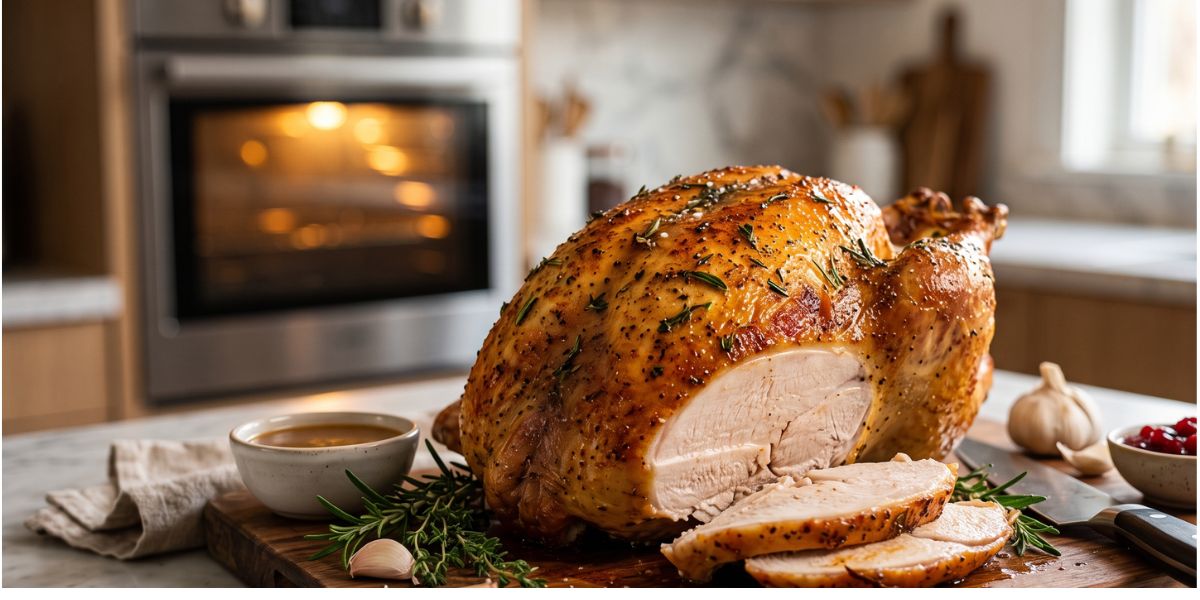
Cooking turkey breast in the oven is one of the easiest ways to make a flavorful holiday meal, Sunday dinner, or simple high-protein main dish. But one question matters more than any other: how long to cook turkey breast in oven so it comes out safe, tender, and juicy?
The answer depends on a few things. The size of the turkey breast matters. A small 3-pound turkey breast will cook much faster than a large 8-pound turkey breast. The type also matters. A bone-in turkey breast usually takes longer than a boneless turkey breast. Oven temperature also plays a big role. A turkey breast roasted at 350°F will usually cook faster than one roasted at 325°F.
Still, cooking time should only be used as a guide. The safest way to know your turkey breast is done is to use a food thermometer. According to USDA food safety guidance, poultry should reach a minimum internal temperature of 165°F / 73.9°C. That means the thickest part of the turkey breast should read 165°F before you serve it.
This guide explains how long to cook turkey breast in the oven by size, type, and temperature. It also covers how to check doneness, how to keep turkey breast juicy, and the most common mistakes to avoid.
How Long to Cook Turkey Breast in Oven?
A turkey breast usually takes about 1½ to 3 hours in the oven, depending on its size, whether it is bone-in or boneless, and the oven temperature.
As a general guide, a turkey breast roasted at 325°F may take:
- 3 to 5½ pounds: about 1½ to 2¼ hours
- 5½ to 9 pounds: about 2¼ to 2¾ hours
At 350°F, many bone-in turkey breasts take:
- 3 to 5 pounds: about 1 to 2 hours
- 5 to 7 pounds: about 2 to 3 hours
These times are helpful for planning. But How Long to Cook a Turkey Breast they are not the final test. Turkey breast is done when the thickest part reaches 165°F on a meat thermometer.
This is important because ovens can vary. Some run hot. Some run cool. Turkey breasts can also vary in shape and thickness. A thick roast takes longer than a flatter one, even if both weigh the same.
So, use the cooking time chart to estimate when to start checking. Then use a thermometer to confirm that the turkey is fully cooked.
Turkey Breast Cooking Time Chart
Use this chart as a simple starting point. Begin checking the internal temperature near the lower end of the cook time.
Turkey Breast SizeOven TemperatureApprox. Cook TimeDone When
3–5 lb bone-in turkey breast 350°F 1–2 hours 165°F
5–7 lb bone-in turkey breast 350°F 2–3 hours 165°F
3–5½ lb turkey breast 325°F 1½–2¼ hours 165°F
5½–9 lb turkey breast 325°F 2¼–2¾ hours 165°F
These times work best for an unstuffed turkey breast. If your turkey breast is stuffed, frozen, partially frozen, or packaged with special cooking instructions, follow the package directions first.
A thermometer is still needed. The turkey breast should reach 165°F in the thickest part before it is served.
How Long to Cook Bone-In Turkey Breast in Oven
Bone-in turkey breast is a popular choice because it has good flavor and often stays moist during roasting. The bone helps protect some of the meat from drying out. However, it can also make the cooking time longer.
A bone-in turkey breast is usually larger and thicker than a boneless roast. This means heat takes more time to reach the center. For this reason, bone-in turkey breast often needs more oven time than boneless turkey breast.
Bone-In Turkey Breast at 325°F
Roasting turkey breast at 325°F is a classic Best Non Stick Pan For High Heat method. This lower oven temperature helps the meat cook evenly. It is a good option for larger turkey breasts because the outside is less likely to dry out before the inside is fully cooked.
At 325°F, a turkey breast weighing about 3 to 5½ pounds usually takes about 1½ to 2¼ hours. A larger turkey breast weighing about 5½ to 9 pounds may take about 2¼ to 2¾ hours.
This temperature is useful when you want a slower roast. It also gives you more control. Since turkey breast is lean, slower cooking can help reduce the risk of overcooking the outside.
If you roast at 325°F, start checking the internal temperature before the expected finish time. Insert the thermometer into the thickest part of the breast. Make sure the thermometer does not touch the bone. If it touches bone, the reading may not be accurate.
Bone-In Turkey Breast at 350°F
Roasting turkey breast at 350°F is also a good choice. It cooks slightly faster than 325°F and can help the skin brown better.
At 350°F, a 3 to 5-pound bone-in turkey breast may take about 1 to 2 hours. A 5 to 7-pound bone-in turkey breast may take about 2 to 3 hours.
This is a good temperature for everyday cooking. It gives a balance of steady roasting and better browning. If the skin starts to get too dark before the turkey is done, loosely cover the breast with foil. This protects the surface while the center keeps cooking.
For the best result, do not cover the turkey tightly for the whole cooking time unless your recipe says to do so. Tight covering can trap steam and soften the skin. A loose foil tent works better when you only need to prevent over-browning.
Why Bone-In Turkey Takes Longer
Bone-in turkey breast takes longer because of its shape and structure. The bone sits inside the meat and affects how heat moves through the breast. A bone-in turkey breast is also often thicker and less even in shape than a boneless roast.
Heat moves from the outside of the turkey toward the center. The thicker the turkey breast, the longer this takes. That is why two turkey breasts of the same weight may not cook in exactly the same time. A short, thick turkey breast may take longer than a wider, flatter one.
This is also why temperature is more reliable than time. Time tells you when to check. Temperature tells you when it is done.
How Long to Cook Boneless Turkey Breast in Oven
Boneless turkey breast is easy to slice and simple to serve. It is often sold as a roast, sometimes tied or wrapped in netting. It may also come seasoned, brined, or packaged in an oven-ready bag.
Boneless turkey breast can cook faster than bone-in turkey breast, but that is not always true. The cooking time depends on size, thickness, and how the roast is shaped.
A rolled or netted boneless turkey breast can be thick in the center. If it is dense, it may still take a while to cook through. A flatter boneless turkey breast will cook faster.
Boneless Turkey Breast Roast
A boneless turkey breast roast usually takes about 1½ to 2½ hours, depending on weight and oven temperature. Smaller roasts may be done sooner. Larger roasts may need more time.
At 325°F, a boneless turkey breast roast may take close to the same amount of time as a small bone-in turkey breast. However, because there is no bone, the meat may cook more evenly.
When cooking a boneless roast, keep the netting on if the package says to do so. The netting helps the roast hold its shape. This makes it easier to cook and slice. Remove it after cooking and resting, unless the package gives different instructions.
Boneless turkey breast is lean, so it can dry out if overcooked. Check the temperature early. Once it reaches 165°F, remove it from the oven and let it rest before slicing.
Boneless Turkey Breast Tenderloin
Turkey breast tenderloins are smaller than whole turkey breast roasts. They cook much faster. Many turkey tenderloins can be baked at 325°F for about 50 to 60 minutes, or until they reach 165°F.
Tenderloins are a good option when you Oven Roasted Turkey Breast Recipe want turkey without cooking a large roast. They are also easier for weeknight meals.
Because tenderloins are smaller, they can overcook quickly. Start checking the temperature near the early side of the cooking time. If you wait too long, the meat may turn dry.
For extra flavor, you can brush tenderloins with olive oil or melted butter before baking. Season with salt, pepper, garlic powder, paprika, rosemary, thyme, or poultry seasoning. A simple seasoning blend works well because turkey breast has a mild flavor.
Best Oven Temperature for Turkey Breast
The best oven temperature depends on your goal. Some cooks prefer 325°F for a slow, even roast. Others prefer 350°F for faster cooking and better browning. Higher temperatures can work for smaller cuts, but they need more attention.
325°F for Slow, Even Roasting
A temperature of 325°F is a safe and steady choice for turkey breast. It works especially well for larger turkey breasts. The lower heat gives the inside time to cook before the outside becomes too dry.
This temperature is also good for holiday cooking. If you are preparing side dishes at the same time, 325°F gives you more flexibility. It also reduces the chance of the turkey browning too quickly.
The downside is that it may take longer. If you are short on time, 350°F may be a better choice.
350°F for a Balance of Speed and Browning
A temperature of 350°F is a great middle ground. It cooks turkey breast faster than 325°F and helps the skin brown nicely.
This is a good choice for bone-in turkey breast, boneless roasts, and everyday meals. It is hot enough to build flavor on the outside but not so hot that the breast dries out too fast.
If the turkey is browning faster than expected, place a loose sheet of foil over the top. Do not wrap it tightly. The goal is to shield the surface, not steam the whole roast.
375°F or Higher for Smaller Cuts
Higher temperatures, such as 375°F, can work for smaller turkey breast cuts. They are useful when cooking tenderloins or small boneless pieces.
However, higher heat needs closer watching. Turkey breast is lean and can dry out if it stays in the oven too long. If you use a higher temperature, check the internal temperature early and often.
For larger turkey breasts, lower temperatures are usually more forgiving. A large turkey breast cooked at high heat may brown too quickly on the outside while the center still needs more time.
How to Tell When Turkey Breast Is Done
The best way to tell when turkey breast is done is to check the internal temperature with a food thermometer.
Turkey breast should reach 165°F in the thickest part. This is the safe minimum internal temperature for poultry. Do not rely only on color. Turkey can look white before it is fully safe. Juices can also be misleading.
To check turkey breast correctly:
Insert the thermometer into the thickest part of the breast. Keep it away from the bone. If the thermometer touches bone, it can give a false reading. For a boneless roast, aim for the center of the thickest section.
Check more than one spot if the roast is large. This is helpful because turkey breast may not cook evenly from end to end.
If the thermometer reads below 165°F, return the turkey to the oven. Check again after 10 to 15 minutes. For smaller cuts, check sooner.
When the turkey reaches 165°F, remove it from the oven. Let it rest before slicing. Resting helps the juices settle, which makes the meat easier to cut and better to eat.
How to Keep Turkey Breast Juicy in the Oven
Turkey breast is naturally lean. That is one reason people like it. But it also means it can dry out if cooked too long.
The good news is that a few simple steps can help keep turkey breast moist and flavorful.
Use Butter or Oil Under the Skin
If you are cooking bone-in turkey breast with skin, add butter or oil under the skin before roasting. This adds flavor and helps protect the meat.
You can mix softened butter with salt, pepper, garlic, rosemary, thyme, sage, or lemon zest. Gently loosen the skin with your fingers, then spread the butter over the meat under the skin.
You can also rub oil or melted butter on the outside of the skin. This helps with browning and gives the seasoning something to stick to.
For boneless turkey breast without skin, brush the outside with oil or melted butter before baking. This helps reduce surface dryness.
Do Not Overcook It
The most common reason turkey breast turns dry is overcooking. Since turkey breast is lean, even a little extra oven time can make a difference.
Use cooking time only as a guide. Start checking the temperature before the end of the suggested range. Remove the turkey when the thickest part reaches 165°F.
If your turkey breast comes with a pop-up timer, it is still smart to use a separate thermometer. A thermometer gives a more exact reading.
Tent with Foil if Browning Too Quickly
Sometimes the outside of the turkey breast browns before the inside is done. This can happen at 350°F or higher. It can also happen if the turkey is placed close to the top heating element.
If the skin looks dark but the inside is not yet 165°F, loosely tent the turkey with foil. This slows browning while the center keeps cooking.
Do not seal the foil tightly around the pan. A loose tent is enough.
Let It Rest Before Slicing
Resting is one of the easiest ways to improve turkey breast. After removing the turkey from the oven, let it stand before slicing.
A smaller turkey breast may need about 10 minutes of rest. A larger turkey breast may benefit from 15 to 20 minutes.
During this time, the juices settle. If you slice right away, more juice runs out onto the cutting board. If you wait, the slices stay moister.
Cover the turkey loosely with foil while it rests. Do not wrap it tightly, or the skin may soften too much.
Common Mistakes When Cooking Turkey Breast
Cooking turkey breast is simple, but a few mistakes can lead to dry or undercooked meat. Avoid these errors for a better result.
Cooking by Time Only
Time is useful, but it is not enough. A recipe may say a turkey breast takes 2 hours, but your turkey may be done sooner or later.
Oven temperature, turkey shape, starting temperature, pan type, and bone structure can all change the cooking time.
Always check the internal temperature. The turkey breast is done at 165°F.
Skipping the Rest Time
Rest time is not optional if you want juicy slices. Cutting the turkey as soon as it leaves the oven can cause juices to run out quickly.
Let the turkey rest for at least 10 minutes before slicing. Larger roasts should rest longer.
Slicing Immediately After Cooking
This mistake is similar to skipping the rest time, but it is worth repeating. Turkey breast needs a short pause after roasting.
Use that time to finish gravy, warm side dishes, or prepare the serving platter. Then slice the turkey across the grain for tender pieces.
Cooking from Partially Frozen Without Adjusting Time
A partially frozen turkey breast will take longer to cook. The outside may look done while the center is still too cold.
If your turkey breast is not fully thawed, follow package directions. Some products are made to cook from frozen. Others are not.
No matter the method, check the internal temperature before serving.
Not Checking the Thickest Part
The thickest part of the turkey breast is the last area to finish cooking. If you only check a thin edge, you may think the turkey is done when the center still needs more time.
Place the thermometer in the thickest part. For bone-in turkey breast, avoid the bone. For boneless turkey breast, check the center of the roast.
Frequently Asked Questions
How Long Do You Cook Turkey Breast Per Pound in the Oven?
A common estimate is about 20 to 30 minutes per pound, depending on oven temperature and whether the turkey breast is bone-in or boneless. However, this is only a rough guide.
Smaller turkey breasts may cook faster per pound. Larger or thicker turkey breasts may take longer. Bone-in turkey breast may also need more time than boneless turkey breast.
The safest rule is simple: cook turkey breast until the thickest part reaches 165°F.
Should Turkey Breast Be Covered or Uncovered in the Oven?
Turkey breast can be cooked uncovered for better browning. This is especially helpful if the turkey breast has skin.
If the skin starts getting too dark before the inside reaches 165°F, cover it loosely with foil. This is called tenting. It helps prevent over-browning while the turkey finishes cooking.
For juicy meat, some cooks cover the turkey for part of the cooking time and uncover it near the end. Others roast it uncovered and only use foil if needed. Both methods can work.
What Temperature Should Turkey Breast Be Cooked To?
Turkey breast should be cooked to an internal temperature of 165°F / 73.9°C.
Check the temperature in the thickest part of the breast. Do not let the thermometer touch bone. For a boneless roast, check the center.
Once the turkey reaches 165°F, remove it from the oven and let it rest before slicing.
How Long Should Turkey Breast Rest After Cooking?
Turkey breast should rest for about 10 to 20 minutes after cooking.
A smaller turkey breast or tenderloin may only need 10 minutes. A larger bone-in turkey breast may need 15 to 20 minutes.
Resting helps the juices settle. It also makes the turkey easier to slice.
Can You Cook Turkey Breast from Frozen?
Some turkey breast products are designed to cook from frozen. Others need to be fully thawed before cooking. Always follow the package directions for the specific product you bought.
Cooking from frozen usually takes longer. You should still check the internal temperature with a thermometer. The thickest part must reach 165°F before serving.
If the turkey breast is only partly frozen and the package does not give freezer-to-oven directions, it is better to thaw it safely before cooking.
Simple Step-by-Step Method for Oven-Roasted Turkey Breast
If you want a basic method, follow these steps.
First, preheat your oven to 325°F or 350°F. Use 325°F for a slower roast or 350°F for faster cooking and better browning.
Next, prepare the turkey breast. Pat it dry with paper towels. Dry skin browns better than wet skin. If the turkey has skin, rub butter or oil over the outside. You can also place seasoned butter under the skin.
Season the turkey with salt, pepper, garlic powder, onion powder, paprika, thyme, rosemary, sage, or poultry seasoning. Keep the seasoning simple if you want a classic flavor.
Place the turkey breast on a rack in a roasting pan if you have one. A rack helps air move around the turkey. If you do not have a rack, you can place thick onion slices, carrots, or celery under the turkey.
Roast the turkey until it is close to the expected cooking time. Then start checking the temperature. Insert the thermometer into the thickest part of the breast.
If the turkey has not reached 165°F, return it to the oven. Check again soon. If the top is browning too much, loosely cover it with foil.
When the thickest part reaches 165°F, remove the turkey from the oven. Let it rest for 10 to 20 minutes. Then slice and serve.
Best Seasonings for Turkey Breast
Turkey breast has a mild flavor, so it works well with many seasonings. For a classic taste, use salt, black pepper, garlic powder, onion powder, thyme, rosemary, and sage.
For a richer flavor, mix softened butter with herbs and spread it under the skin. Add lemon zest for brightness. Add paprika for color. Add a little brown sugar if you want light sweetness.
For a savory holiday flavor, use poultry seasoning, garlic, butter, and fresh herbs. For a simple everyday turkey breast, use olive oil, salt, pepper, and garlic.
The key is not to overpower the meat. Turkey breast does well with simple seasoning and careful cooking.
What to Serve with Oven-Roasted Turkey Breast
Turkey breast works with many side dishes. For a holiday-style meal, serve it with mashed potatoes, gravy, stuffing, cranberry sauce, green beans, roasted carrots, or dinner rolls.
For a lighter meal, serve turkey breast with roasted vegetables, salad, sweet potatoes, rice, or steamed broccoli.
Leftover turkey breast is also useful. You can slice it for sandwiches, chop it for soup, add it to salads, or use it in casseroles.
Because turkey breast is lean, it pairs well with sauces and moist sides. Gravy, cranberry sauce, pan juices, or herb butter can make the meal feel more complete.
How to Store Leftover Turkey Breast
After serving, refrigerate leftover turkey breast within a safe time. Slice or cut the meat into smaller pieces so it cools faster. Store it in an airtight container in the refrigerator.
Use leftovers for sandwiches, wraps, soups, salads, or quick dinners. If you want to keep turkey longer, freeze it in freezer-safe bags or containers.
For best texture, add a little broth or gravy when reheating. Turkey breast can dry out during reheating, so gentle heat works best.
Final Takeaway
When deciding how long to cook turkey breast in oven, use cooking time as a planning guide and internal temperature as the final test.
Most turkey breasts take about 1½ to 3 hours in the oven, depending on size, type, and temperature. Bone-in turkey breast usually takes longer than boneless turkey breast. A 325°F oven gives slow, even cooking. A 350°F oven gives a good balance of speed and browning.
No matter which method you choose, the most important step is checking the thickest part with a food thermometer. Turkey breast is ready when it reaches 165°F. After cooking, let it rest before slicing so the meat stays juicy.
For safe, tender, and flavorful turkey breast, remember this simple rule: roast by time, confirm by temperature, and rest before serving.