
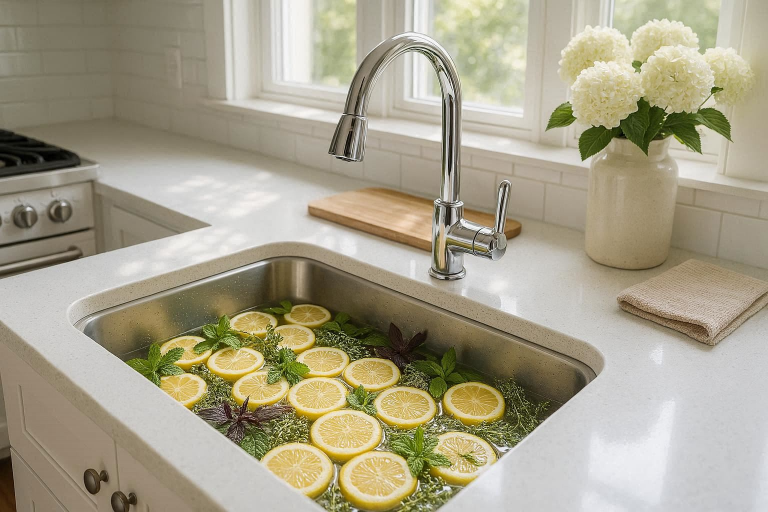
There are few things worse in a home than walking into your kitchen and being hit with a lingering, foul odor. More often than not, the culprit isn’t the garbage can or a forgotten dish—it’s the kitchen sink drain.
That unpleasant “sink stink” can quickly turn your cooking space into a place you want to avoid.
The good news is that you don’t need harsh, expensive chemical drain cleaners to solve the problem. The most powerful and effective things to put in a kitchen sink for smell are likely already in your pantry.
This guide will walk you through the absolute best DIY remedies to neutralize that odor immediately and give you the long-term prevention strategies used by plumbing professionals. Say goodbye to the stench and hello to a fresh-smelling kitchen!
The Root Cause: Why Does My Kitchen Sink Smell So Bad?
Before you start pouring a random concoction down the Cleaning Guide for Home & Kitchen drain, it helps to identify why your sink smells. Knowing the cause directs you to the most effective remedy.
Most kitchen sink odors are caused by the breakdown of organic matter inside your pipes, but sometimes it’s a more complex plumbing issue.
Food Debris and Organic Matter Buildup
This is the most common reason for a smelly kitchen sink. Small food particles—even those that seem harmless—get past your strainer and stick to the inside walls of your pipes and the P-trap (the U-shaped pipe under the sink).
As this organic matter decays, it releases foul-smelling gases, often described as a rotten-food or musty foul odor.
Fats, Oils, and Grease (FOG) Accumulation
Pouring hot cooking grease down the drain is a major mistake. While liquid when hot, FOG cools quickly in the pipes and solidifies.
This sticky, waxy residue traps other food particles, creating a strong, putrid gunk buildup that bacteria love. The breakdown of this grease is a prime source of a serious drain smell.
The Dry P-Trap Problem (Sewer Gas)
Every sink has a P-trap designed to hold a small amount of water. This water barrier is your defense against harmful and offensive sewer gas from the main plumbing system.
If a sink goes unused for a long time (like if you are on vacation), the water in the trap can evaporate, allowing sewer gases—which often smell like rotten eggs—to escape into your kitchen.
Issues with Your Garbage Disposal (If Applicable)
If you have a garbage disposal, it is a frequent source of odor. Food scraps get trapped under the splash guard, on the grinding blades, or inside the disposal chamber itself.
Even after running the unit, lingering residue can quickly decompose and produce an awful sink stink.
Quick-Fix DIY Remedies: What to Put in Your Sink Right Now
No need for an emergency trip to the store. The best solutions for what to put in kitchen sink for smell are simple, cheap, and non-toxic.
The Hot Water Flush: Simple, But Essentia
If the odor is mild, a simple hot water flush can sometimes melt away soft grease and push lingering debris down the line.
Actionable Steps:
-
Bring a kettle or pot of water to a boil.
-
Slowly and carefully pour the entire pot of boiling water directly down the drain.
-
Tip: If you have older PVC pipes, let the water cool for a minute or two to prevent potential damage.
-
Follow up by running the hot tap for about a minute. Repeat this process weekly for prevention.
The Deodorizing Powerhouse: Baking Soda and Vinegar
This is the classic, most powerful, and widely recommended DIY remedy for deodorizing a kitchen sink. The chemical reaction not only fizzes away buildup but also helps to neutralize acidic odors.
Actionable Steps:
-
Pour 1 cup of baking soda down the drain.
-
Follow immediately with 1 cup of white vinegar.
-
Quickly plug the drain (use a stopper or a wet cloth) to trap the foaming reaction inside the pipe.
-
Let the mixture sit and foam for 30 minutes to an hour.
-
Unplug the drain and flush it thoroughly with very hot water (boiling or near-boiling).
The Citrus Solution: Lemon, Salt, and Ice (Especially for Disposals)
This method is perfect for refreshing a garbage disposal. The ice and salt act as a non-chemical, abrasive cleaner to scrub the blades, while the citrus provides a clean, fresh scent.
Actionable Steps:
-
Put 1 cup of ice cubes down the disposal.
-
Add a generous handful of coarse salt (rock or kosher).
-
Add the peels from one lemon, lime, or orange.
-
Turn on the cold water to a slow stream and run the disposal until the grinding sound subsides.
-
The citrus peels release natural oils that leave behind a clean, pleasant fragrance.
Hydrogen Peroxide for Deep Cleaning
Hydrogen peroxide is a mild disinfectant that works by breaking down organic materials and killing odor-causing bacteria. It’s an excellent, non-toxic alternative for a deeper clean.
Actionable Steps:
-
Pour $1/2$ cup of $3\%$ hydrogen peroxide down the drain.
-
Let it sit for about 10–15 minutes.
-
Follow with a hot water flush.
Dish Soap and Hot Water: The Grease Cutter
Since grease is a primary culprit, a simple combination of dish soap and hot water can work wonders for a mild odor. Dish soap is formulated to break down Fats, Oils, and Grease.
Actionable Steps:
-
Squirt a generous amount of liquid dish soap down the drain—aim for 2–3 tablespoons.
-
Let your hottest tap water run for a few seconds to warm the pipes.
-
Follow the soap with a pot of very hot water to push the degreasing action through the plumbing.
White Vinegar Alone: An Overnight Treatment
If you suspect bacterial or mold growth is the source of the foul odor, pure white vinegar can be an effective solo treatment due to its acidity.
Actionable Steps:
-
At night, after the last use of the sink, pour $1$ cup of plain white vinegar down the drain.
-
Leave it to work overnight (do not run water).
-
In the morning, flush with cold water.
Specialized & Professional Solutions
While the pantry staples often do the trick, some persistent smells may require a more specialized approach or a call to a professional plumber.
Enzyme Drain Cleaners: The Eco-Friendly Option
Unlike chemical drain cleaners, enzyme drain cleaners are non-corrosive and safe for your pipes and the environment. They contain special bacteria that literally “eat” the organic debris and gunk (food scraps, soap scum, hair) coating the inside of your pipes.
-
How to Use: Follow the label instructions, which usually involve pouring the product down the drain before bed and letting it sit overnight. This is a great product for routine maintenance.
Commercial Chemical Cleaners (Use with Caution)
Heavy-duty chemical drain cleaners use strong acids or alkalis to dissolve clogs. While they are a last resort for an incredibly stubborn blockage, they are not recommended as a first step for just an odor.
Warning: Chemical cleaners can damage certain types of pipes, pose a safety risk if misused, and should NEVER be mixed with other cleaners like bleach or vinegar.
When to Call a Plumber: Checking the P-Trap and Vent Pipe
If you’ve tried all the DIY and commercial solutions and the foul odor persists, the problem is likely structural and requires a professional.
| Plumbing Problem | Symptom | The Fix |
| Clogged P-Trap/U-Bend | Very slow draining, persistent rotten food or sewage smell. | The plumber will physically open and clean out the P-trap or use a drain snake to clear a deeper blockage. |
| Dry P-Trap | Strong sewer gas smell, especially after returning from a trip. | If running water doesn’t fix it, there may be a leak, which a plumber can tighten or replace. |
| Blocked Vent Pipe | Strong sewer gas smell in multiple drains, gurgling sounds, or a slow flush in toilets. | The vent pipe on your roof is clogged (usually by debris or nests). A plumber has the tools to clear it safely. |
Proactive Prevention: 5 Tips to Stop Sink Odors Permanently
The best way to eliminate a drain smell is to prevent it in the first place. Incorporate these simple habits into your kitchen routine to keep your pipes clean and smelling fresh.
Always Use a Drain Strainer
The single most effective tool for prevention is a simple drain strainer or screen. This catches the largest food particles that are the main source of the gunk and decay. Empty the strainer into the trash before washing dishes.
Dispose of FOG Properly
Never pour cooking Fats, Oils, or Grease (FOG) directly down the sink. Scrape it into a container (like an old jar or can) and let it cool and solidify, then throw it in the trash. This prevents the sticky residue from forming in your pipes.
Regular Maintenance Flushes
Make the simple baking soda and vinegar treatment or a hot water flush a routine. Doing a basic drain cleaner maintenance every two weeks will break down minor debris before it has a chance to cause a noticeable foul odor.
Clean the Overflow and Drain Stopper
Odors don’t just come from the drain itself. Food splash-back and bacteria can build up around the drain stopper and in the overflow hole (if your sink has one). Scrub these areas regularly with an old toothbrush and a solution of hot, soapy water.
Run Cold Water with the Disposal
If you have a disposal, always run cold water for about 15 seconds before and after you use it. Cold water solidifies grease so the grinding blades can break it up and flush it away more easily. Hot water will simply melt the grease, causing it to stick further down the pipe.
Common Mistakes to Avoid When Deodorizing Your Sink
Attempting to fix a smelly sink can go wrong if you use the wrong methods or mixtures.
-
Mixing Chemicals: NEVER mix household chemicals like bleach and vinegar (or ammonia-based cleaners). This creates highly toxic, even lethal, chlorine gas.
-
Pouring Grease Down the Drain: As mentioned, hot grease is a liquid that turns into a sticky, clogging solid further down the pipe, making the smell worse in the long run.
-
Assuming Boiling Water is Always Safe: While highly effective, repeated use of pure boiling water can potentially weaken older or poorly installed PVC pipes. Use very hot, but not aggressively boiling, water for routine flushing.
-
Ignoring the P-Trap: Thinking the smell is just “rotting food” when it’s actually sewer gas coming from a dry P-trap. If the smell is like rotten eggs, run water immediately to refill the trap.
FAQs
Can I use bleach to clean a smelly drain?
Bleach can kill odor-causing bacteria and mold, but it doesn’t break down organic clogs or grease. It’s best avoided, as it can be harmful to plumbing systems and its fumes are dangerous. Natural solutions like baking soda and vinegar or an enzyme cleaner are safer and more effective.
How often should I clean my kitchen drain?
For prevention, a minor maintenance flush (like a hot water rinse or a small amount of baking soda) should be done weekly. A full baking soda and vinegar treatment is recommended monthly or as soon as a slight odor begins to develop.
Why does my sink smell like rotten eggs?
A strong rotten egg smell is usually caused by sewer gas (hydrogen sulfide) escaping into your home. This almost always points to a problem with your plumbing’s protective mechanisms: either a dry P-trap (not enough water barrier) or a clogged vent pipe. Refill the P-trap by running the water; if the smell persists, call a plumber.
Is boiling water safe for PVC pipes?
Pure boiling water is generally safe for modern plumbing systems. However, extreme heat can slightly soften older, weakened, or improperly installed PVC pipes, leading to eventual leaks. A safer alternative is to use water that is very hot but has been off the boil for a minute, or to mix the boiling water with some cold water first.
What’s the best natural product for garbage disposal smell?
The best non-toxic option is a combination of ice cubes, coarse salt, and citrus peels (lemon or orange). The ice and salt scour the disposal components, and the citrus oils leave a refreshing, clean scent.
Conclusion:
A foul odor from your kitchen sink is a clear sign that decaying organic matter has begun to accumulate within your drain and pipes. Fortunately, you are now equipped with an arsenal of powerful, simple, and affordable things to put in kitchen sink for smell.
Whether you opt for the fizzing action of the baking soda and vinegar mix, the degreasing power of hot water and dish soap, or the scouring effect of ice and lemon peels for your disposal, you can quickly eliminate that unpleasant scent. Consistency is key: make regular maintenance flushes a part of your kitchen cleanup routine, and you’ll keep the drain fresh and the whole kitchen smelling clean.