
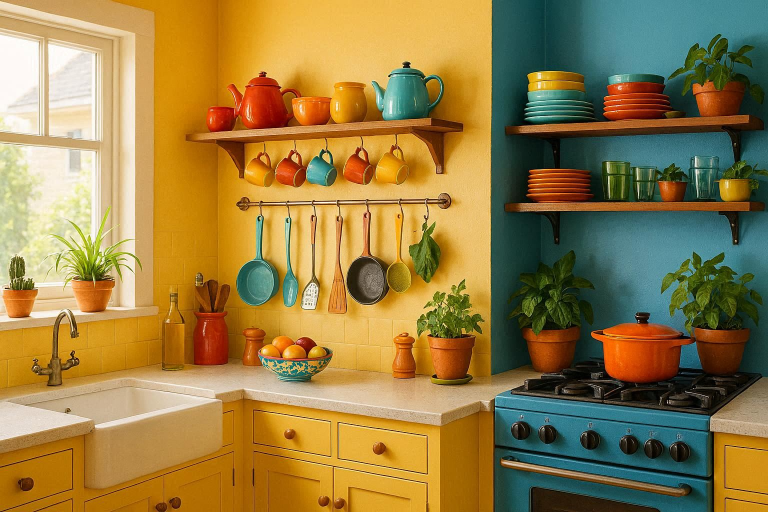
Deciding what color to paint the kitchen is arguably the most crucial—and daunting—choice in any home refresh. The kitchen isn’t just a place for cooking; it’s the heart of your home, a gathering spot for family, and a significant factor in your property’s resale value.
The perfect shade can transform a cramped, dark space into an airy, welcoming oasis. The wrong one can make your morning coffee feel dreary.
This guide moves beyond fleeting trends to provide you with expert-approved, timeless color choices and a step-by-step process for selecting a hue that complements your unique space, lighting, and style. Let’s find the color that will make your kitchen shine.
Finding Your Kitchen’s Perfect Color Palette
Your kitchen’s paint color has an enormous impact because the room contains so many fixed elements: cabinets, countertops, flooring, Colors to Paint a Kitchen and appliances. Unlike a living room, where the walls are the main focus, a kitchen color must harmonize with everything already there.
Start by thinking of your paint choice as the backdrop that allows your other elements to take center stage.
The Psychology of Kitchen Colors: Setting the Mood
Color psychology plays a huge role in the kitchen, a room associated with energy, food, and social interaction.
-
Warm Colors (Yellow, Orange, Red): Believed to stimulate appetite and energy. They create a cozy, inviting, and stimulating atmosphere, great for entertaining.
-
Cool Colors (Blue, Green, Violet): Associated with calmness, freshness, and nature. They create a serene, clean, and tranquil environment.
-
Neutrals (White, Gray, Greige): Offer versatility and cleanliness. They provide a sophisticated, elegant base, allowing accents (like artwork or hardware) to provide the personality.
Tip: Choose a color that aligns with how you use the space. Do you host lively dinner parties? Consider a warm neutral. Is your kitchen your quiet spot for morning coffee? Lean towards calming, cool shades.
Timeless & Trending Kitchen Paint Colors for 2025
While trends come and go, some colors maintain universal appeal, balancing modernity with lasting elegance. Here are the top categories for black and white kitchen your kitchen painting project.
The Classic Neutrals: White, Greige, and Warm Gray
Neutrals are the reigning queens of kitchen design for a reason. They offer a clean, versatile canvas that maximizes light reflection.
-
Soft White (Not Stark White): The ultimate timeless choice. A soft or creamy off-white (like Benjamin Moore’s White Dove or Sherwin-Williams’ Alabaster) is always a safe bet. It provides a crisp, clean feeling without the stark, sterile look of a pure, bright white.
-
Greige: The perfect blend of gray and beige. Greige (like Sherwin-Williams’ Accessible Beige) has taken center stage because it offers the cool sophistication of gray with the warm, welcoming vibe of beige. It works beautifully with both cool stainless steel and warm wood tones.
-
Warm Gray: Unlike cooler grays that can sometimes feel gloomy, warm grays have taupe or violet undertones. This makes the space feel cozier and pairs elegantly with the common dark accents found in many modern kitchens.
The Statement Shades: Navy Blue and Forest Green
For homeowners ready to infuse a rich dose of personality, deep, nature-inspired colors are a dominant trend. These shades are most often used on kitchen cabinets or a key element like the kitchen island.
-
Navy Blue: Deep, sophisticated, and a classic pairing for white or light gray countertops. Navy (such as Benjamin Moore’s Hale Navy) adds drama and depth without being overwhelming. It works well in large, well-lit spaces and creates a beautiful contrast with brass or gold hardware.
-
Forest/Emerald Green: This earthy, organic color is incredibly grounding and pairs perfectly with natural materials like wood and stone. It brings the outdoors in, creating a tranquil atmosphere. Deep greens are a sophisticated choice that feels both modern and traditional.
The Bright & Happy Hues: Soft Yellows and Light Blues
If you want a lighter, more vibrant kitchen without committing to a statement color, these subtle hues offer brightness and charm.
-
Soft Yellow: A light, buttery yellow (avoiding overly sharp or bright hues) is a cheerful, classic kitchen color. It enhances natural light and provides an instant lift, promoting positivity and a welcoming feeling.
-
Light Blue/Blue-Gray: Think of a hazy, cloudy sky or a tranquil coastal scene. A muted light blue or a blue-gray (like Sherwin-Williams’ Rainwashed) is calming and clean. It’s perfect for creating an airy, crisp look and often makes a small kitchen feel more expansive.
How to Choose the Right Color Based on Your Kitchen’s Unique Features
Choosing the right paint color is less about the color itself and more about how it interacts with the rest of your environment. You must consider your existing fixtures before committing to a shade.
Analyzing Your Natural Light (North, South, East, West)
The direction your kitchen faces dramatically impacts how a color appears. Never choose a final paint color without observing it in your kitchen at different times of the day.
| Exposure | Light Quality | Ideal Color Characteristics | Colors to Consider |
| North-Facing | Cool, blue-tinged, often dim. | Needs warm undertones to counteract the cool light and prevent the color from looking too gray or flat. | Warm whites, creamy pastels, warm grays/greiges. |
| South-Facing | Bright, warm, intense all day. | Can handle cooler, darker colors, as the natural light prevents them from looking gloomy. | Deep blues, charcoal grays, rich greens, or clean whites. |
| East-Facing | Bright and warm in the morning; cool/shadowy in the afternoon. | Colors will look truest in the morning, choose a shade you love when the light is at its best. | Soft neutrals, light greens, or blues. |
| West-Facing | Cool/dim in the morning; very warm/orange-toned in the evening. | Use a color that looks good in both the cool morning light and the intense afternoon glow (e.g., a balanced greige). | Greige, beige, soft blues, or warm white. |
Color Pairings: Walls vs. Cabinets vs. Countertops
A cohesive kitchen design relies on the balance between your permanent elements.
-
Dark Cabinets, Light Walls: This classic contrast keeps the space feeling bright while grounding it with the cabinetry. Example: Navy cabinets paired with a crisp off-white wall color.
-
Light Cabinets, Bold Walls: If you have traditional white cabinets, a bold wall color (like a rich sage green or even a deep charcoal accent wall) is the perfect way to add personality without a major renovation.
-
Countertop Veining: Always let the undertones of your granite or marble countertops guide you. A countertop with blue-gray veins pairs beautifully with a blue-gray paint. A stone with warm, gold-brown veining will sing next to a warm white or creamy beige.
Tip: Use the 60-30-10 Rule in your color scheme. 60% is your dominant color (often walls/cabinets), 30% is a secondary color (flooring/countertops), and 10% is a bold accent color (hardware, lighting, accessories).
Making a Small Kitchen Look Bigger with Paint
If your kitchen feels cramped, paint can be your biggest ally.
-
Use Light-Reflecting Colors: Pale, light, and soft hues are your best friend. They bounce light around the room, creating the illusion of more space. Think soft whites, light creams, or pale pastel shades.
-
Monochromatic Schemes: Paint the walls, trim, and even the cabinets (if possible) the same light color. The lack of visual breaks prevents the eye from stopping, making the entire space feel like one continuous, open area.
-
Focus on the Ceiling: A bright white ceiling makes the walls appear taller, adding vertical dimension. Avoid painting the ceiling a dark color, as this will bring the room down.
Essential Painting Tips & Tricks for the Best Finish
The best color in the world can fall flat with the wrong application. Pay attention to these expert details.
The Importance of Undertones: A Make-or-Break Detail
Every color has an underlying tone that can be warm (yellow, red, brown) or cool (blue, green, violet). Ignoring this is the reason many paint jobs fail.
-
The Problem: You choose a “gray” that looks perfect online, but when you paint your wall, it looks distinctly blue or purple. This is the undertone clashing with your lighting or fixed elements.
-
The Solution: Get large stick-on paint samples or paint a large swatch on your wall (about 2′ x 2′). Look at it at all times of day, next to your cabinets, countertops, and flooring. If it reads as a subtle version of a different color (e.g., your greige reads pink), the undertone is wrong for your space.
Understanding Paint Sheen: Which Finish is Best for Kitchens?
Kitchens are high-traffic, high-moisture, and high-grease areas. The correct finish is critical for durability and easy cleaning.
-
Cabinets & Trim: Use Semi-Gloss or Satin. These sheens are highly durable, easy to wipe down, and provide a subtle, elegant reflectivity that makes a kitchen feel clean and polished.
-
Walls: Use Eggshell or Satin (sometimes called Pearl). Eggshell offers a low-luster look that hides imperfections well, but Satin is more washable, making it a safer bet for walls near the stove or sink.
Common Kitchen Paint Color Mistakes to Avoid
Even seasoned designers sometimes miss these pitfalls. Learn from the errors of others to ensure a flawless final result.
-
5.1 Choosing a Color That Clashes with Fixed Elements: The biggest mistake is selecting a wall or cabinet color that fights your countertops or flooring. For example, pairing a cool blue-gray paint with countertops that have a strong, warm yellow/orange undertone will make both elements look “off.”
-
5.2 Ignoring the “Test Swatch” Stage: You must try the paint in your kitchen. Colors look entirely different on a small chip under the bright lights of a paint store than they do on a wall next to your wood cabinets in evening light. Invest in sample pots or large peel-and-stick swatches.
-
5.3 The Overly Trendy Color Pitfall: While a bright, bold color might be “in” this year, keep the larger, more permanent surfaces (cabinets, walls) in timeless neutrals or classic deep shades (navy, sage). Save the vibrant, hyper-trendy colors like avocado green or bubblegum pink for easily changeable accents like bar stools, curtains, or small appliance colors.
Extra Topical Clusters & LSI Terms
When choosing what color to paint the kitchen, it’s important to consider long-term value and targeted areas.
Popular Kitchen Paint Colors for Resale Value
If you are painting with resale in mind, stick to universally appealing shades that serve as a neutral backdrop:
-
Classic Whites: Creamy off-whites (White Dove, Alabaster).
-
Subtle Greiges: Colors that bridge gray and beige (Edgecomb Gray, Repose Gray).
-
Light, Muted Blues or Greens: Shades that evoke nature and calmness (Soft Sage, Dusty Blue).
Best Paint Colors for Kitchen Cabinets Only
If you are only painting your cabinets and leaving the walls a neutral white or beige, you can afford to go bolder and richer.
-
Rich Dark Tones: Charcoal, Navy, or Black. These add a sophisticated, modern contrast.
-
Earthy Greens: Forest Green, Deep Teal, or Olive Green. These are less dramatic than blue but just as elegant.
-
Two-Toned Look: A popular choice is to use a deep color (Navy, Charcoal) on the lower cabinets/island and a lighter, contrasting color (White, Greige) on the upper cabinets.
FAQs
What is the most popular kitchen color?
The most consistently popular color remains Soft White (not sterile white). Its timelessness, versatility, and ability to reflect light make it an attractive choice for homeowners and buyers alike.
What colors make a kitchen look bigger and brighter?
Light-reflecting colors are key. Soft Whites, Creams, Pale Greiges, and Light Pastel Blues/Greens are best. Using a consistent, light color on both the walls and cabinets further enhances the sense of space.
Should kitchen walls and cabinets be the same color?
They can be! Painting them the same light color creates a cohesive, spacious, and modern look by eliminating contrast. However, using a two-toned approach—darker cabinets and lighter walls—is also highly popular and adds depth.
What is a good neutral color for a kitchen?
Greige (a blend of gray and beige) is considered the most versatile neutral. It offers the warmth of beige and the modern appeal of gray, harmonizing with almost any countertop and wood tone.
What color should I never paint my kitchen?
Avoid highly saturated, intense, or glossy versions of colors that can overwhelm a space or quickly look dated. Designers often warn against pure, high-gloss black (shows every fingerprint), sharp yellow (can create a glare), and very bright reds (too stimulating for a relaxed home environment).
Conclusion:
Deciding what color to paint the kitchen is a blend of science, psychology, and personal taste. The best color for your kitchen is one that works with your fixed elements, flatters your natural light, and aligns with the mood you want to create.
Whether you opt for the calming elegance of a sage green or the timeless versatility of a warm greige, remember to rely on large test swatches and the correct sheen for a professional, durable finish. Don’t be afraid to add a touch of personality—it’s the heart of your home, after all.