
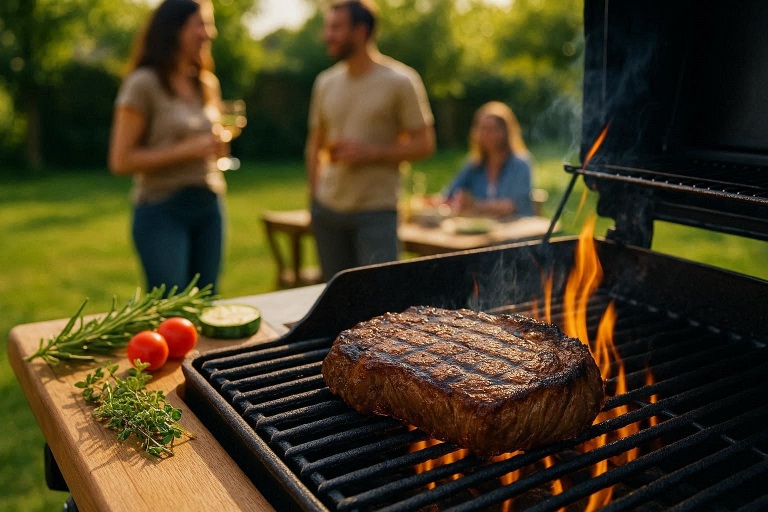
Grilling steak on a gas grill is one of the easiest (and tastiest!) ways to upgrade dinner at home. With just a few simple steps, you can turn a basic cut of beef into a juicy, restaurant-style steak—without fancy equipment or chef-level skills. The best part? A gas grill heats up quickly, gives you great temperature control, and is perfect for weeknights, family cookouts, or casual backyard barbecues.
But here’s the truth: most steak disappointments—dry meat, no sear, overcooked center—aren’t because of the grill. They happen because of small mistakes: choosing the wrong cut, skipping preheating, not knowing when the steak is actually done, or cutting into it too soon.
In this guide, you’ll learn exactly how to grill steak on a gas grill step by step. We’ll cover how to pick the right steak, how to set up your grill, the right temperatures, how long to cook for your preferred doneness, and how to rest and slice for maximum flavor. Whether you’re a complete beginner or just want more consistent results, this guide will help you get perfect, juicy steaks every time.
Choosing the Best Steak for Grilling on Gas
The first step to amazing steak is choosing the right cut. Some steaks simply perform better on a gas grill because they have the right balance of fat, tenderness, and thickness.
Ribeye is a classic grilling favorite for a reason. It has lots of marbling—those thin white streaks of fat running through the meat. When the steak hits the hot grill, that fat melts and bastes the meat from the inside, giving you a juicy, rich, beefy flavor even if you’re still learning.
Strip steak (New York strip) is a little leaner than ribeye but still has good marbling and great flavor. It’s a nice middle ground: not too fatty, not too lean, and usually very tender when cooked to medium-rare or medium.
Sirloin is more budget-friendly and a bit leaner. It isn’t quite as buttery as ribeye or strip, but if you don’t overcook it, it can still be tender and tasty. It’s a good everyday grilling steak.
T-bone and Porterhouse give you two steaks in one: a strip steak on one side and a piece of tenderloin on the other, separated by a T-shaped bone. These are impressive for guests, but they’re a little trickier because the two sides cook at slightly different speeds.
Filet mignon is the most tender cut, but also very lean. It doesn’t have as much fat, so it doesn’t have the same “beefy” flavor as ribeye. Filet is great if you like a very soft, mild steak, and it benefits from butter or a rich sauce.
For gas grilling, ideal thickness is around 1–1.5 inches. Thinner steaks cook too fast and can overcook before you get a good sear. Thicker steaks are perfect for searing over high heat, then finishing over lower heat.
Marbling matters because fat = flavor and juiciness. When the steak cooks, the marbling melts and keeps the meat moist. Look for steaks with fine, even marbling rather than big thick chunks of fat on the edges.
Fresh steak is always easiest to grill, but you can cook previously frozen steak if it has been thawed properly in the fridge. Grilling steak straight from frozen is possible, but it takes more time and control, so it’s better to thaw for consistent results.
When you visit the butcher, don’t be shy. Ask for “good grilling steaks about 1 to 1.5 inches thick with nice marbling.” You can also say you’re cooking on a gas grill and want something like ribeye, strip, or sirloin. A good butcher will be happy to guide you.
Essential Tools and Ingredients You’ll Need
You don’t need a professional outdoor kitchen to grill a great steak, but a few basic tools make the process easier and more consistent.
Start with a gas grill with a lid. The lid lets Grill the Best Steak you trap heat like an oven, which is especially helpful for thicker steaks that need a good sear and then gentle cooking to the right doneness.
An instant-read thermometer is your best friend. Instead of guessing whether the steak is done, you can check the internal temperature in seconds. This one tool alone can dramatically improve your results.
You’ll also want long-handled tongs so you can flip the steak without piercing it (which would let juices escape) and without getting too close to the heat.
A grill brush or scraper is essential for cleaning the grates before and after cooking. Cleaner grates prevent sticking and unpleasant burnt flavors from old food.
To oil the grates safely, use an oil-safe paper towel or a grill-safe brush. You dip the towel or brush lightly into oil, then run it over the hot grates with tongs.
For ingredients, keep it simple:
- Steak (your chosen cut)
- Kosher salt or sea salt – the coarse texture sticks well and seasons evenly.
- Freshly ground black pepper – for aroma and flavor.
- Neutral oil with a high smoke point like canola, vegetable, or avocado oil – this helps prevent sticking and burning.
Optional extras can take your steak from good to special:
- Garlic butter or herb butter melted over the steak as it rests adds richness and flavor.
- Marinades and rubs can add variety. Marinades are great for flavor and some tenderizing, but very sugary ones can burn on high heat. Dry rubs are easier to manage on a hot gas grill, as long as you don’t use too much sugar.
How to Prepare Your Steak Before It Hits the Gas Grill
Good preparation makes grilling much less stressful. Remove your steak from the fridge about 20–30 minutes before grilling so it can come closer to room temperature. This helps it cook Guide to Mastering Everyday Cooking more evenly from edge to center.
Next, pat the steak dry with paper towels. Removing surface moisture is key to getting a nice brown crust. If the steak is wet, it will steam instead of sear.
Salting is important, and you have two main options:
- Early salting (dry brining): Salt the steak at least 40–60 minutes before grilling, or even the night before. The salt draws out some moisture, then the meat reabsorbs it, helping season the steak more deeply.
- Right-before-grilling salting: If you’re short on time, salt just before it goes on the grill. This still boosts flavor, just not as deeply as a dry brine.
In many cases, simple seasoning is best. A generous coating of salt and freshly ground black pepper on both sides is often all you need for a great steak. Complex rubs are fun, but they can sometimes hide the natural beef flavor.
Just before grilling, lightly oil the steak. You don’t need a lot—just a thin coating to help prevent sticking and promote browning. Combine this with oiled grill grates and you’ll have fewer issues with the steak tearing or sticking when you flip it.
Setting Up Your Gas Grill for Perfect Steak
Your gas grill setup can make or break your steak. Start by preheating the grill with the lid closed for 10–15 minutes. Turn all burners to high during this time. You want the grates to get very hot so they can create a good sear.
A hot grill is the key to that deep brown crust and classic grill marks. If your grill is only warm, the steak will slowly cook and turn gray instead of developing that delicious, caramelized exterior.
After preheating, clean the grates with a grill brush or scraper to remove old food and carbon buildup. Then, using tongs, rub a lightly oiled paper towel or grill brush over the grates. This adds a thin layer of oil and helps prevent sticking.
For better control, set up two heat zones on your gas grill:
- A direct heat zone (one or two burners on high) for searing.
- An indirect heat zone (one burner on low or off) for finishing.
You’ll sear the steak over the hot, direct side to build color and flavor, then move it to the cooler side to gently reach your target internal temperature. This is especially important for thicker cuts like ribeye or T-bone.
Aim for an overall grill temperature of around 450–550°F (230–290°C) when searing steak. Many gas grills have built-in thermometers in the lid, which give you a rough idea. The exact number is less important than having a clearly hot searing zone and a cooler finishing zone.
Step-by-Step: How to Grill Steak on a Gas Grill
Now that everything is ready, here’s a simple step-by-step process you can follow every time.
- Preheat and clean the grill
- Turn all burners to high, close the lid, and preheat for 10–15 minutes. Clean the grates with a grill brush, then oil them lightly using tongs and an oiled paper towel.
- Oil the grates carefully
- This step reduces sticking. Use a small amount of oil—too much and you risk flare-ups. Always keep your hand and face away from the grates when oiling.
- Place steaks over direct heat
- Lay the steaks on the hottest part of the grill. You can grill with the lid open or closed, but closing the lid helps maintain heat for thicker cuts. Let the steak sear without moving it for a few minutes to develop color.
- Timing per side (rough guide)
- Exact times depend on thickness and grill temperature, but as a general guide for a 1–1.25 inch steak:
- Rare: 2–3 minutes per side
- Medium-rare: 3–4 minutes per side
- Medium: 4–5 minutes per side
- Start with these ranges and adjust based on your grill and your preferred doneness.
- Create grill marks (optional)
- If you want crosshatch marks, rotate the steak about a quarter turn halfway through each side’s cooking time. This is purely for looks, but it’s a fun touch.
- Move to indirect heat if needed
- For thicker steaks, after both sides are nicely seared, move the steak to the cooler side of the grill. Close the lid and let it finish cooking gently until it reaches your target temperature.
- Check internal temperature
- Use your instant-read thermometer to check doneness. Insert it into the thickest part of the steak, avoiding bone or big fat pockets. Removing the steak a couple of degrees before your target temperature allows for carryover cooking as it rests.
Follow these steps, and you’ll have a repeatable method for grilling steak on a gas grill—one that you can tweak slightly as you get to know your grill and your personal preferences.
Steak Doneness Temperatures (And How to Check Them)
One of the biggest secrets to great steak isn’t the grill—it’s knowing when to stop cooking. That’s where doneness temperatures come in. Instead of guessing by color or time, you use internal temperature to hit your perfect level every time.
Here is a simple temperature guide for steak doneness:
- Rare: 120–125°F (49–52°C) – cool red center, very soft to the touch
- Medium-rare: 130–135°F (54–57°C) – warm red center, soft but slightly springy
- Medium: 140–145°F (60–63°C) – warm pink center, more firmness
- Medium-well: 150–155°F (66–68°C) – slightly pink or mostly brown inside, quite firm
- Well-done: 160°F+ (71°C+) – fully cooked through, no pink, quite firm and drier
To use an instant-read thermometer properly, insert the probe into the thickest part of the steak, aiming for the center. Avoid touching bone, fat pockets, or the grill grates, because they can give you false readings. Insert from the side if the steak is thinner; this often gets you closer to the true center.
You also need to remember carryover cooking. When you remove the steak from the grill, it doesn’t stop cooking immediately. The internal temperature can rise by about 3–5°F (1–3°C) as it rests. That means if you want a medium-rare steak at 130–135°F, you might pull it off the grill at around 127–130°F and let it finish while resting.
Many people talk about the “finger test” for doneness, where you compare the firmness of the steak to different parts of your hand. While it can be helpful with practice, it’s not very accurate for beginners, and every cut feels different. A thermometer gives you a clear, reliable number and quickly becomes the most important tool you use when grilling steaks.
Resting, Slicing, and Serving Your Grilled Steak
Once your steak reaches the right temperature, the job isn’t quite done. How you treat the steak after it comes off the grill affects juiciness and texture just as much as cooking.
Resting is crucial. When steak cooks, the juices move toward the surface. If you cut into it right away, those juices spill out onto the cutting board instead of staying in the meat. By letting the steak rest, you give the juices time to redistribute throughout the steak, so each slice stays moist and flavorful.
As a general rule, let your steak rest for 5–10 minutes, depending on its size and thickness. A thinner steak might only need 5 minutes, while a big T-bone or ribeye might benefit from closer to 10. Place the steak on a cutting board or plate, and loosely tent it with foil if you want to keep it warm. Don’t wrap it tightly, or it can steam and soften the crust.
When it’s time to slice, pay attention to the grain of the meat. The grain is the direction in which the muscle fibers run. You want to cut against the grain, meaning across the fibers, not along them. This shortens the fibers and makes each bite more tender and easier to chew.
For serving, you don’t need anything fancy. A simple pat of herb butter or garlic butter on top of the resting steak can melt into the meat and add extra richness. Great side dishes include grilled vegetables, baked or mashed potatoes, a crisp green salad, or even corn on the cob. Keep the sides simple and let the steak be the star.
Simple Marinades and Seasoning Ideas for Gas-Grilled Steak
You don’t always have to marinate steak to get great flavor. In fact, many great steaks are seasoned with nothing more than salt and pepper. So when should you marinate, and when is simple seasoning enough?
If you’re using a well-marbled cut like ribeye or strip steak, salt and pepper only is often perfect. The fat already provides flavor and juiciness. Marinades are more useful for slightly leaner cuts, like some sirloins, or when you want a very specific flavor profile.
A basic marinade usually includes four main parts:
- Oil – helps distribute flavors and keeps the meat from drying out
- Acid – like vinegar, lemon juice, or lime juice, which can lightly tenderize the surface
- Salt – for seasoning and moisture retention
- Herbs and aromatics – such as garlic, rosemary, thyme, onion, or spices
Here are a few quick marinade ideas:
- Garlic and herb marinade:
- Olive oil, minced garlic, chopped fresh rosemary or thyme, salt, and pepper.
- Soy and brown sugar marinade:
- Soy sauce, a bit of brown sugar or honey, garlic, ginger, and a splash of oil.
- Lemon and rosemary marinade:
- Lemon juice and zest, olive oil, chopped rosemary, garlic, salt, and pepper.
For all of these, 30 minutes to a few hours in the fridge is usually enough. Don’t marinate for too long in strong acidic mixtures, or the texture can start to suffer.
If you prefer a dry rub, you can mix spices and rub them directly onto the steak. Good options include:
- Smoky paprika
- Garlic powder
- Onion powder
- Black pepper
- A touch of cayenne or chili powder if you like heat
You can still season with salt separately, since salt behaves differently than spices and helps the meat retain moisture.
Common Mistakes When Grilling Steak on Gas (And How to Avoid Them)
Even with good steak and a nice gas grill, a few common mistakes can ruin the result. The good news is that they’re easy to avoid once you know what to look for.
One big mistake is not preheating the grill long enough. If the grates aren’t hot, you won’t get a proper sear, and the steak can cook unevenly. Always give your grill 10–15 minutes to heat up.
Another is flipping the steak too often or pressing down on it. Constant flipping doesn’t give the meat time to brown properly, and pressing with a spatula squeezes out juices and causes flare-ups. Instead, let each side cook undisturbed for a few minutes, then flip once or twice at most.
Many beginners also use too much sauce or very sugary marinades over high heat. The sugar burns quickly, leaving you with a bitter, blackened exterior before the inside is done. If you’re using a sweet sauce, brush it on near the end of cooking.
Cutting into the steak too early to “check doneness” is another classic issue. This releases juices and dries out the meat. Use a thermometer instead of slicing into the steak.
Gas grills often have hot spots, so if you ignore them, some steaks may overcook while others undercook. Pay attention to which parts of your grill run hotter and rotate or move steaks as needed.
Finally, relying only on time instead of internal temperature leads to inconsistent results. Weather, grill type, steak thickness, and even starting temperature all change how long it takes to cook. Use time as a rough guide and your thermometer for final decisions.
Gas Grill Safety Tips When Cooking Steak
Safety matters just as much as flavor when grilling. Before you even turn on the gas, check the gas connections and hoses for any obvious damage or leaks. If you smell gas or suspect a leak, turn everything off and address the issue before cooking.
When lighting your grill, always keep the lid open. Lighting with the lid closed can allow gas to build up and cause a flare when it ignites. Once the burners are lit and stable, you can close the lid to preheat.
Flare-ups can happen when fat drips onto the burners or flames. To handle them, move the steak to a cooler zone of the grill instead of leaving it in the flames. You can also keep a small spray bottle of water nearby for minor flare-ups, but avoid spraying too much water onto the burners.
Practice safe handling of raw meat. Use separate plates and utensils for raw and cooked steak to avoid cross-contamination. Wash your hands after touching raw meat, and don’t reuse marinades as sauces unless you boil them first.
When you’re done grilling, properly shut down the grill by turning off the burners and the gas supply. Once the grill has cooled, clean the grates to prepare for next time. Good safety and maintenance help your grill last longer and make every steak session smoother and more enjoyable.
FAQs
How long do you grill steak on a gas grill?
For a 1–1.25 inch steak, grill about 2–3 minutes per side for rare, 3–4 for medium-rare, and 4–5 for medium. Always use an instant-read thermometer for best accuracy instead of relying only on time.
Should I grill steak with the lid open or closed?
For thinner steaks, you can grill with the lid open to better watch the sear. For thicker steaks, it’s usually better to sear over high heat, then close the lid to finish cooking more evenly.
Do you need to oil the steak or the grill grates?
Ideally, do both lightly. Brush a thin layer of oil on the steak and lightly oil clean, hot grates to reduce sticking and help browning.
What temperature should a gas grill be for steak?
For searing steak, aim for high heat—around 450–550°F (230–290°C). You can then move the steak to a slightly cooler zone if it needs more time to reach your desired doneness.
How often should I flip steak on the grill?
You usually only need to flip steak once or twice. Let each side sear undisturbed for a few minutes so it can develop good color and crust.
How do I keep my steak from sticking to the grill?
Make sure the grill is fully preheated, clean the grates well, and oil them lightly. Also pat the steak dry, oil it lightly, and avoid moving it too soon—once a crust forms, it will release more easily.
Can I grill frozen steak directly from the freezer?
Yes, you can, but it’s trickier. It takes longer, and it’s easier to overcook the outside before the inside is done, so it’s usually better to thaw steak in the fridge first.
How do I make my grilled steak more tender?
Choose a well-marbled cut like ribeye or strip, don’t overcook it, and slice against the grain. You can also use a marinade with some acidity or a dry brine with salt to help improve texture and flavor.
When should I season steak before grilling?
If you have time, salt the steak 40–60 minutes before grilling (or even a few hours) for a dry brine. If not, season generously with salt and pepper right before it goes on the grill.
Is it safe to eat steak cooked medium-rare?
For most healthy people, steak cooked to medium-rare (about 130–135°F / 54–57°C) is generally considered safe because bacteria live mostly on the surface, which is seared. Always use safe handling practices and a clean grill to reduce risk.