
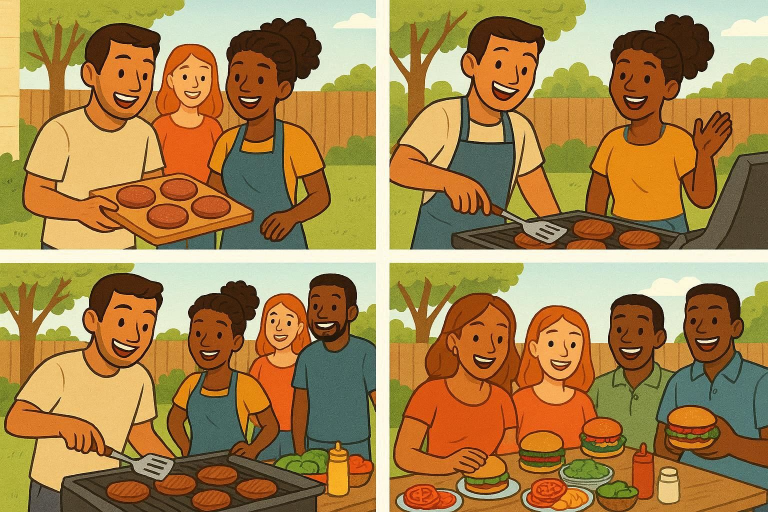
There’s nothing like biting into a juicy, flame-kissed burger fresh off the grill—crispy on the outside, tender and full of flavor on the inside. You don’t need a fancy restaurant or special equipment to enjoy that kind of burger at home. With a simple gas grill and a few basic tips, you can turn your backyard into your own burger spot.
A gas grill makes the whole process easier and more controlled. You can preheat quickly, adjust the temperature with a knob, and avoid the mess of charcoal. That means less stress and more focus on what really matters: building the perfect burger.
In this guide, you’ll learn step by step how to grill burgers on a gas grill, from choosing the right meat and forming patties to setting the correct heat, timing the cook, and adding toppings at just the right moment. Along the way, you’ll get practical tips to avoid common mistakes like dry, burned, or undercooked burgers. By the end, you’ll feel confident firing up your gas grill and serving juicy, delicious burgers every time.
Why Gas Grills Are Great for Burgers
Grilling burgers on a gas grill is one of the easiest ways to get juicy, consistent results without a lot of stress. Gas grills shine when it comes to convenience. You simply turn a knob, press the ignition, and the burners light up. Within 10–15 minutes, your grill is hot and ready to cook. No messing with charcoal, lighter fluid, or waiting a long time for coals to ash over.
Another big advantage is heat control. With a gas grill, you can adjust the temperature just like you would on a stove. If the burgers are cooking too fast, turn the heat down slightly. If they need a stronger sear, bump the heat up. This kind of control makes it easier, especially for beginners, to avoid burned outsides and raw centers.
Gas grills also provide a more consistent temperature across the grates. This means you can cook multiple burgers at once and expect them to finish at about the same time. That’s perfect for feeding a family or a small group of friends.
You also get a cleaner burn with gas. There’s usually less smoke and fewer flare-ups compared to charcoal, which some people prefer, especially in smaller outdoor spaces or on balconies where heavy smoke can be a problem. For busy weeknights and casual weekend cookouts, a gas grill offers a dependable, easy way to make delicious burgers whenever you’re craving them.
Gas vs. Charcoal for Burger Flavor
Charcoal lovers often argue that charcoal gives a deeper, smokier flavor, and that can be true. However, gas grills can still produce excellent flavor, especially when you use quality beef and good seasoning. Much of what we love in a burger comes from the Maillard reaction—browning on the surface of the meat—rather than from smoke alone.
On a gas grill, you can still get that beautiful sear and slight char on the outside of your burger. If you really want more smoky flavor, you can even use a smoker box with wood chips on a gas grill. For many home cooks, the difference in taste is small compared to the huge gain in convenience and control.
When to Choose Gas Over Charcoal
Gas is a great choice when you:
- Want dinner on the table quickly after work
- Don’t want to deal with charcoal, ash, and extra cleanup
- Are cooking for a group and need steady, predictable heat
- Prefer an easier learning curve and fewer flare-ups
If you grill often and value reliability and speed, a gas grill is hard to beat for burgers.
Essential Tools and Ingredients
To make great burgers on a gas grill, you don’t need fancy gadgets—but a few basic tools and the right ingredients make a big difference.
Start with the tools:
- Gas grill with working burners and lid – The lid helps trap heat, cook the burgers evenly, and melt cheese.
- Grill brush and scraper – Clean grates are less sticky and give better grill marks.
- Tongs and spatula – Tongs for moving things around the grill, and a sturdy spatula for flipping burgers.
- Instant-read thermometer – This is key for checking doneness without cutting into the burgers and losing juices.
- Oil and paper towels – Lightly oiling the grates helps prevent sticking.
Next, focus on the ingredients. The star of the show is the beef:
- Ground beef (80/20 or 85/15) – This means 80% lean, 20% fat (or 85/15). The fat adds juiciness and flavor. Too lean, and you risk dry, crumbly burgers.
- Salt and pepper – Simple seasoning is often best. A generous sprinkle of both brings out the beef’s natural flavor.
- Optional seasonings – Garlic powder, onion powder, smoked paprika, or a favorite burger seasoning blend can add extra depth.
Don’t forget the bun and toppings. They complete the burger experience:
- Buns – Brioche, sesame seed, or potato rolls are popular choices. Look for buns that are soft but sturdy enough to hold a juicy patty.
- Toppings – Cheese slices (cheddar, American, Swiss), lettuce, tomato, onion, pickles, and sauces like ketchup, mustard, mayo, or special burger sauce.
With these tools and ingredients ready, you’ll have everything you need to build flavorful, well-cooked burgers from start to finish.
Prepping Your Gas Grill for Burgers
Good burgers start with a properly prepared grill. Before you even form your patties, spend a few minutes getting your gas grill ready.
First, check your propane level and connections. Make Grill the Best Burgers sure there’s enough gas for the whole cooking session, and inspect hoses and connections to ensure there are no leaks. Safety should always come first.
Next, preheat the grill. Turn the burners to medium-high or high heat, close the lid, and let the grill heat up for about 10–15 minutes. Preheating helps prevent sticking and gives you those classic grill marks and a nice sear.
Once it’s hot, clean the grates with a grill brush or scraper. Removing old bits of food and carbon helps your burgers cook more evenly and taste fresher.
After brushing, oil the grates lightly. Fold a paper towel, dip it in a high-smoke-point oil (like canola or vegetable oil), and use tongs to rub it over the grates. This thin layer of oil reduces sticking without causing flare-ups.
If your grill is large enough, create heat zones. You can keep one side on medium-high for direct searing and the other side on medium or low for gentler cooking. This gives you flexibility: if a burger is browning too quickly, you can slide it to the cooler side to finish cooking without burning.
Ideal Grill Temperature for Burgers (in °F/°C)
For most burgers, an ideal grill temperature is around 400–450°F (200–230°C). This range gives you a strong sear on the outside while still allowing the inside to cook to your desired doneness.
If your grill has built-in thermometers, use them as a guide, but an oven thermometer placed on the grates can give an even more accurate reading.
How to Create Direct and Indirect Heat Zones
On a gas grill, creating heat zones is simple:
- Turn one or two burners to medium-high for direct heat. This is where you’ll sear the burgers.
- Turn one burner to low or even off to create an indirect heat zone. This cooler side is helpful if a burger needs more time to cook inside without getting too dark outside.
You can start burgers on direct heat for the sear, then move them to indirect heat if needed. This method gives you more control and helps prevent burnt burgers.
Forming and Seasoning the Burger Patties
Even with the best grill setup, your burgers won’t turn out great if the patties are poorly made. Taking a little care during this step pays off in flavor and texture.
Start by choosing the right fat ratio. Ground beef that’s 80/20 is a classic choice for burgers because it has enough fat to stay juicy and flavorful. Leaner blends like 90/10 may seem healthier, but they often cook up dry, especially on a hot grill.
When forming patties, handle the meat gently. Scoop out a portion of the meat and press it together just enough so it holds its shape. Overworking the meat can make burgers dense and tough. Think of it like forming a snowball rather than kneading dough.
Shape the patties so they’re slightly larger than the buns. Burgers shrink as they cook, so starting a little bigger ensures they fit the bun nicely when they’re done. Aim for an even thickness, so they cook at the same rate throughout.
A small but important trick is to add a thumbprint or dimple in the center of each patty. As the burger cooks, it tends to puff up in the middle. The dimple helps it stay flatter and cook more evenly.
When it comes to seasoning, keep it simple and generous. Sprinkle both sides with salt and pepper just before the patties go on the grill. Salt draws moisture out if it Guide to Mastering Everyday Cooking sits too long, so seasoning right before cooking helps maintain juiciness. You can add other dry seasonings at this point too, but there’s no need to mix them into the meat unless you prefer that style.
Ideal Burger Patty Thickness
For gas grilling, a good thickness is about ¾ inch to 1 inch (2–2.5 cm). Thinner patties cook very quickly and can dry out, while very thick patties take longer and are harder to cook evenly. A medium thickness gives you a nice sear outside and time to reach your preferred doneness inside.
When to Season Burgers for Best Flavor
The best time to season burgers with salt is right before they hit the grill. This keeps the outside flavorful without giving the salt time to pull too much moisture out of the meat. Pepper and other spices can also be added at this stage.
If you like to mix seasonings into the meat, do it gently and as late as possible in the process. The more you mix, the more you compress the meat, so try to combine everything quickly and lightly.
By picking the right beef, shaping your patties with care, and seasoning at the right time, you set yourself up for juicy, well-browned burgers that cook beautifully on your gas grill.
How to Grill Burgers on a Gas Grill (Step-by-Step)
Grilling burgers on a gas grill is simple once you follow a clear process. Think of it as a small routine: heat the grill, cook the patties, melt the cheese, toast the buns, then let everything rest. Each step has a purpose.
Step 1: Preheat the grill
Turn your gas grill to medium-high heat, aiming for around 400–450°F (200–230°C). Close the lid and let it preheat for about 10–15 minutes. A hot grill gives you a good sear and helps prevent sticking.
Step 2: Place patties on direct heat, dimple side up
Set your formed burger patties directly over the burners, on the hot part of the grill. The little thumbprint or dimple should face up. This helps the burgers cook more evenly and reduces puffing in the center.
Step 3: Close the lid for even cooking
Close the grill lid to trap heat. This turns your grill into an oven and cooks the burgers from both the top and bottom. It also speeds up cooking and keeps the temperature steady.
Step 4: Grill the first side 3–5 minutes (no pressing down!)
Let the burgers cook undisturbed for 3–5 minutes. Don’t press them down with the spatula. Pressing squeezes out juices and dries them out. Watch for juices starting to pool on top and the edges looking slightly cooked.
Step 5: Flip once; grill 3–5 more minutes depending on doneness
Flip each burger gently using a spatula. Cook the second side for another 3–5 minutes, depending on how done you like them and how thick they are. Use this time window as a guide and adjust after you check internal temperature.
Step 6: Add cheese in the final 1–2 minutes, close lid to melt
If you’re making cheeseburgers, place cheese slices on top during the last 1–2 minutes of cooking. Close the lid so the heat can melt the cheese into a gooey layer over the patties.
Step 7: Toast buns on indirect heat until lightly golden
Move the buns to a cooler part of the grill (indirect heat) or turn one burner down to low. Place the cut sides down and toast them until they’re lightly golden and slightly crisp. This usually takes just a minute or two.
Step 8: Rest burgers briefly (2–3 minutes) before serving
When the burgers are done, transfer them to a plate and let them rest for 2–3 minutes. This short pause lets the juices settle so they don’t run out as soon as you bite in.
When and How Often to Flip Burgers
For best results, flip burgers only once. Start on one side, cook until you see browning on the edges and juices forming on top, then flip. Constant flipping doesn’t make them cook faster; it just makes it harder to get a good crust.
How to Keep Burgers from Sticking to the Grill
To reduce sticking:
- Start with a fully preheated grill
- Clean the grates before cooking
- Oil the grates lightly using a paper towel
- Don’t try to move the burger too soon; once it has a sear, it will release more easily
If you tug gently with the spatula and the patty still grips the grate, give it another 30 seconds and try again.
Burger Doneness and Food Safety
A big part of grilling burgers is getting the doneness right while staying safe. Because ground beef mixes meat from different areas, harmful bacteria can be spread throughout the patty, not just on the surface. That’s why handling temperature properly is so important.
Use an instant-read thermometer to check the internal temperature. Insert it into the center of the thickest part of the burger. This gives you accurate information without cutting the burger open.
Here are common temperature ranges:
- Medium-rare: about 130–135°F (54–57°C)
- Medium: about 140–145°F (60–63°C)
- Medium-well: about 150–155°F (65–68°C)
- Well-done: about 160°F+ (71°C+)
For safety, many guidelines recommend cooking ground beef to 160°F (71°C), especially if serving children, pregnant people, older adults, or anyone with a weaker immune system.
After you remove the burgers from the grill, remember carryover cooking. The internal temperature can rise a few degrees as the burger rests. If you want a medium burger, you can pull it off the grill a couple of degrees before your target, knowing it will climb slightly while resting.
Checking Doneness Without Cutting the Burger
Cutting into the burger to check doneness releases juices. Instead, rely on:
- An instant-read thermometer for accuracy
- Visual cues: firmer texture, clear juices rather than red
- Experience: over time, you’ll learn how your grill and patties behave
Still, the thermometer is the most reliable tool and avoids guesswork.
Why Temperature Matters More Than Time
Cooking times are only estimates. Grill temperature, patty thickness, and even wind or outside temperature can change how long burgers take to cook. That’s why temperature beats timing. Use minutes as a starting point, but always confirm with a thermometer when possible.
Toppings, Buns, and Flavor Upgrades
Once you’ve mastered the cooking part, toppings and buns are where you can really have fun and personalize your burgers.
Classic toppings never go out of style:
- Cheese (American, cheddar, Swiss)
- Lettuce
- Tomato slices
- Onion (raw, grilled, or caramelized)
- Pickles
- Ketchup, mustard, and mayo
For a more gourmet feel, try:
- Caramelized onions
- Sliced avocado or guacamole
- Fried egg
- Crispy bacon
- Jalapeños or other spicy peppers
Choosing the right bun is important too. You want something soft enough to bite easily, but strong enough to hold the juices and toppings. Brioche, sesame seed buns, and potato rolls are all popular options. Toasting the buns on the grill adds texture, prevents sogginess, and brings out their flavor.
Simple sauce ideas can lift your burger from basic to special:
- Garlic mayo: Mix mayonnaise with minced garlic and a pinch of salt.
- Smoky burger sauce: Combine ketchup, mayo, a little mustard, and smoked paprika.
- Spicy mayo: Stir hot sauce or sriracha into mayo for a gentle kick.
Best Cheeses for Gas-Grilled Burgers
Some cheeses melt better and pair well with the smoky flavor of the grill:
- American cheese – super melty and classic
- Cheddar – sharp, flavorful, and rich
- Swiss or Gruyère – nutty and smooth
- Pepper Jack – creamy with a bit of spice
Add cheese in the final minute or two, close the lid, and let it melt into the patty.
Building the Perfect Burger Stack
A smart stacking order helps with both flavor and structure. For example:
- Bottom bun
- Sauce
- Lettuce (acts as a barrier to keep bun from getting soggy)
- Burger patty with cheese
- Tomato, onion, pickles
- More sauce if you like
- Top bun
This order keeps things stable and spreads moisture and flavor evenly.
H2: Common Mistakes When Grilling Burgers (and How to Avoid Them)
Even experienced cooks make burger mistakes. Knowing what to avoid will improve your results right away.
- Overworking the meat:
- Too much mixing or pressing when forming patties makes them tight and tough. Handle the meat gently.
- Pressing down on patties:
- Pushing with a spatula squeezes juices out onto the grill. It might sound satisfying, but it dries out the burger.
- Flipping too often or too early:
- Constant flipping stops a crust from forming and can cause sticking. Let the burger sear before you flip.
- Cooking on too high heat:
- Very high heat can burn the outside while leaving the center undercooked. Medium-high is usually best.
- Not preheating the grill:
- A cold or barely warm grill leads to sticking and uneven cooking. Always preheat.
- Skipping the rest time:
- Resting the burgers for a few minutes makes them juicier and more enjoyable to eat.
What to Do If Burgers Flare Up
If you see big flames:
- Move the burgers to a cooler zone or indirect heat
- Close the lid partially to limit oxygen
- Avoid spraying water; instead, control the fuel and airflow
Flare-ups usually come from fat dripping onto the flames, so trims and proper heat control help.
How to Fix Dry Burgers
If a batch turns out dry:
- Add moisture with sauces (mayo, burger sauce, barbecue sauce)
- Use juicy toppings like tomato and grilled onions
- Next time, choose a higher-fat beef blend or reduce cooking time slightly
Troubleshooting: Dry, Crumbly, or Undercooked Burgers
When something goes wrong, there’s usually a clear cause and an easy fix.
Dry or crumbly burgers often come from meat that’s too lean, overcooking, or pressing the patties too much. Falling-apart burgers can also mean you handled the meat too gently without enough shaping, or the patties are too thin.
If burgers are undercooked, your grill may not be hot enough, the patties may be very thick, or you may not be cooking them long enough on each side. Use your heat zones and a thermometer to tighten this up.
To improve future cooks:
- Adjust cooking time based on patty thickness
- Use indirect heat once the outside is well-browned
- Avoid pressing and flipping repeatedly
If burgers are slightly overcooked, you can still save the meal. Pile on toppings, sauces, and juicy vegetables to add moisture and flavor.
Choosing the Right Fat Ratio for Juiciness
Aim for 80/20 or 85/15 ground beef. The fat melts during cooking and keeps the inside moist. Very lean meat, like 90/10, is more likely to dry out on a hot grill.
When to Add Breadcrumbs or Eggs (If Ever)
Most classic burgers don’t need breadcrumbs or eggs. Those are more common in meatloaf or meatballs. However, if your burgers keep falling apart, a small amount of egg or breadcrumbs can act as a binder. Use only a little and mix gently, or you’ll change the texture too much.
By understanding what causes common issues and how to fix them, you can fine-tune your technique and enjoy juicy, flavorful burgers from your gas grill every time.
FAQs
How long do you grill burgers on a gas grill?
For average ¾–1 inch thick patties, grill about 3–5 minutes per side on medium-high heat. Thinner burgers cook faster; thicker ones may need an extra minute or two. Always use time as a guide and temperature to confirm doneness.
What temperature should my gas grill be for burgers?
Aim for 400–450°F (200–230°C) for most burgers. This gives you a good sear on the outside while cooking the inside evenly. Use direct heat for searing, and move to a slightly cooler zone if the burgers brown too fast.
Should I grill burgers with the lid open or closed?
For burgers, it’s usually best to cook with the lid closed. This traps heat, cooks the burgers more evenly, and helps melt cheese. You can leave it open briefly when searing or flipping, but close it again to finish cooking.
How do I keep burgers from sticking to the gas grill?
Start with a hot, clean grill and brush the grates well. Lightly oil the grates with a paper towel dipped in oil, and avoid moving the burgers too soon. Once they develop a good sear, they’ll release more easily.
When should I add cheese to my burgers on the grill?
Add cheese during the last 1–2 minutes of cooking. Place the slices on top, close the lid, and let the heat melt the cheese over the patty. Take them off as soon as the cheese looks melted and gooey.
How do I know when burgers are done without cutting them?
The most reliable method is an instant-read thermometer inserted into the center of the patty. You can also use a gentle touch test: softer feels rarer, firmer feels more well-done. But for safety and accuracy, temperature is best.
Can I grill frozen burgers on a gas grill?
Yes, you can grill frozen burgers, but they’ll take longer to cook. Use medium heat, don’t crank it too high, and expect a few extra minutes per side. Always check that the internal temperature reaches at least 160°F (71°C) for safety.
Why do my burgers puff up in the middle?
Burgers puff up because the outer meat contracts as it cooks, pushing the center upward. To prevent this, press a small thumbprint or dimple in the center of each patty before grilling. This helps them stay flatter and cook more evenly.
How thick should burger patties be for gas grilling?
A good thickness is about ¾–1 inch (2–2.5 cm). This thickness gives you enough interior to stay juicy while still cooking through without burning the outside. Thicker patties need lower heat and more time.
What’s the best meat blend for juicy gas-grilled burgers?
For most home grills, 80/20 ground chuck (80% lean, 20% fat) is ideal. You can also use blends that include brisket or short rib for extra flavor. The key is enough fat to keep the burgers moist and tender on the grill.