
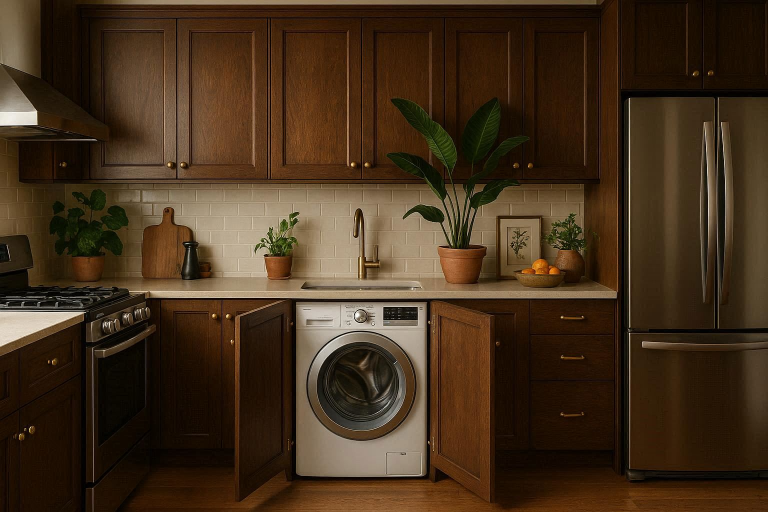
Having a washer and dryer in the kitchen can be a convenient solution, especially in smaller homes or apartments where space is at a premium. However, laundry appliances can disrupt the aesthetic of a sleek, modern kitchen, often looking out of place among stylish cabinetry, countertops, and appliances. Whether you’re renovating your kitchen or simply looking for ways to hide your laundry appliances, there are several ways to make your washer and dryer blend seamlessly with the rest of the room. In this article, we’ll explore a variety of stylish and practical solutions for covering up a washer and dryer in the kitchen, from built-in cabinetry to simple curtain solutions.
Why Covering Up Washer and Dryer in Kitchen Makes Sense
Before diving into the various methods, let’s explore why you might want to conceal your washer and dryer in the kitchen. There are a few reasons why this approach makes sense for many homeowners:
- Aesthetic Appeal: Laundry appliances can be bulky and unattractive, clashing with the clean lines and design of a modern kitchen. Hiding them ensures the space remains visually appealing.
- Space Efficiency: If you have limited space, integrating your washer and dryer into the cabinetry allows you to make use of every square inch while maintaining a streamlined design.
- Improved Functionality: By hiding your washer and dryer, you can create a more organized kitchen environment. It keeps the focus on food preparation and dining while providing easy access to laundry tasks when needed.
- Increased Property Value: A well-designed and functional kitchen is always appealing to potential buyers. By incorporating a hidden laundry area, you improve the overall functionality of the space.
Common Methods to Hide Washer and Dryer
There are multiple ways to cover up your washer and dryer in the kitchen. Let’s look at some of the most common methods to keep your laundry appliances hidden but accessible.
Built-in Cabinetry & Custom Cupboards
One of the most popular and stylish ways to cover up a washer and dryer is by incorporating them into custom cabinetry. This option allows you to kitchen laundry area create a seamless look where the appliances are concealed behind cabinetry that matches the rest of your kitchen. Built-in cabinetry can also hide any pipes, vents, and connections.
- How to implement: Choose a cabinet design that aligns with the rest of your kitchen style (modern, traditional, rustic, etc.). A custom cabinet with hinged doors can be installed to cover the washer and dryer, ensuring they are easily accessible but not visible when not in use.
- Pro Tip: Opt for a soft-close mechanism for the doors to avoid noisy slamming when opening and closing.
Under-Counter Installation with Matching Doors
Another effective method is placing the washer and dryer under the counter, with matching doors attached to the cabinetry. This is a great option for kitchens with an island or a large counter space where you can hide the Healthy Cooking Gadgets Every Home Should Have laundry appliances beneath. This approach works well in compact kitchens, as it minimizes the visual impact of large laundry machines.
- How to implement: Choose a compact washer and dryer unit that fits the space below the countertop. The doors should be hinged or pull-out, making it easy to access the machines.
- Pro Tip: Make sure to leave some ventilation space behind the units to avoid overheating.
Stackable Washer-Dryer in Tall Cabinets
If your kitchen has tall cabinets, a stackable washer and dryer could be a perfect solution for hiding your laundry machines. This arrangement is space-efficient and allows you to preserve valuable counter and floor space while keeping the washer and dryer neatly tucked away.
- How to implement: Stackable washer-dryer combos can be installed inside a tall cabinet, with front-facing doors that match the rest of your cabinetry.
- Pro Tip: Install a pull-out shelf below the stacked units to make it easier to sort laundry or fold clean clothes.
Sliding, Bi-Fold, or Pocket Doors
For a more flexible and stylish approach, consider using sliding, bi-fold, or pocket doors to cover the washer and dryer. These types of doors don’t require the space of traditional cabinet doors, making them ideal for smaller kitchens or areas where space is limited.
- How to implement: Pocket or bi-fold doors can be mounted on a track, so they slide or fold to the side when you need access to your laundry appliances. These doors can be designed with various materials and finishes to match your kitchen style.
- Pro Tip: Choose doors with a soft-close function to ensure they don’t make noise when opened or closed.
Curtains or Fabric Skirts — A Budget-Friendly Option
For a quick and cost-effective solution, consider using curtains or fabric skirts to conceal your washer and dryer. This approach is particularly useful in rental kitchens or situations where a more temporary solution is needed.
- How to implement: Install a curtain rod or tension wire above the washer and dryer, and hang fabric that complements your kitchen decor. You can use a simple fabric panel, a tailored skirt, or even a shower curtain.
- Pro Tip: Choose a fabric that is machine washable for easy maintenance, especially if it’s near water.
Laundry Closet / Utility Nook Integration
If you have extra space in a corner of your kitchen or nearby, consider creating a small laundry closet or utility nook where the washer and dryer can be hidden behind closed doors. This solution is often used in open-concept homes to keep laundry tasks out of sight but still easily accessible.
- How to implement: Build a small closet or niche area, perhaps in an unused corner or behind a partition, to house the washer and dryer. You can add shelves for detergents, fabric softeners, or other laundry supplies.
- Pro Tip: Ensure the closet has proper ventilation and is accessible for regular maintenance and repairs.
How to Plan and Execute a Laundry Hideaway in Your Kitchen
Successfully hiding your washer and dryer in the kitchen requires some careful planning and consideration of several factors to Best Kitchen Appliances for Small Homes ensure that the solution is both functional and aesthetically pleasing.
1. Measure & Check Clearance (depth, ventilation, access)
Before committing to a design, ensure that the space is large enough for your appliances, and check that there is adequate clearance for proper ventilation. Washing machines and dryers need airflow to avoid overheating.
- Pro Tip: Don’t forget to leave enough space for the washer and dryer doors to open fully, especially if you are using hinged doors or cabinets.
Ventilation & Drainage Considerations
A key element when hiding a washer and dryer is ensuring proper ventilation and drainage. Dryers, especially, require good airflow to operate safely. If you’re placing them in cabinetry or behind doors, be sure to account for ventilation.
- Pro Tip: If your dryer is vented, install a vent that leads to the outside of your home. If it’s a condenser dryer, ensure there is space for water drainage.
Matching Style: Cabinets, Color & Finishes
Ensure the cabinetry or doors you choose match the style of your kitchen. Whether you’re aiming for a sleek modern look or a rustic charm, the style of the hiding solution should integrate seamlessly with your existing kitchen design.
- Pro Tip: If your kitchen has wood cabinets, opt for cabinetry that matches in both material and finish. If your kitchen is minimalist, choose matte or high-gloss finishes for a modern look.
Storage & Workflow: Shelves, Folding Countertops, Detergent Storage
While hiding your washer and dryer is important, consider adding storage features that can enhance the functionality of your kitchen laundry area. Shelves for detergents, a folding countertop, or a pull-out drawer for laundry essentials can make the space more efficient.
- Pro Tip: Make sure your storage is easy to access. For example, a pull-out basket drawer or a shallow shelf above the washer/dryer combo can keep laundry essentials organized and within reach.
Ergonomics: Comfort, Accessibility, Loading/Unloading Ease
When designing your laundry hideaway, ensure that the machines are positioned at an ergonomic height for easy loading and unloading. A poorly positioned washer or dryer can lead to back strain or difficulty reaching clothes.
- Pro Tip: If possible, raise the washer and dryer slightly off the floor to make it easier to load and unload laundry.
Tips & Tricks for a Seamless, Aesthetic Integration
- Consistency: Keep your laundry area consistent with the overall kitchen design, especially when it comes to finishes and materials. The washer and dryer should be hidden, but the design should feel like a natural extension of your kitchen.
- Camouflage with Panels: To truly hide the appliances, consider using custom panels on your cabinets or doors that mirror your kitchen’s cabinetry, so the washer and dryer blend seamlessly.
- Functional Accessories: Incorporate thoughtful design features like towel racks, detergent trays, or baskets into your laundry hideaway. This creates a functional, organized space without sacrificing style.
Common Mistakes to Avoid When Hiding Washer & Dryer
- Poor Ventilation: Don’t neglect proper airflow when designing your hidden laundry space. A lack of ventilation can cause excess moisture buildup, which can damage your kitchen cabinetry and create a breeding ground for mold and mildew.
- Inaccessible Machines: Avoid designing a laundry area that makes it difficult to access the washer and dryer. Make sure there’s enough space to open the doors and access the machines for maintenance and repairs.
- Overcrowding the Space: While it’s tempting to hide everything, overcrowding your kitchen with too many features or cabinets can make the room feel cramped. Keep the design balanced and functional.
Comparison of Different Solutions — Which Works Best When?
When deciding how to cover up your washer and dryer in the kitchen, consider the following factors:
- Built-in Cabinet vs Curtain vs Sliding Door vs Utility Nook: Each solution has its pros and cons based on space, budget, and design preferences. For example, built-in cabinetry offers a sleek, seamless look but may require custom work, while a curtain is an affordable, quick solution but may lack long-term durability.
- Pros & Cons:
- Built-in Cabinet: Professional look, but often costly.
- Curtain: Budget-friendly, but may not feel as permanent.
- Sliding Doors: Stylish and space-efficient but may require a track system.
- Utility Nook: Offers the most privacy and noise reduction but requires additional space.
FAQs
What’s the easiest way to hide a washer and dryer in a kitchen?
Using sliding doors or curtains is often the easiest and most affordable way to hide laundry appliances without a full renovation.
Can I stack a washer and dryer in kitchen cabinets?
Yes, stacking your washer and dryer in tall kitchen cabinets is a great way to save space and conceal the appliances.
Do I need extra ventilation if my dryer is inside a cupboard?
Yes, adequate ventilation is essential to prevent overheating. Ensure your dryer is vented correctly.
Is it okay to put a washing machine under the kitchen counter?
Yes, as long as there is enough space for drainage, ventilation, and proper machine operation.
How much space do I need to hide washer and dryer in a cabinet?
You’ll need at least 2–3 inches of clearance on each side for proper ventilation and easy access.
Should I use sliding doors, curtains, or standard cabinet doors to conceal laundry appliances?
This depends on your design preference, space, and budget. Sliding doors are space-efficient, while curtains are budget-friendly.
How can I make a kitchen laundry area look seamless and not obvious?
Use custom cabinetry or matching panels to blend the laundry appliances with your kitchen’s style.
Conclusion
Concealing a washer and dryer in your kitchen is a great way to maintain a clean, organized, and visually appealing space while still providing access to laundry appliances when needed. Whether you choose built-in cabinetry, sliding doors, or a simple fabric curtain, there’s a solution for every style and budget. Plan carefully, consider ventilation and accessibility, and enjoy a seamless integration that enhances both the look and functionality of your kitchen.