
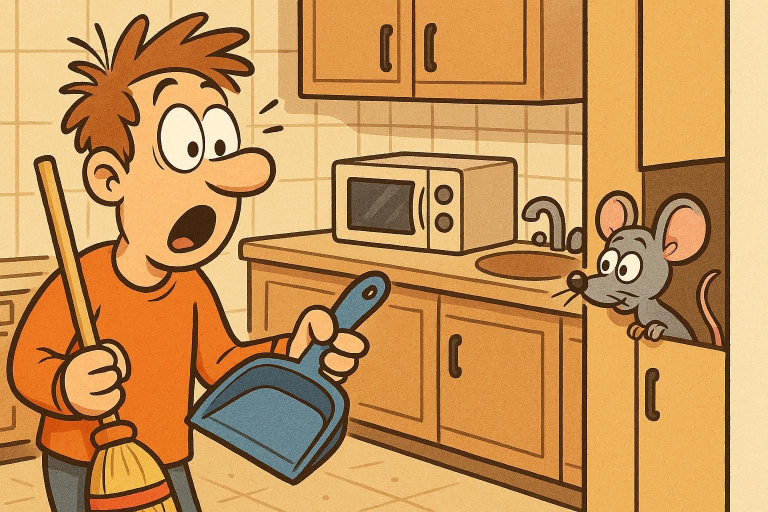
Discovering mouse droppings in your kitchen is an unsettling moment. It’s a clear red flag—you have an unwanted houseguest, or possibly several, and they are contaminating the heart of your home.
The immediate reaction is often panic, followed by the urge to quickly sweep or vacuum the mess away.
Stop right there.
Handling mouse droppings incorrectly is not just messy; it’s a genuine health risk. Rodent waste can carry harmful pathogens, including Hantavirus, Salmonella, and Lymphocytic Choriomeningitis (LCMV).
This guide will walk you through the essential, expert-approved steps—starting with the Centers for Disease Control and Prevention (CDC) protocol—to safely clean, disinfect, and eradicate the problem, ensuring your kitchen is safe and healthy once again.
Immediate Action Plan: Don’t Panic, Prepare!
Your first move should not be cleaning, but preparation. The immediate goal is to prevent airborne contaminants from spreading and to protect yourself.
Why Finding Droppings is a Serious Health Risk (But Not a Crisis)
Mice are notorious carriers of disease, often transmitting Cleaning Guide for Home & Kitchen pathogens through their urine, saliva, and, most commonly, their feces (mouse droppings).
When dry mouse droppings are disturbed by sweeping or vacuuming, tiny particles aerosolize (become airborne), which can be inhaled, leading to serious illness.
-
Hantavirus Pulmonary Syndrome (HPS): The most severe risk, often spread through inhaling aerosolized virus from rodent droppings.
-
Salmonellosis: Contracted by consuming food or water contaminated by droppings.
-
Allergens: Rodent dander and waste can trigger asthma attacks and allergic reactions.
A single sighting of droppings signals an issue that requires immediate, careful attention, but it is entirely manageable with the right plan.
The Absolute Must-Dos Before You Begin Cleanup
Before you even touch a paper towel, take these critical, protective steps:
-
Ventilate: Open all windows and doors in the kitchen and surrounding areas. Leave the space for at least 30 minutes to allow fresh air to circulate and disperse any existing airborne contaminants.
-
Quarantine Food: Immediately inspect and remove all potentially contaminated food items. Anything with signs of chewing, open packaging, or located near droppings should be double-bagged and discarded.
-
Clear the Area: Move any items (appliances, dishes, containers) that are near the droppings to allow for a comprehensive cleanup.
CDC-Recommended Safe Cleanup: A Step-by-Step Protocol
This protocol is essential for minimizing health risks when dealing with mouse droppings in kitchen areas.
Gathering Your Protective Gear and Supplies
Personal protection is paramount. Do not proceed without these items:
| Category | Item | Purpose |
| Personal Protection | Rubber or Plastic Gloves (non-absorbent) | Protect hands from contact. |
| Personal Protection | N95 Respirator/Mask (or better) | Prevents inhalation of airborne particles. |
| Disinfectant | Bleach Solution (1 part bleach to 10 parts water) OR EPA-registered disinfectant | Kills germs and pathogens. |
| Cleanup Tools | Paper Towels (large quantity) | For soaking up droppings and disinfectant. |
| Disposal | Plastic Garbage Bags (heavy-duty, sealable) | For safe disposal of all contaminated materials. |
The Critical First Step: Ventilation and Soaking (Do NOT Sweep or Vacuum!)
This step is where most people make a dangerous mistake. Never dry-sweep or vacuum droppings, as this will launch dangerous viral particles into the air.
-
Ventilate: Ensure the 30-minute ventilation period is complete.
-
Gear Up: Put on your gloves and respirator mask.
-
Soak: Generously spray all droppings, urine, and nesting materials with your bleach solution or EPA-registered disinfectant. The goal is to thoroughly wet all waste.
-
Wait: Allow the disinfectant to soak for at least 5 minutes (or according to the product label) to kill any pathogens effectively.
Safe Removal of Droppings and Contaminated Materials
Once the droppings are thoroughly soaked and disinfected, they can be safely removed.
-
Use paper towels to wipe up the soaked mouse droppings and urine.
-
Place all used paper towels, gloves, and any other contaminated disposable materials (like food packaging or soiled cardboard) into a heavy-duty plastic bag.
-
Double-Bag the waste by sealing the first bag and then placing it inside a second plastic bag, sealing that one tightly as well.
-
Dispose of the sealed bag immediately in a covered, outdoor trash bin.
Final Disinfection of Hard Surfaces
After the droppings are removed, you must clean and disinfect the entire area.
-
Wipe Down: Clean all hard, non-porous surfaces (countertops, cabinets, hard floors, etc.) with the bleach solution or disinfectant.
-
Mop: Mop floors with a disinfectant solution.
-
Rinse: Wipe down the area a final time with clean water and dry the surfaces.
-
Personal Hygiene: Remove your gloves and immediately wash your hands thoroughly with soap and warm water for at least 20 seconds.
Cleaning Contaminated Areas Beyond the Floor
Mice don’t just stick to the floor. They move through cabinets, drawers, and pantries, leaving mouse droppings in kitchen storage areas.
How to Clean Mouse Droppings from Cabinets and Drawers
-
Empty Completely: Remove every item from the affected cabinet or drawer.
-
Inspect: Check all corners, cracks, and the backs of drawers for further droppings or nesting material.
-
Disinfect & Wipe: Follow the same ventilation and soaking protocol (Section 2.2 and 2.3). Spray disinfectant, let it sit, and wipe up with paper towels.
-
Sanitize: Clean the entire interior with the bleach solution, ensuring you reach the back and corners. Use a disinfectant safe for wood or shelf liners if necessary.
Sanitizing Dishes, Cookware, and Utensils
Any dishes, cutlery, or cookware stored in an area with droppings must be considered contaminated, even if you don’t see direct contact.
-
Dishes: Wash all dishes and utensils in a dishwasher on the hottest setting available, or hand wash with hot water and soap, followed by a soak in a mild bleach solution (1 teaspoon of bleach per quart of water) for two minutes, and then a thorough rinse.
-
Cookware: Soak and scrub pots and pans in hot, soapy water.
Safely Handling Contaminated Clothing and Linens
If you found droppings in a storage closet near the kitchen (containing aprons, linens, or towels), they need immediate sanitization.
-
Laundering: Wash all contaminated items in a washing machine using laundry detergent and the hottest water setting appropriate for the fabric.
-
Drying: Dry the items on a high heat cycle.
Finding the Source: Where Are They Coming From?
Cleaning the droppings is only the first part of the job. You must find out how the mice got in and why they were attracted to your kitchen.
Identifying Common Mouse Entry Points (Cracks, Pipes, Vents)
Mice can squeeze through astonishingly small gaps—a space the size of a dime (about 1/4 inch or 6 mm) is all they need.
-
Under Sinks: Check around water and drain pipes where they enter the wall or floor.
-
Behind Appliances: Move the refrigerator, oven, and dishwasher to check for holes in the walls or baseboards.
-
Doors and Windows: Look for gaps or damage around frames and seals.
-
Utility Lines: Check where cable, gas, or electrical lines enter the home.
Understanding the Why: What Attracted the Mice?
Mice are attracted to two things: food and shelter. Your kitchen provides both.
-
Accessible Food: Crumbs under appliances, unsealed pet food bags, bird seed, or open containers of pantry staples (flour, rice, pasta).
-
Water Source: Dripping pipes or condensation.
-
Nesting Material: Cardboard boxes, stacks of paper, or fabric left out.
The Dropping Clues: Fresh vs. Old Infestation Signs
The droppings themselves can tell you about the activity level:
-
Fresh Droppings: Shiny, dark, and soft. This indicates a current, active infestation.
-
Old Droppings: Hard, gray, dry, and crumble easily. This suggests the droppings are old, and the mice may no longer be active in that exact spot, though they could be elsewhere.
Eradication & Removal: Stopping the Infestation
Once you’ve cleaned up, the next step is to remove the active mice.
Choosing the Right Traps for Your Home (Snap Traps vs. Bait Stations)
The most effective approach is almost always a combination of trapping and exclusion.
| Trap Type | Pros | Cons |
| Traditional Snap Traps | Highly effective, quick kill, non-toxic, reusable. | Requires careful placement, can be messy. |
| Bait Stations (Rodenticide) | Easy to use, placed out of sight, often weather-resistant. | Poses a risk to pets/children, mice may die inside walls (odor). |
| Glue Traps | Easy to place, clearly shows capture. | Considered inhumane, ineffective in dusty areas. |
Expert Tip: Use an attractant like peanut butter, chocolate, or nesting material (cotton balls) on snap traps—mice are often wary of cheese. Place traps perpendicular to walls where mice travel.
When to Call a Professional Pest Control Service
While a single mouse can often be handled with DIY efforts, a full-blown infestation requires professional intervention.
Call an expert if you notice:
-
Heavy Dropping Concentration: Large piles or extensive trails of mouse droppings.
-
Widespread Damage: Gnaw marks on electrical wires, plastic pipes, or structural wood.
-
Persistent Activity: You continue to see or hear mice, or new droppings appear daily despite trapping efforts.
-
Inaccessible Areas: Activity in hard-to-reach places like inside walls, ceilings, or ventilation systems.
A professional can accurately identify the entry points and employ effective, large-scale eradication methods, including fumigation or long-term baiting programs.
Advanced Prevention: Making Your Kitchen Mouse-Proof
The only way to guarantee a rodent-free kitchen is through “exclusion”—physically blocking all points of entry and removing their incentives to stay.
Sealing Entry Points with the Right Materials (Steel Wool, Caulk)
Mice can chew through many materials, so you need durable, long-lasting seals.
-
Small Gaps (<1/4 inch): Use silicone caulk to seal small cracks in foundation or walls.
-
Medium Gaps (1/4 to 1/2 inch): Stuff the hole tightly with coarse steel wool or copper mesh, and then seal over the material with caulk or expanding foam. Mice hate chewing through steel wool.
-
Large Holes (>1/2 inch): Use cement, sheet metal, or hardware cloth.
Food Storage Mastery: Cutting Off the Food Source
The number one preventative measure is proper food storage. Eliminate all accessible food sources.
-
Airtight Containers: Transfer all dry pantry goods (cereal, rice, sugar, pet food) from cardboard boxes and plastic bags into heavy-duty, airtight plastic or glass containers.
-
Cleanliness: Wipe down counters daily, clean spills immediately, and sweep/mop regularly. Pay special attention to the area under and behind the stove.
-
Trash Disposal: Use a garbage can with a tight-fitting lid and take the trash out nightly, especially if it contains food scraps. Never leave dirty dishes in the sink overnight.
Decluttering and Deep Cleaning Under Appliances
Mice thrive in hidden, cluttered spaces where they feel safe.
-
Appliances: Pull out your refrigerator and stove, and vacuum/mop the deep recesses behind and underneath them, which are common spots for crumbs and mouse droppings in kitchen.
-
Storage: Replace cardboard storage boxes with plastic totes, as mice can chew through and nest in cardboard. Keep storage items off the floor where possible.
Common Mistakes to Avoid During a Rodent Infestation
When faced with mouse droppings in kitchen, your quick reaction can sometimes lead to dangerous or ineffective actions.
-
Mistake 1: Sweeping or Vacuuming: As previously emphasized, this is the most dangerous mistake, as it aerosolizes disease particles. Always wet-disinfect first.
-
Mistake 2: Using Poisons Indoors: Bait stations, while effective, run the risk of the rodent dying inside your walls, leading to a horrible, lingering odor and secondary pest issues.
-
Mistake 3: Relying on Repellents Alone: Ultrasonic devices, mint, or other natural scents might deter mice initially, but they will not stop a determined rodent seeking food or shelter. Exclusion and trapping are necessary.
-
Mistake 4: Sealing Before Eradicating: If you seal a hole while mice are still inside your home, you trap them in, forcing them to chew new exit points and potentially die within your structure. Always remove the mice first.
-
Mistake 5: Using Ineffective Traps: Live traps often don’t work, as mice can find their way back. If you use a catch-and-release method, you must transport the mouse at least 3 miles away from your home.
FAQs
How big are mouse droppings compared to rat droppings?
Mouse droppings are significantly smaller. They are typically 3 to 6 mm (1/8 to 1/4 inch) long, dark, and look like small, black grains of rice with pointed ends. Rat droppings are much larger, up to 3/4 inch long, and tend to be blunt or spindle-shaped.
Is it safe to use a regular vacuum on mouse droppings?
No, it is not safe. A regular vacuum (even with a standard filter) will stir up dried particles and blow them through the exhaust port, contaminating the air you breathe. Only a professional-grade HEPA-filter vacuum should be used, and only after the droppings have been thoroughly disinfected and soaked.
Can mice contaminate packaged food?
Yes. Mice can chew through cardboard, thin plastic, and paper to access the food inside. Even if the outer packaging looks intact, any food that was stored near droppings or in a contaminated area should be inspected and, if compromised, discarded to prevent diseases like salmonellosis.
How quickly can a mouse infestation take hold?
Mice reproduce rapidly. A single female mouse can give birth to 5 to 10 litters per year, with 5 to 6 pups per litter. A small problem can escalate into a full-blown infestation in a matter of months, making immediate action crucial upon finding the first sign of mouse droppings in kitchen.
Will the smell of peppermint oil really repel mice?
While peppermint oil has a strong scent that mice dislike, it is not a reliable long-term solution for an active infestation. The scent wears off quickly, and a hungry or cold mouse will ignore the scent to access food and warmth. It can be used as a supplementary deterrent after a full cleanup and exclusion.
Conclusion: Securing a Mouse-Free Kitchen
Finding mouse droppings in kitchen areas is a stressful event, but by following a clear, structured, and expert-recommended approach, you can eliminate the health risk and secure your home.
The process is straightforward:
-
Preparation: Ventilate the area and put on protective gear (gloves and mask).
-
Cleanup: Disinfect first (spray, soak, wipe). Never sweep or vacuum dry droppings.
-
Eradication: Set traps and eliminate the existing rodents.
-
Prevention: Seal all entry points and remove food and water sources.
By being thorough and acting decisively, you ensure that the heart of your home remains a safe, clean, and rodent-free environment for your family.