
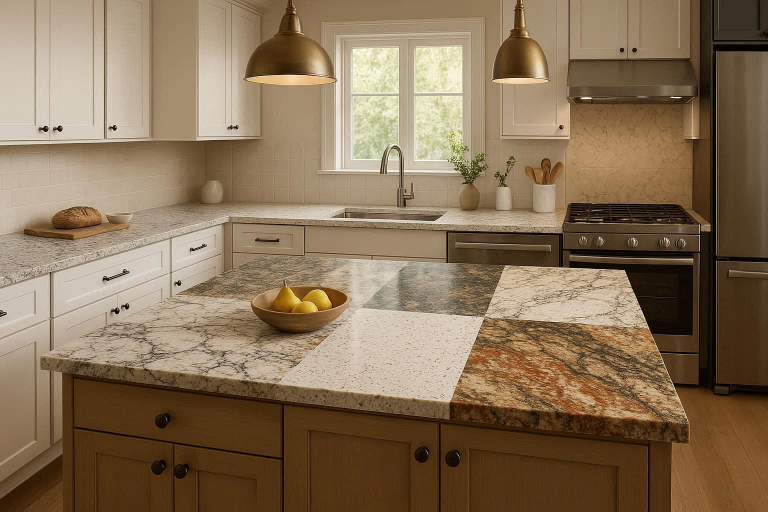
If you’re thinking about renovating your kitchen or installing new countertops, you’ve probably come across quartz as an option. Quartz kitchen countertops have become a popular choice in recent years for their durability, low maintenance, and aesthetic appeal. As homeowners look for materials that combine beauty and practicality, quartz has emerged as a top contender.
But what exactly are quartz kitchen countertops? In this blog post, we’ll dive into the composition, appearance, pros, cons, pricing, and comparisons to help you decide if quartz is the right choice for your kitchen.
What Are Quartz Kitchen Countertops?
At their core, quartz kitchen countertops are engineered stone surfaces made from natural quartz crystals, resins, and pigments. Unlike natural stones like granite and marble, quartz countertops are man-made, giving manufacturers the ability to control the color, texture, and overall look. This makes quartz countertops a customizable and versatile option for any kitchen design.
The benefits of quartz countertops are plentiful. They’re extremely durable, resisting scratches, stains, and even heat damage better than many other materials. Additionally, quartz countertops are incredibly low maintenance. Unlike granite, which requires periodic sealing, quartz doesn’t need this extra care, making it a convenient choice for busy homeowners.

What Are Quartz Kitchen Countertops Made Of?
Quartz countertops are made from about 90-95% natural quartz, which is one of the hardest minerals on Earth. The remaining 5-10% consists of resins, polymers, and pigments that give the countertops their color and texture. The quartz crystals are mixed with the resins and then pressed into slabs that are shaped and Home Organization Ideas for Kitchen and Living Room polished to create the finished countertop.
The manufacturing process allows for a range of finishes, colors, and patterns, from sleek, modern designs to more traditional looks. Since quartz is engineered, it can replicate the look of natural stones, such as marble or granite, without the maintenance required for those materials.
It’s important to note that natural quartz is different from engineered quartz. While the former refers to the raw mineral, the latter is the product used in countertops, which is mixed with resin and other materials for added durability and design flexibility.
What Do Quartz Kitchen Countertops Look Like?
One of the standout features of quartz countertops is their stunning range of colors and patterns. Since quartz is engineered, manufacturers can create virtually any color and pattern combination. Whether you want a classic white countertop with subtle veining or a bold black countertop with dramatic swirls, quartz can mimic the look of natural stones like marble or granite.
Some of the most popular quartz countertop colors include:
- White: A timeless, classic choice that works with almost any kitchen style.
- Gray: Sophisticated and modern, gray quartz countertops often come in lighter tones or with subtle veining.
- Black: Sleek and elegant, black quartz countertops add drama to any kitchen.
- Beige and Brown: Earthy tones that work well in traditional or rustic kitchens.
- Veined Patterns: Quartz can be engineered to mimic the appearance of marble, with beautiful veining patterns that give a luxurious feel.
The ability to customize quartz countertops means you can find a style that matches your kitchen perfectly. Whether you prefer a minimalist design or something more intricate, quartz offers a wide variety of options to suit different tastes.

What Is the Price of Quartz Kitchen Countertops?
The price of quartz countertops can vary significantly depending on factors like brand, color, thickness, and installation. On average, quartz countertops cost between $50 and $150 per square foot. This price typically includes the material, fabrication, and installation costs. However, if you’re looking at premium brands or designer colors, the price can be much higher.
Here are some factors that influence the cost:
- Brand: High-end brands may have a premium price tag due to their reputation or unique designs.
- Thickness: Thicker slabs generally cost more, as they require more material and labor to cut and install.
- Color: Exotic or rare colors may be more expensive than more common shades like white or gray.
- Installation: Labor costs can vary by location and the complexity of the job. Additional features, like custom edges or backsplashes, can also increase the price.
When comparing quartz vs granite price, quartz countertops can be more affordable than granite in some cases, though it’s worth noting that high-end granite can sometimes cost just as much or more than quartz. The benefit of quartz, however, is the low maintenance required, as granite needs to be sealed regularly, which can add to long-term costs.
Quartz vs Granite Countertops
Choosing between quartz and granite can be challenging because both materials offer unique benefits. Let’s compare the two in key areas:
- Composition:
- Quartz is engineered, meaning it’s made by combining natural quartz with resins and pigments.
- Granite, on the other hand, is a natural stone that’s mined and then cut into slabs.
- Durability:
- Quartz is more resistant to stains, scratches, and chips than granite because of its non-porous nature.
- Granite is also durable but is more prone to staining if not sealed properly.
- Maintenance:
- Quartz is low-maintenance because it doesn’t require sealing and is resistant to staining.
- Granite needs to be resealed periodically to maintain its resistance to stains.
- Aesthetics:
- Quartz offers more variety in terms of color and pattern, as it can be engineered to replicate the look of other materials like marble.
- Granite has natural variations in color and pattern, giving each slab a unique appearance.
- Price:
- Quartz tends to be more affordable than granite in many cases, though the cost difference depends on factors like brand and design.
Pros of Quartz:
- Durable and resistant to stains and scratches
- Low maintenance
- Wide variety of colors and designs
- Can mimic natural stones like marble or granite
Cons of Quartz:
- Can be more expensive than some other materials
- Not as heat-resistant as granite (can discolor with excessive heat)
Pros of Granite:
- Natural stone with unique, one-of-a-kind designs
- Durable and heat-resistant
- Increases home value
Cons of Granite:
- Requires regular sealing
- Prone to stains if not maintained properly
Common Problems with Quartz Countertops
While quartz countertops are highly durable, they are not immune to issues. Some of the most common problems include:
- Scratches and Chips: Quartz is highly resistant to scratching, but it’s not entirely scratch-proof. Using cutting boards and being cautious with heavy pots and pans can help prevent this.
- Heat Damage: Quartz can be damaged by excessive heat. Placing hot pots or pans directly on the surface can cause discoloration or cracks.
- Discoloration: While quartz is resistant to staining, prolonged exposure to sunlight or harsh chemicals can cause color fading.
- Maintenance Issues: While quartz is low-maintenance, harsh cleaning products or abrasive materials can damage the surface.
I Hate My Quartz Countertop – What Should I Do?
If you’re frustrated with your quartz countertop, there are a few solutions:
- Minor Issues: Small chips or scratches can often be repaired by professionals. A quartz countertop repair kit might also help for minor issues.
- Aesthetic Changes: If you dislike the color or look, consider changing the finish or adding new features, like a different edge style or backsplash.
- Replacement: If the countertop is seriously damaged, replacing the slab may be the best option. However, it’s important to weigh the cost of replacement versus repair.
Quartz Countertop Samples: Why Are They Important?
Before making a final decision, it’s crucial to view and test quartz samples. Quartz comes in many colors and patterns, so seeing the sample in your kitchen’s lighting is essential. You can order samples from suppliers or visit showrooms to find the perfect match for your space.
How to Choose the Right Quartz Countertop for Your Kitchen
When selecting the right quartz countertop, consider the following:
- Kitchen Style: Choose a color and pattern that complements your kitchen’s design, whether it’s modern, traditional, or rustic.
- Functionality: Quartz countertops are great for high-traffic kitchens due to their durability, but consider how much cooking you do and if you need additional features like heat resistance.
- Budget: Quartz can be an investment, so decide how much you’re willing to spend on countertops.
Popular Quartz Countertop Colors and Trends
Some of the top quartz countertop colors include:
- White: Clean and timeless, ideal for modern kitchens.
- Gray: A sophisticated and neutral color that pairs well with various kitchen styles.
- Veined Quartz: Replicates the look of marble, offering elegant swirls of color.
These colors can fit into contemporary, minimalist, or classic kitchen designs, making quartz versatile for any home.
FAQ
What is the difference between quartz kitchen countertops and natural quartz?
Quartz countertops are engineered, combining natural quartz with resins and pigments, whereas natural quartz is a raw mineral.
How much does a quartz kitchen countertop cost per square foot?
Quartz countertops range from $50 to $150 per square foot, depending on brand, color, thickness, and installation.
Is quartz a good choice for kitchen countertops?
Yes, quartz is durable, low-maintenance, and available in a wide range of colors and patterns.
What are the best quartz countertop colors for modern kitchens?
Popular choices for modern kitchens include white, gray, and veined quartz patterns.
Can quartz countertops be repaired?
Yes, quartz countertops can be repaired for minor issues like scratches and chips.
How do quartz and granite countertops compare in price?
Quartz is generally more affordable than high-end granite, but both are premium options for kitchens.
Are there any environmental concerns with quartz countertops?
Quartz is sustainable, but the manufacturing process involves resins and chemicals. Some brands offer eco-friendly options.
How do I maintain my quartz kitchen countertops?
Keep quartz clean with mild soap and water, avoid harsh chemicals, and use cutting boards to prevent scratches.
Conclusion
Quartz kitchen countertops are a durable, low-maintenance, and aesthetically versatile option for homeowners. Whether you’re renovating your kitchen or building a new one, quartz offers a wide range of colors and patterns to suit any design. With its durability, ease of maintenance, and stunning appearance, it’s no wonder that quartz has become a go-to choice for many homeowners.