
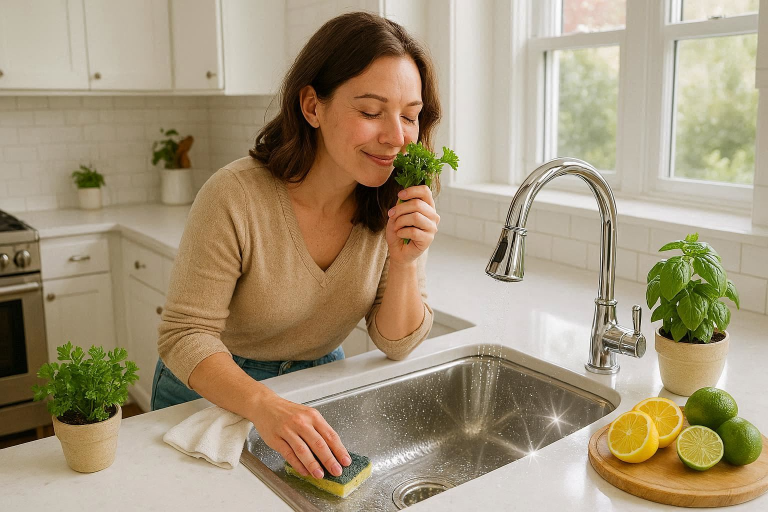
That foul odor wafting up from your kitchen sink can instantly ruin the appeal of your entire kitchen. It’s more than just an annoyance; it’s a sign that organic matter is accumulating and decomposing right beneath your basin.
The good news? You don’t need expensive chemicals or a plumber on speed dial to fix it. Most stinky sink problems can be resolved quickly and naturally with simple household ingredients like baking soda and vinegar.
This comprehensive guide will walk you through the ten most effective DIY methods, show you how to deep-clean your garbage disposal, and establish a bulletproof routine to ensure those nasty smells never return.
Let’s transform your kitchen from stinky to sparkling fresh.
The Real Reason Your Kitchen Sink Smells Bad
Before you can truly eliminate a persistent odor, you need to understand where it’s coming from. The source is usually one of three common issues lurking just out of sight.
The Culprit: Food, Grease, and Biofilm Build-up
The most frequent cause of sink smells is the buildup of kitchen scraps. Even small amounts of food residue, grease, and soap scum that wash down the drain eventually stick to the pipe walls.
-
Organic Matter: Trapped food particles and coffee grounds start to decompose, creating a distinct, musty, rotting smell.
-
Biofilm: A slimy layer of odor-causing bacteria forms inside the pipes, feeding on the trapped gunk. This is especially true for grease and fat, which solidify and cling to the pipes, trapping other debris.
-
Soap Scum: Over time, fatty acids in soap react with minerals in hard water to create a hard residue that also catches debris.
Sewer Gas and the P-Trap: The Rotten Egg Smell
If your sink smells distinctly like rotten eggs or sewage, the problem is not decomposing food but an issue with your plumbing system’s gas barrier.
Every sink has a U-shaped bend in the pipe underneath, called the P-trap (or U-bend). Its design is ingenious: it holds a small amount of water to create a seal, blocking noxious sewer gases from flowing up into your home.
The rotten egg smell occurs when:
-
The P-trap dries out (common if you’ve been away on vacation and haven’t run the water).
-
The P-trap has a slow leak, allowing the water seal to break.
-
The plumbing vent (which regulates pressure and vents gas outside) is clogged.
The Often-Forgotten Area: Your Sink Overflow Drain
If you have a sink basin with a small hole near the top, that’s the overflow drain. Its purpose is to prevent flooding, but because water and debris enter it infrequently, it becomes a perfect breeding ground for mold, mildew, and biofilm.
Neglecting this area can leave a constant, subtle stink even after you’ve cleaned the main drain.
10 Immediate & Effective DIY Solutions to Stop the Odor
You have the tools you need right in your pantry. These natural Smelly Sink Drain methods use abrasive, acidic, and deodorizing properties to cut through grime and neutralize smells.
The Ultimate Duo: Baking Soda and Vinegar Fizz (The Gold Standard)
This is the number one method recommended by plumbers and cleaning experts for a reason. Baking soda (sodium bicarbonate) is a natural abrasive and deodorizer, while white vinegar (acetic acid) dissolves mineral deposits and kills bacteria.
-
Pour 1 cup of boiling water down the drain to pre-heat the pipes.
-
Carefully pour $1/2$ cup of baking soda down the drain.
-
Follow immediately with 1 cup of white vinegar.
-
Plug the drain immediately to contain the foaming chemical reaction.
-
Allow the mixture to sit and bubble for 15–30 minutes to dissolve built-up grease and grime.
-
Flush thoroughly with another pot of boiling water.
Simple Power: The Boiling Water Flush
For minor smells caused by fresh grease, this may be all you need. The heat liquefies the grease, allowing it to be flushed away.
-
Boil a large pot (about 1 gallon) of water.
-
Slowly pour the boiling water directly down the drain.
-
Tip: Repeat this weekly as a preventative maintenance step.
Natural Deodorizer: Citrus Peels and Ice Cubes (Best for Disposals)
If the smell is from your garbage disposal, this dual-action method is perfect.
-
Drop a handful of ice cubes down the disposal.
-
Add a few slices of lemon, lime, or orange peel.
-
Turn on the cold water, and run the disposal until the grinding sounds stop.
The ice acts as a natural scouring pad, cleaning the grinding chamber and blades, while the citrus oils provide a fresh, natural scent. This helps remove the debris, not just mask the odor.
The Overnight Refresh: Baking Soda and Salt
For a deeper deodorizing treatment, a baking soda and salt mixture can be left in the drain overnight.
-
Mix $1/4$ cup of baking soda with 2 tablespoons of salt.
-
Pour the mixture down the drain before bed.
-
Flush with boiling water the next morning.
The salt enhances the abrasive action of the baking soda, helping to scrape away buildup.
Disinfecting Power: Hydrogen Peroxide Rinse
If you suspect bacteria is the primary cause, hydrogen peroxide is a great, pipe-safe alternative to bleach.
-
Pour $1/2$ cup of 3% hydrogen peroxide down the drain.
-
Let it sit and fizz for 10–15 minutes.
-
Flush with hot water. This will help sanitize the pipe’s surface.
For Mild Odors: White Vinegar Alone
If you just need a light deodorizer and don’t want the fizzing reaction, plain vinegar works well.
-
Pour 1 cup of white vinegar down the drain.
-
Let it sit for about an hour.
-
Rinse with hot water.
The Soap Scum Cutter: Dish Soap and Hot Water
Dish soap is designed to emulsify and break down grease and oil—the prime culprits of the smell.
-
Squirt a generous amount of grease-cutting dish soap (like Dawn) down the drain.
-
Follow with a gallon of very hot (but not necessarily boiling) water.
Unconventional Quick Fix: Antiseptic Mouthwash
Certain mouthwashes contain alcohol and antiseptic ingredients that can kill odor-causing bacteria quickly.
-
Pour a small capful of an alcohol-based mouthwash down the drain.
-
Let it sit for 10 minutes.
-
Flush with hot water. This is an excellent way to freshen the drain between deep cleanings.
Manual De-Gunking: Cleaning the Strainer/Stopper
Sometimes the smell is simply from the exposed parts of your drain.
-
Remove the sink strainer or stopper.
-
Use an old toothbrush and dish soap to scrub away the slimy, dark buildup on the underside and around the drain opening. This biofilm is highly odoriferous.
For a Fresh Scent: Essential Oils
After cleaning the debris, use essential oils for a final, pleasant scent boost.
-
Add 5–10 drops of a strong oil (Lemon, Tea Tree, or Peppermint) to a handful of baking soda.
-
Pour the scented baking soda down the drain.
-
Flush with a bit of hot water.
Garbage Disposal Deep Cleaning: The Hidden Source of Smells
Garbage disposals are notorious for harboring foul smells. Food particles can get stuck to the grinding blades, the splash guard, or inside the grinding chamber.
The Ice and Salt Grind Method
This is the most effective method for cleaning the disposal blades and chamber walls.
-
Drop 2 cups of ice cubes into the disposal.
-
Add 1/4 cup of coarse salt (table or rock salt).
-
Turn on the cold water and run the disposal until the noise dies down.
The ice and salt act as an abrasive grit, scouring the blades and side walls of the chamber.
Vinegar Ice Cubes for Maintenance
For regular upkeep, freeze a mixture of water and white vinegar in an ice tray.
-
Drop 4–5 vinegar ice cubes into the disposal.
-
Turn on the cold water and run the disposal.
This cleans and disinfects simultaneously, offering a less abrasive option for weekly maintenance.
Scrubbing the Splash Guard (Flange)
The rubber guard (or flange) that sits over the disposal opening collects the worst grime.
-
Turn off the disposal power at the breaker for safety.
-
Lift the rubber guard and use an old sponge or brush to scrub the underside, where black, slimy buildup often clings.
-
Alternatively, you can remove the guard entirely for a thorough soak and scrub in a sink full of hot, soapy water.
Troubleshooting Clogs: When DIY Fails
If all the natural solutions fail and you notice water draining slowly along with a persistent, intense smell, you may have a deeper clog or a specific plumbing issue.
Step-by-Step: Inspecting and Cleaning the P-Trap
If you suspect a solid blockage in the P-trap, you can often clean it out yourself with minimal tools.
-
Preparation: Place a bucket or towel under the P-trap to catch any standing water and debris.
-
Disassembly: Using groove joint pliers or just your hands, slowly unscrew the two slip nuts on either side of the P-trap.
-
Clean: Remove the U-shaped pipe. Scrape out any congealed grease, hair, or food sludge using a piece of wire or a small brush.
-
Reassemble: Screw the trap back into place. Run water slowly at first to check for leaks, tightening the nuts if necessary.
When to Call a Pro: Blocked Vent Pipes and Persistent Odors
Sometimes, the cause of the rotten egg smell is not the P-trap but a clogged plumbing vent pipe on your roof. This blockage prevents the plumbing system from breathing, causing the P-trap water seal to be sucked out, thus allowing sewer gas to enter your kitchen.
-
Sign: A persistent, strong sewer odor that returns quickly after cleaning the drain.
-
Action: Do not attempt to clear a vent pipe yourself. Call a certified professional plumber who can safely access and clear the vent.
When a Plunger is Necessary
If the drain is slow and clogged, and water is standing in the basin, a simple cup plunger can often dislodge the blockage.
-
Fill the sink with enough water to cover the plunger’s cup.
-
If you have a double sink, plug the second drain securely with a stopper or a wet rag.
-
Place the plunger firmly over the drain and pump vigorously for 15–20 seconds.
-
Remove the plunger and see if the water drains. Repeat if necessary, following up with a boiling water flush.
Chemical vs. Enzyme Drain Cleaners: Which is Safer?
When the natural methods don’t quite cut it, you might turn to commercial products. It is crucial to choose wisely to protect your health and your plumbing.
The Risks of Caustic Chemical Cleaners
Many store-bought drain cleaners contain powerful, corrosive chemicals like sulfuric acid or lye.
-
Damage Risk: These chemicals generate heat and can damage old PVC pipes, destroy rubber gaskets, and even crack porcelain sinks with repeated use.
-
Health Hazard: They release noxious fumes and pose a significant safety risk from splashes and inhalation.
-
The Masking Effect: They often don’t fully remove the debris, only carving a narrow path through the clog, which allows the buildup to return quickly.
Why Enzyme-Based Cleaners are the Pipe-Friendly Choice
Enzyme-based drain cleaners are a much safer and more effective option for tackling organic material.
-
Biological Action: They use specialized bacteria and enzymes to digest the organic matter (grease, soap scum, hair) into harmless, water-soluble components.
-
Safety: They are non-corrosive, non-toxic, and safe for all types of plumbing, including septic systems.
-
Prevention: Used monthly, they are fantastic preventative treatments that eliminate the biofilm before it can cause a smell or a clog.
The Long-Term Odor Prevention Routine
The key to a perpetually fresh sink is consistency. Establish a simple routine to prevent that smelly biofilm from taking hold in the first place.
Daily Habits: Scrape First, Rinse Last
-
Use a Strainer: Always use a drain strainer to catch all food scraps, including tiny bits of rice, vegetable peelings, and coffee grounds. Empty it into the trash before washing dishes.
-
Wipe Down Grease: Never pour fats, oils, and grease (FOG) down the drain. Wipe greasy pans with a paper towel before washing them to remove excess residue.
-
Run Cold Water: When using a garbage disposal, always run a strong stream of cold water for at least 30 seconds after the grinding noise stops to fully flush all remaining particles down the main pipe.
Weekly Maintenance: The Hot Water and Vinegar Rinse
Once a week, perform a quick maintenance flush.
-
Pour 1 cup of white vinegar down the drain.
-
Let it sit for 30 minutes.
-
Flush with a kettle of hot water. This weekly regimen prevents the gradual buildup of minor film and neutralizes early odors.
Monthly Check-up: The Baking Soda Deep Clean
Once a month, perform the full baking soda and vinegar fizz treatment (as described in section 2) to break down any tougher residue that has accumulated.
Common Mistakes That Make Sink Odors Worse
Even with the best intentions, certain actions can inadvertently worsen your smelly sink problem.
Pouring Fats, Oils, and Grease (FOG) Down the Drain
This is the number one mistake. While FOG is liquid when hot, it cools and solidifies quickly inside the pipes, acting like flypaper for food scraps and dramatically accelerating the formation of odor-causing biofilm.
Relying Only on Bleach
While bleach kills bacteria and can briefly stop the smell, it is highly corrosive and does not physically remove the underlying clog. Furthermore, it can react with certain materials in your pipes or septic system, and its fumes are unpleasant. Stick to natural or enzyme solutions for regular use.
Ignoring Slow Drainage
A slowly draining sink is an early warning sign of a pending problem. Ignoring it allows more debris to accumulate, increasing both the chance of a severe clog and a worse smell. Treat slow drainage immediately with the boiling water or baking soda and vinegar method.
FAQs
Why does my sink smell like rotten eggs?
This specific smell is almost always sulfur gas (sewer gas). It means the water seal in your P-trap has been compromised, allowing gas from the sewer line to enter your home. Check if the P-trap is dry (run the water for a minute to refill it) or if there is a problem with the plumbing vent pipe.
How often should I clean my kitchen drain?
For odor prevention, a quick maintenance rinse (hot water and vinegar) should be done weekly. A deeper cleaning (baking soda and vinegar) or a professional enzyme cleaner should be done monthly.
Is it safe to pour bleach down my kitchen sink?
It is generally discouraged for regular use. While a small amount of dilute bleach can disinfect, repeated use can damage pipes, and it does nothing to clear an actual clog. If you have a septic system, bleach can kill the beneficial bacteria in the tank. Use it sparingly, if at all.
What foods should never go down a garbage disposal?
Avoid putting fibrous foods (celery stalks, asparagus), starchy foods (rice, pasta), coffee grounds, eggshells, and especially fats, oils, and grease down the disposal. These items are more likely to cling to the blades and cause odors or clogs.
Can a clogged sink vent cause a bad smell?
Yes. The vent allows air into the system to keep water flowing smoothly. If it clogs, it can cause the water seal in your P-trap to be sucked out of the pipe, leading to sewer gas backing up into your kitchen, causing the rotten egg smell.
Final Thoughts: A Fresh, Clean Kitchen
A smelly kitchen sink is a solvable problem that requires nothing more than a few minutes of attention and a couple of pantry staples. By understanding the causes—primarily food and grease accumulation, and sometimes a compromised P-trap seal—you can target your cleaning efforts effectively.
Adopt the baking soda and vinegar treatment for immediate relief, and integrate the simple daily and weekly prevention habits. A clean, fresh-smelling drain is a key component of a welcoming, well-maintained kitchen.