
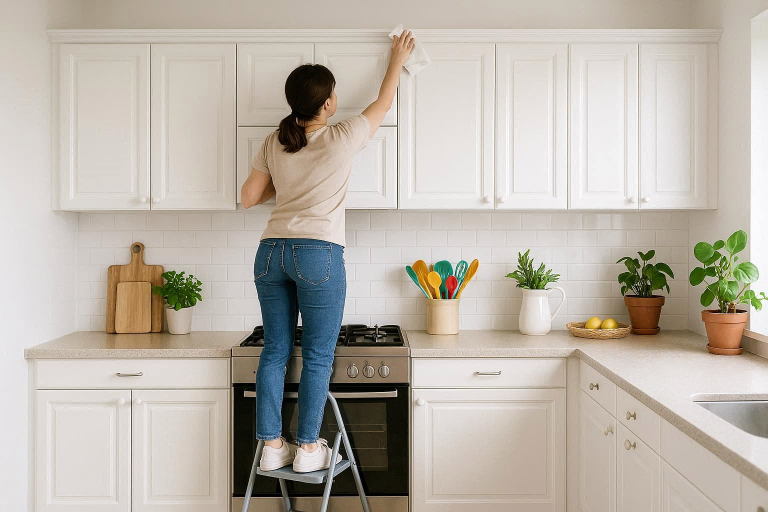
Grease buildup on top of kitchen cabinets can quickly turn your beautiful kitchen into a greasy, sticky mess. This issue is frustrating for homeowners who want to maintain a clean, fresh space. But don’t worry – preventing grease on your kitchen cabinets is not as hard as it seems. With the right knowledge and some simple actions, you can keep your cabinets cleaner and fresher for longer.
In this article, we’ll break down the best strategies to prevent grease buildup, from regular cleaning routines to installing the right tools and materials. By understanding why grease accumulates and how to control it, you’ll be able to enjoy a cleaner kitchen without hassle.
Why Grease Builds Up on Cabinet Tops
To fully understand how to prevent grease on top of your kitchen cabinets, it’s essential to first recognize why this happens in the first place. The kitchen is one of the busiest areas of the home, and cooking can lead to airborne grease settling on surfaces, including your cabinets. Here’s how it works:
- Cooking creates steam and grease particles: When you cook, especially on high heat or with oil, small grease droplets are released into the air. These tiny particles land on every surface in the kitchen, including the tops of your cabinets.
- Lack of proper ventilation: Without proper ventilation, these airborne particles have nowhere to go and settle on the upper surfaces. A poor range hood or exhaust fan that doesn’t clear air properly exacerbates the issue.
- Sticky grease attracts dirt: Over time, grease becomes sticky, which means dust and debris also cling to it, creating an even bigger mess. This causes your cabinet tops to look greasy and dirty.
Common Mistakes That Cause Grease Accumulation
While grease buildup is a common problem, many of us unknowingly contribute to it by making a few simple mistakes. Identifying these missteps will help you avoid them in the future:
- Neglecting ventilation: Not using range hoods or exhaust fans is a common mistake. If your kitchen doesn’t have proper ventilation, grease particles will have nowhere to escape and will settle on your cabinet tops.
- Not covering pots and pans: Cooking without lids or splatter guards allows grease to fly everywhere. If you’re cooking something like bacon or frying food, the grease droplets spread across the kitchen, including the tops of your cabinets.
- Irregular cleaning habits: Many homeowners wait too long between deep cleans. A daily or weekly wipe down can stop grease from accumulating in the first place.
- Using the wrong cleaning products: Harsh chemical cleaners can damage the finish on your cabinets, making them more susceptible to grease buildup. Always use gentle cleaners that are safe for the surface.
Preventive Strategies Before Grease Settles
There are several steps you can take to prevent grease from accumulating on your kitchen cabinets in the first place. Let’s look at the most effective ones:
Use Proper Ventilation: Range Hoods and Exhaust Fans
The first line of defense against grease buildup is proper ventilation. A good range hood or exhaust fan will draw steam and greasy air out of your kitchen, Cleaning on Top of Kitchen Cabinets preventing it from settling on surfaces.
- Range hoods: Make sure your range hood is the correct size for your stove. It should be able to handle the volume of air produced by cooking. You should also clean the filters regularly to ensure efficient operation.
- Exhaust fans: If you don’t have a range hood, an exhaust fan can help pull greasy air out of the room. Make sure it is positioned near the stove and runs whenever you’re cooking.
Cover Pots, Pans & Use Splatter Guards While Cooking
When frying or cooking with oil, always cover pots and pans to reduce splattering. Splatter guards and lids prevent grease from escaping into the air. If you’re cooking something particularly greasy, such as bacon or stir-frying, cover the pan with a lid or a splatter guard to prevent airborne grease.
Building a Barrier: Cabinet‑Top Liners and Protective Surfaces
Another excellent way to prevent grease from sticking to your cabinets is by creating a barrier. This could be in the form of protective liners or surfaces that Cleaning Guide for Home & Kitchen shield the top of your cabinets from grease and dust.
Types of Liners and What Works Best
Cabinet-top liners come in several forms, and the best option depends on your needs:
- Shelf liners: These are easy to install and can be cut to fit the top of your cabinets. They create a protective layer between the grease and your cabinet surface. Vinyl or washable liners work best because they can be wiped clean easily.
- Wax paper: If you prefer a disposable option, wax paper can be a good solution. It’s not as durable as a shelf liner, but it can help catch grease and is easy to replace.
- Washable shelf paper: Some shelf papers are designed to be washable, which makes them a great long-term option. These types of liners are often more durable and resistant to grease buildup.
How to Install and Maintain Liners
Installing cabinet-top liners is simple. Here’s a quick guide:
- Clean the surface: Before applying any liner, thoroughly clean the top of your cabinets to remove any existing grease or dust.
- Measure and cut: Measure the dimensions of your cabinet tops, then cut your liner to fit.
- Place the liner: Lay the liner flat on the cabinet top. Some liners come with adhesive backing, while others need to be tucked under the edges.
- Maintain regularly: Every month, remove the liner, clean the surface underneath, and replace the liner if necessary.
Regular Cleaning Routine: Keep Grease from Settling In
Prevention is key, but regular cleaning ensures grease doesn’t have a chance to settle and build up. Here’s how you can keep things in check:
Weekly Light Wipe Downs
Wiping down your kitchen surfaces at least once a week can prevent grease from accumulating. Use a microfiber cloth or soft sponge to avoid damaging your cabinet surface. Focus on high-touch areas and areas around your stove where grease particles are likely to settle.
Monthly Deep Clean
Once a month, deep clean the tops of your cabinets to remove any grease buildup that has started to settle. For this, you’ll need a more powerful cleaner, like a degreaser, which will break down the oils and make it easier to wipe them away.
Recommended Cleaning Products & Solutions
- White vinegar and water: A simple mixture of vinegar and water can help break down grease. Use this for light cleaning and regular upkeep.
- Baking soda and water paste: For tough grease spots, create a paste with baking soda and water, apply it to the greasy area, and scrub gently.
- Commercial degreasers: For heavy-duty grease buildup, look for non-toxic, kitchen-safe degreasers that will not damage the cabinet finish.
Long-Term Solutions & Kitchen Design Ideas
While regular maintenance is important, some long-term solutions can help prevent grease from accumulating on your cabinet tops altogether.
Installing a High‑Quality Range Hood / Exhaust System
A high-quality range hood will not only improve your kitchen’s ventilation but also help clear out airborne grease particles. When choosing a range hood, consider one with a higher CFM (cubic feet per minute) rating to ensure it can handle the grease generated during cooking.
Choosing Grease-Resistant Materials for Cabinets
When designing your kitchen, you can opt for materials that naturally resist grease. Cabinets made from materials like stainless steel or matte-finish wood are less likely to attract grease compared to high-gloss finishes. Some finishes also have a protective coating that repels grease.
Protective Coatings or Sealants for Cabinet Tops
You can apply a protective coating or sealant to your cabinets to create a more durable, grease-resistant surface. This is especially useful for wood or painted cabinets. Look for a non-toxic, food-safe sealant that will not only protect from grease but also from moisture and other kitchen-related damage.
Mistakes to Avoid
While there are several ways to prevent grease from accumulating on your kitchen cabinets, some common mistakes can hinder your efforts:
- Not cleaning regularly: Waiting for months before cleaning your kitchen is a recipe for greasy buildup. Regular cleaning is key to preventing grease from becoming a long-term problem.
- Using harsh chemicals: Using strong chemical cleaners can damage your cabinet surfaces and make it easier for grease to cling in the future. Stick to gentle, non-toxic cleaners.
- Overlooking the ceiling and exhaust fans: Grease can accumulate on the ceiling and exhaust fans, and if not cleaned regularly, these areas can contribute to a greasy kitchen. Make sure to clean your range hood and the area above your cabinets frequently.
FAQs
Why does grease accumulate on top of kitchen cabinets even if I clean regularly?
Grease accumulates due to airborne particles from cooking, especially when ventilation is inadequate. A range hood and regular cleaning can help reduce this issue.
How often should I clean cabinet tops to prevent grease buildup?
Aim to wipe down your cabinet tops weekly and do a deep clean once a month.
Can cabinet-top liners really stop grease from sticking to wood/paint finish?
Yes, liners provide a protective barrier that prevents grease from sticking to the wood or paint finish, making cleaning much easier.
What is the most effective ventilation setup to reduce grease particles in kitchen air?
A high-quality range hood with a high CFM rating is the best solution to capture and remove grease-laden air.
Are there surfaces or finishes that resist grease better than others?
Matte finishes and stainless steel are less prone to collecting grease. Choose these materials when renovating or building your kitchen.
Conclusion
Preventing grease buildup on top of kitchen cabinets is achievable with the right strategies and tools. By ensuring proper ventilation, using protective liners, cleaning regularly, and investing in long-term solutions like grease-resistant materials and sealants, you can keep your kitchen cabinets in pristine condition. With these tips, you’ll be able to enjoy a cleaner, fresher kitchen with minimal effort. Happy cooking and cleaning!