
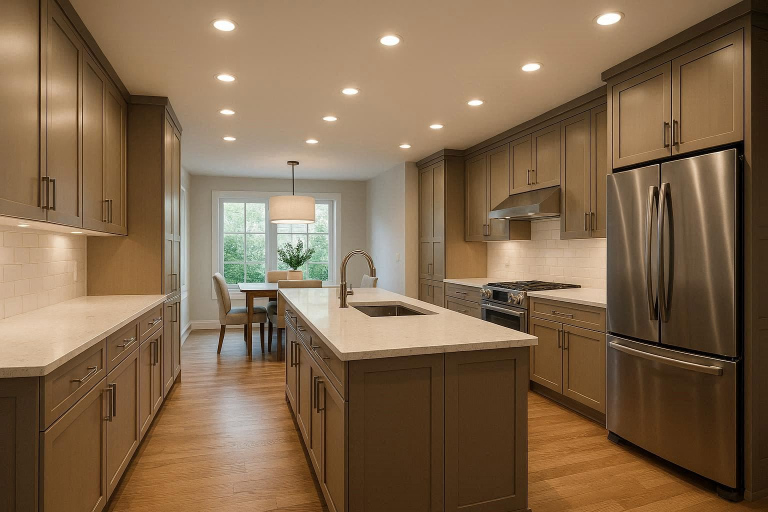
Recessed lighting in the kitchen is a popular choice for creating a modern, sleek, and well-lit space. Whether you’re renovating your kitchen or simply upgrading the lighting, recessed lights are perfect for delivering ambient, task, and accent lighting — all while remaining unobtrusive. However, improper placement can result in shadows, uneven lighting, or dim work areas. This guide will take you through everything you need to know about how to place recessed lighting in a kitchen for optimal functionality and aesthetics.
Understanding Kitchen Lighting Needs
Types of Kitchen Lighting: Ambient, Task & Accent
Before diving into the placement of recessed lighting, it’s essential to understand the three main types of kitchen lighting:
- Ambient Lighting: This is the general lighting that fills the room, providing overall illumination. Recessed lights are excellent for ambient lighting as they provide broad coverage without cluttering the space.
- Task Lighting: This type of lighting is designed to illuminate specific work areas, such as countertops, sinks, and stoves. Task lighting helps reduce eye strain when cooking or prepping food.
- Accent Lighting: Accent lighting highlights particular areas or features of your kitchen, such as artwork, shelves, or cabinetry. It can add warmth and depth to the space, especially when used strategically in conjunction with ambient and task lighting.
Why Proper Recessed Light Placement Matters
Correct placement of recessed lights ensures that each lighting type fulfills its role. Poor placement can result in areas of the kitchen being too dim or brightly lit. For example, placing lights too far apart can lead to shadows on counters, while putting them too close to walls can create harsh, uneven lighting.
Planning Your Kitchen Lighting Layout
Measure Your Kitchen & Map Zones
Start by measuring your kitchen’s dimensions, including the ceiling height. Mapping out zones in the kitchen is essential because different areas (e.g., the stove, sink, or kitchen island) require different lighting levels. Use graph paper or design software to sketch out the floor plan of your kitchen.
Identify Key Work Areas (Counters, Sink, Stove, Island)
The most crucial work zones in the kitchen are the countertops, sink, stove, and kitchen island (if you have one). These areas need task lighting to ensure proper visibility while cooking, chopping, or washing dishes. Take note of these zones and mark them on your plan.
Note Ceiling Height and Obstacles
Consider the height of your kitchen ceiling before placing recessed lighting. Standard ceiling heights are typically 8 to 9 feet, but higher ceilings may need different spacing rules to ensure the light spreads effectively.
Also, identify any obstacles such as beams, vents, or pipes in the ceiling that may affect where you can place lights.
Recessed Lighting Spacing & Layout Guidelines
General Ambient Lighting: Grid/Perimeter Layout
For general ambient lighting, a common method is the grid layout. This involves spacing the recessed lights in a uniform grid pattern across the ceiling to provide even illumination. For kitchens with standard 8-foot ceilings, recessed lights should Placing Recessed Lighting In A Kitchen generally be spaced about 4-6 feet apart, depending on the wattage of your bulbs.
Alternatively, the perimeter layout involves placing lights around the edges of the kitchen to create an even wash of light across the entire room. This layout works well for larger kitchens or open-floor plans.
Task Lighting: Counters, Sink, Stove, Island
Task lighting requires more precision. Recessed lights should be placed directly above high-activity areas like the sink, stove, and kitchen island to avoid shadows. For example, in front of a kitchen island, a pair of lights placed 24 inches apart will ensure the area is evenly lit.
- Sink: Place recessed lights above the sink at a distance of 2-3 feet to ensure adequate lighting without creating glare.
- Stove: Install lights directly above the stove area, leaving about 2 feet between each light.
- Counters: Light up your countertops by placing recessed lights every 3-4 feet above the work surface.
Accent Lighting & Wall‑Washing
Accent lighting is often used to highlight cabinetry, shelving, or artwork. When placing recessed lights for accent lighting, keep them closer to the wall to focus the light on features like backsplash tiles or open shelves.
For wall-washing, the lights should be aimed at the wall and spaced about 3-4 feet apart to ensure an even wash of light without causing harsh shadows.
Sample Layouts for Common Kitchen Shapes
For a U-shaped kitchen, you should focus on the counter spaces and the island. Place lights evenly across the top of the counters, with additional lights above the sink area.
In an L-shaped kitchen, place recessed lights over the shorter leg of the “L” for balanced lighting, with task lighting directed at the stove, sink, and counters.
For kitchens with kitchen islands, ensure you have 2 or 3 recessed lights directly above the island for an evenly distributed light that is great for cooking and socializing.
Choosing Fixtures, Housings & Bulbs
Types of Recessed Housings (IC‑rated, Remodel, etc.)
When selecting recessed lighting for your kitchen, consider the type of housing:
- IC-rated housings: These can be installed in direct contact with insulation and are perfect for ceilings with insulation above them.
- Remodel housings: Ideal for retrofitting into existing ceilings, remodel housings require no major ceiling modifications.
- New construction housings: These are designed for new ceiling installations and are installed before drywall.
Trim Types & Beam Spreads (Baffle, Reflector, Gimbal)
The trim affects both the look and functionality of the recessed light. Common trim types include:
- Baffle trim: Reduces glare and is ideal for ambient lighting.
- Reflector trim: Directs light downward and is great for task lighting.
- Gimbal trim: Offers adjustability for accent lighting or highlighting specific features.
Bulb Considerations: LED, Color Temperature, Dimmers
LED bulbs are an energy-efficient option for recessed lighting. For kitchens, aim for a cool white color temperature (between 3500K-5000K) to provide clear, bright light. Dimmable LED bulbs allow you to adjust the lighting depending on your needs, offering both task and ambient illumination.
Step‑by‑Step Guide to Mark & Plan Light Placement
Sketch Kitchen & Mark Zones
Create a simple sketch of your kitchen and outline the zones where light is needed, such as above the counter, sink, stove, and island.
Use Spacing Rules / Calculators
Refer to the general spacing guidelines mentioned earlier or use an online recessed lighting calculator to ensure even distribution of light.
Mark Joists / Avoid Obstructions
Before drilling any holes, locate the ceiling joists and avoid placing lights directly in their path. Use a stud finder to mark these areas.
Plan Wiring & Switches / Consider Dimmers
When planning recessed lighting, ensure that your electrical wiring can support the number of fixtures you want to install. Consider wiring for dimmer switches to adjust the lighting according to your needs.
Common Mistakes & How to Avoid Them
Overcrowding the Ceiling or “Runway” Effect
Placing too many recessed lights can clutter your kitchen’s ceiling and result in excessive brightness in certain areas. Maintain spacing of 4-6 feet between each fixture for balanced coverage.
Placing Lights Too Close to Walls or Cabinets
When lights are placed too close to walls or cabinets, it can create uneven lighting and harsh shadows. Make sure there’s a minimum of 12-18 inches of clearance from walls.
Ignoring Task Zones — Leaving Counters Dim
A common mistake is failing to install lights directly over counters or work areas. Ensure you place lights over your sink, stove, and other work surfaces to create optimal task lighting.
Mixing Color Temperatures or Bulb Types
Mixing different color temperatures (cool white vs warm white) or bulb types (LED vs incandescent) can create a disjointed lighting effect. Stick to one type of bulb and color temperature for consistency.
Poor Planning — Not Marking Joists / Obstacles
Before drilling holes, always mark ceiling joists and ensure your lighting plan avoids any obstructions. This will save time and effort during installation.
Tips & Best Practices from Pros
- Layering is Key: Combine recessed lighting with other types of lighting such as under-cabinet lights or pendants over islands.
- Dimmer Switches: Install dimmer switches to adjust the lighting depending on the time of day and tasks at hand.
- Test Before You Install: Temporarily place the lights in your desired spots to test the layout before making permanent holes in the ceiling.
Extra Considerations & Variations
Combining Recessed Lighting with Under-Cabinet Lighting or Pendants
For an even more dynamic lighting setup, consider combining recessed lighting with under-cabinet lights to brighten work surfaces without casting shadows. Pendant lights over islands can also add a decorative touch while providing focused task lighting.
Kitchens with High Ceilings or Open Floor Plans
In kitchens with higher ceilings, you’ll need to space recessed lights farther apart to ensure the light reaches all areas. In open floor plans, consider how light will transition from the kitchen to adjacent living spaces.
Using Dimmer Switches for Flexibility
Dimmer switches allow you to adjust the lighting based on the time of day or specific tasks. This flexibility ensures that your kitchen lighting meets all your needs without being overwhelming.
FAQs
Where should recessed lights be placed in a kitchen?
Recessed lights should be placed above task zones like the sink, stove, and countertop areas. For ambient lighting, consider placing them evenly spaced across the ceiling.
How far apart should recessed lights be in an 8-foot kitchen ceiling?
For an 8-foot ceiling, recessed lights should typically be spaced about 4-6 feet apart.
What type of bulbs and color temperature are best for kitchen recessed lighting?
LED bulbs with a color temperature between 3500K-5000K are ideal for kitchens, as they provide bright, clear light.
Conclusion
Properly placing recessed lighting in your kitchen can enhance both the functionality and aesthetic of the space. By understanding the different types of lighting, following spacing guidelines, and selecting the right fixtures, you can create a well-lit kitchen that makes cooking and entertaining easier. Avoid common mistakes, plan carefully, and don’t hesitate to combine recessed lights with other lighting options for a truly dynamic kitchen.