
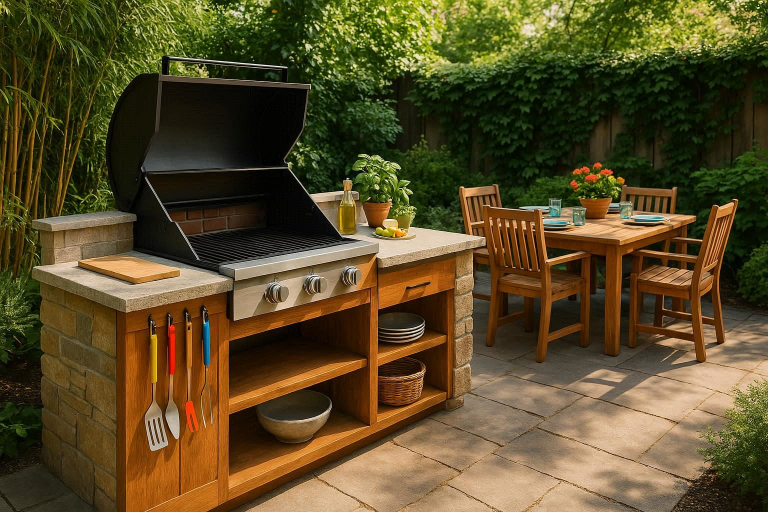
Are you ready to elevate your backyard? Imagine hosting family dinners, barbecues, or cozy get-togethers with friends, all while enjoying the fresh air and natural beauty of your outdoor space. One of the best ways to achieve this is by building an outdoor kitchen. Not only does it enhance your outdoor living experience, but it can also add significant value to your home. In this blog post, we’ll guide you through the steps to create an outdoor kitchen that’s both functional and stylish, tailored to your specific needs.
Why You Should Build an Outdoor Kitchen
Enhances Entertainment
The backyard is the perfect place to entertain guests, and an outdoor kitchen makes it all the more inviting. Whether you’re grilling burgers for a casual family dinner or preparing a gourmet meal for a special occasion, an outdoor kitchen allows you to keep the fun flowing without missing a beat. No more running in and out of the house to grab ingredients, utensils, or drinks. You’ll be able to chat with your guests, keep an eye on the kids playing outside, and prepare your meal—all from the comfort of your outdoor kitchen.
Increases Home Value
When it comes to home improvements, outdoor kitchens are among the top choices that provide a great return on investment. Potential homebuyers love the idea of an outdoor kitchen because it adds both functionality and style. The combination of luxury appliances, ample cooking space, and a relaxing atmosphere can make your home stand out from others on the market.
Convenience and Comfort
Having a kitchen outside means no more running inside to grab an ingredient or clean your hands after handling raw food. An outdoor kitchen offers a level of convenience that traditional kitchens can’t match. You can also set up an area for eating and lounging, making it easy to host meals and parties with minimal effort.
Great for the Outdoors
There’s something about cooking in the open air that makes food taste even better. An outdoor kitchen allows you to enjoy the joys of nature while preparing your favorite meals. The fresh air, sounds of birds chirping, and the warmth of the sun on your skin add to the overall experience of cooking and dining outdoors.
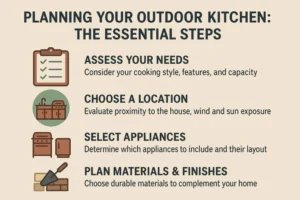
Planning Your Outdoor Kitchen: The Essential Steps
Assess Your Space
Before you begin building your outdoor kitchen, it’s essential to assess your available space. Measure Cleaning Guide for Home & Kitchen your yard and determine the best location for your kitchen. Ideally, it should be close to your house for easy access to plumbing and electricity, but far enough from the main living area so that the smells and smoke from cooking don’t interfere with indoor activities. Consider factors like wind direction, sunlight exposure, and proximity to your garden or seating areas.
Design Your Layout
When planning how to make an outdoor kitchen, the layout is key. There are several popular designs, including:
- U-Shape: A versatile design that wraps around you, offering plenty of counter space and easy access to appliances.
- L-Shape: A classic design that allows you to separate cooking and dining areas while still keeping everything within reach.
- Island Style: Ideal for those who want an open-concept kitchen where the cook can be part of the action.
Consider how you plan to utilize your outdoor kitchen and the number of people who will typically be cooking and eating simultaneously. Your layout should flow naturally and allow for easy movement between cooking, prepping, and serving areas.
Choose Key Features
There are several key features to include in your outdoor kitchen:
- Grill: The centerpiece of most outdoor kitchens, choose between a gas, charcoal, or electric grill based on your preferences.
- Sink: A sink is essential for cleanup, especially when preparing raw meats or handling messy dishes.
- Refrigerator: An outdoor-rated fridge helps keep beverages, ingredients, and leftovers cold without needing to go inside.
- Counter Space: More counter space means more room for food prep, so make sure you include enough space for chopping, plating, and serving.
- Storage: Cabinets, drawers, or open shelving provide space to store utensils, spices, and tools for cooking.
Determine Budget
Building an outdoor kitchen can be as simple or as elaborate as you like. It’s important to outline a realistic budget based on your needs and preferences. Consider the costs of appliances, materials, labor (if hiring a contractor), and any additional features, such as lighting or weather protection. Remember that quality materials and appliances can help ensure your outdoor kitchen lasts for years to come.
Choosing the Right Appliances and Materials
Grill: Gas vs. Charcoal vs. Electric
One of the most important decisions when making an outdoor kitchen is selecting the right grill. Each type of grill has its benefits:
- Gas Grills: Quick to heat up, easy to use, and ideal for those who want to cook quickly.
- Charcoal Grills: Known for their rich, smoky flavor and traditional cooking style.
- Electric Grills: Convenient and eco-friendly, perfect for smaller spaces or those who live in areas with strict fire regulations.
Refrigerator: Outdoor-Rated Refrigerators and Cooling Units
Outdoor kitchens require outdoor-rated appliances to withstand the elements. When choosing a refrigerator, look for a model designed for outdoor use, which will have better insulation and be able to handle varying temperatures.
Sink: Installing a Sink for Convenience and Cleanup
A sink is a must-have for cleaning up after meals. You can opt for a small prep sink or a larger, deep sink, depending on your space and needs. Consider adding a hot water system for convenience, especially if you plan on using your kitchen for larger gatherings.
Countertops: Best Materials for Outdoor Use
When choosing countertops for your outdoor kitchen, durability is key. Materials like granite, stainless steel, and stone are resistant to heat and weather, making them perfect for outdoor use. Make sure to choose a surface that’s easy to clean and maintain.
Storage Solutions: Cabinets, Drawers, and Shelving
Storage space is often overlooked but is essential for keeping your kitchen organized. Stainless steel cabinets or weather-resistant wood are great options for outdoor use. Shelving and drawers will help keep your utensils, condiments, and cooking tools easily accessible.
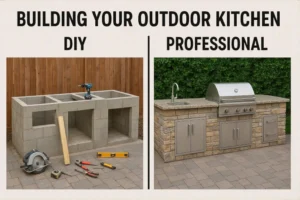
Building Your Outdoor Kitchen: A DIY vs. Professional Approach
DIY Outdoor Kitchen: Step-by-Step for a Basic Setup
If you’re handy with tools and have a clear plan, building a basic outdoor kitchen can be a satisfying DIY project. Start by constructing your base (using materials like concrete or stone), then install the key components: your grill, sink, counter space, and storage.
Hiring a Professional: When to Consider a Contractor
If you want to add custom features, or if the project seems too complex (especially when it comes to plumbing or electrical work), it’s a good idea to hire a professional. Contractors can help bring your vision to life, and they’ll ensure that everything is up to code.
Permits and Regulations
Before you start building, check with local authorities to see if you need any permits, especially if you plan on installing gas lines or plumbing. Some areas may have regulations about outdoor kitchens, so it’s important to ensure that your project complies with local building codes.
Outdoor Kitchen Design Tips
Incorporate Natural Elements
Blending your outdoor kitchen with the surrounding landscape can help it feel like a natural extension of your home. Use materials like stone, wood, or brick to complement the existing architecture and surrounding environment.
Lighting: Task and Ambient Lighting
Lighting is key to setting the mood in your outdoor kitchen. Use task lighting for cooking areas and ambient lighting for seating and dining spaces. String lights, lanterns, or built-in lights in the counter or overhead can create a welcoming atmosphere.
Weather Protection: Roof, Pergola, or Canopy
If you live in an area with unpredictable weather, consider adding a roof, pergola, or canopy to protect your outdoor kitchen. This will allow you to cook and dine outside regardless of the rain or sun exposure.
Seating Area: Designate Space for Dining or Lounging
An outdoor kitchen is not complete without a seating area. Whether you prefer a formal dining table or a casual lounge with comfy chairs, make sure to include space for guests to sit, eat, and enjoy the atmosphere.
Maintenance and Care for Your Outdoor Kitchen
Cleaning Your Appliances
To keep your outdoor kitchen in top condition, it’s important to regularly clean your appliances. Make sure to clean your grill after each use, wipe down countertops, and sanitize the sink.
Protecting from the Elements
Protect your outdoor kitchen appliances and furniture from the elements by using covers during the off-season or when not in use. This will help prevent weather damage and keep your kitchen looking new.
Seasonal Maintenance
As the seasons change, so do the needs of your outdoor kitchen. Before winter sets in, clean everything thoroughly, drain water lines, and cover any exposed components. In spring, give your kitchen a deep clean and check for any damage that may have occurred over the winter.
Common Mistakes to Avoid When Building an Outdoor Kitchen
Not Planning for Enough Storage
A common mistake is underestimating the need for storage space. Be sure to include plenty of cabinets, shelves, and drawers to keep cooking tools, spices, and utensils within easy reach.
Poor Ventilation
Proper ventilation is essential, especially when grilling or cooking with high heat. Without good airflow, you may experience smoke buildup that can ruin the cooking process and affect the comfort of your guests.
Ignoring Utility Needs
Don’t overlook the importance of water, electricity, and gas connections. Ensure that your outdoor kitchen has everything it needs to function smoothly, and consult a professional if necessary to set up these utilities.
FAQ Section
What is the cost of building an outdoor kitchen?
The cost varies widely based on features, materials, and the complexity of installation. On average, expect to spend anywhere from $5,000 to $20,000 or more for a fully functional outdoor kitchen.
Can I make my outdoor kitchen without a professional?
Yes! With the right tools, knowledge, and planning, building a basic outdoor kitchen can be a rewarding DIY project.
How do I keep my outdoor kitchen clean and maintained?
Regular cleaning, protecting appliances with covers, and seasonal maintenance will help ensure your outdoor kitchen stays in top shape.
Do I need a permit to build an outdoor kitchen?
It depends on local regulations. If you’re installing plumbing or gas lines, a permit may be required.
What appliances do I need in an outdoor kitchen?
At a minimum, you’ll need a grill, refrigerator, sink, and adequate counter space and storage.
Conclusion
Building an outdoor kitchen is an exciting and rewarding project that can transform your backyard into a hub of entertainment and culinary creativity. By following the steps outlined in this guide, you can create a space that not only enhances your outdoor lifestyle but also adds value to your home. So, why wait? Start planning how to make an outdoor kitchen today and turn your backyard into the ultimate cooking and entertaining space!