
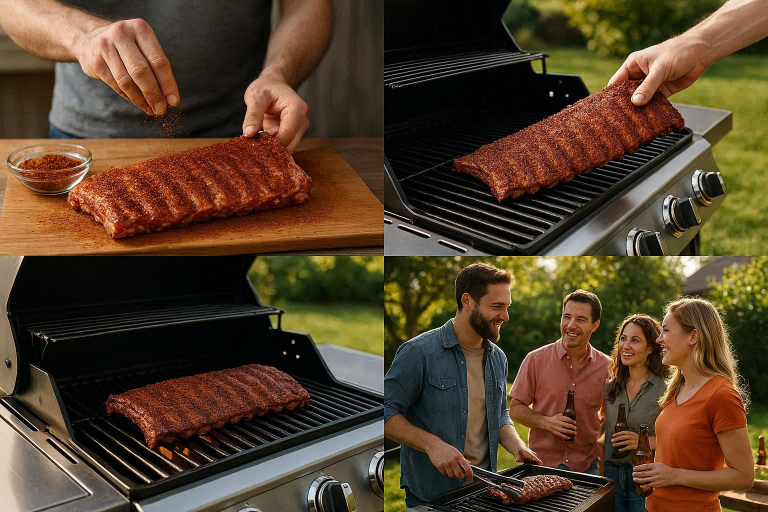
Many people believe you need a big, expensive smoker to make real BBQ ribs, so they never even try them on a simple gas grill. The truth is, you can cook amazingly tender, juicy, smoky ribs right in your backyard with the grill you already own. In this guide, I’ll show you exactly how to prep, season, cook, and sauce ribs step by step, even if you’re a complete beginner.
You’ll learn how to set up your gas grill for low and slow cooking, how to use indirect heat so the ribs don’t burn, and how to add that delicious smoke flavor with wood chips. We’ll also talk about timing, temperatures, and the small patience tricks that turn tough racks into fall-off-the-bone goodness. By the end, you’ll feel confident firing up your gas grill and serving ribs that taste like they came from a real BBQ joint. Let’s get started.
What Makes Great BBQ Ribs (Even on a Gas Grill)?
Great BBQ ribs aren’t just about sauce. They’re about texture, moisture, and flavor all working together. When you bite into good ribs, the meat should be tender and easy to chew, but not so soft that it turns mushy. Tough ribs make you work for every bite and usually 50 Time-Saving Recipes mean they were cooked too fast or at too high a temperature.
Moisture is another big factor. Juicy ribs feel rich and satisfying, with meat that glistens slightly when you slice it. Dry ribs, on the other hand, are stringy, chalky, and often rely on loads of sauce just to be edible. The difference usually comes down to how you manage heat, time, and moisture during cooking.
There are three main pillars of great ribs, even on a gas grill:
- Low & slow cooking – Ribs are full of connective tissue. They need gentle heat over several hours to break down and become tender.
- Indirect heat – Instead of putting ribs directly over the flame, you cook them on the cooler side of the grill while the burners are lit on the opposite side. This turns your gas grill into a kind of outdoor oven.
- Moisture + flavor from rubs, smoke, and sauce – A good dry rub builds a flavorful crust, smoke adds depth, and sauce brings sweetness, tang, or heat at the end.
The good news is that a gas grill can mimic a smoker’s behavior when you set it up right. With one side of the grill running and the ribs on the other side, plus a smoker box or foil packet of wood chips, you can create that slow, smoky environment most people associate only with dedicated smokers.
Baby Back vs. Spare Ribs vs. St. Louis Cut
Not all ribs are the same, and knowing the difference helps you choose what works best for you.
- Baby back ribs are smaller, leaner, and a bit more tender. They cook faster and are often the easiest option for beginners.
- Spare ribs come from lower on the rib cage. They’re larger, meatier, and have more fat, which means more flavor but also a slightly longer cooking time.
- St. Louis cut ribs are spare ribs trimmed into a neat, rectangular shape. They’re easier to cook evenly and slice cleanly.
If you’re just starting out, baby back ribs are a great choice because they’re more forgiving and don’t take quite as long to cook.
Why Low and Slow Matters for Ribs
Ribs are tough if you rush them. The meat contains collagen and connective tissue that only break down with time and gentle heat. When you cook ribs low and slow, that collagen slowly melts into gelatin, making the meat tender and juicy instead of chewy. High heat can cook the outside fast but leave the inside tough, so patience is key.
Tools and Ingredients You’ll Need
You don’t need fancy competition BBQ gear to make great ribs on a gas grill. A few basic tools and good ingredients will take you a long way.
Essential tools:
- A gas grill with at least 2 burners so you can set up indirect heat
- A grill brush to clean the grates
- Tongs for safely moving and flipping the ribs
- Aluminum foil for wrapping and resting
- A meat thermometer to check doneness if you like
- A drip pan or disposable aluminum pan to catch drippings and help control flare-ups
Optional tools:
- A smoker box or a simple foil packet to hold wood chips and create smoke
Key ingredients:
- Rack(s) of ribs – baby back or spare
- Olive oil or mustard to help the rub stick (binder)
- A dry rub, either store-bought or homemade
- Your favorite BBQ sauce for glazing at the end
- Wood chips such as hickory, apple, or cherry
- Optional liquids like apple juice, apple cider vinegar, beer, or broth to spritz or add when wrapping for extra moisture
Best Wood Chips for Gas Grill Ribs
Wood choice changes the character of your ribs. Apple and cherry give a mild, slightly sweet smoke that pairs beautifully with pork and is perfect for beginners. Hickory has a stronger, classic BBQ flavor that many people love but can be overpowering if you use too much. If you’re new to smoking on a gas grill, start with a mild wood and see how you like the flavor before moving to stronger options.
How to Prep Ribs for the Gas Grill
Before your ribs ever touch the grill, good prep makes a huge difference. This is where you set yourself up for tender, flavorful meat instead of something tough and chewy.
The first job is removing the membrane from the back of the ribs. On the bone side, you’ll see a thin, shiny layer. That’s the membrane. It doesn’t break down well during cooking, so it can stay chewy and block flavor from getting into the meat.
Removing it is simple:
- Place the ribs bone side up.
- Slide a small, sharp knife under the membrane at one corner to loosen it.
- Once you can grab a piece, use a paper towel for grip.
- Pull slowly. Sometimes it comes off in one clean sheet. If it tears, just grab the next section and keep going.
Taking this step makes the ribs more tender and lets your rub and smoke penetrate better.
Next, trim excess fat or uneven edges. You don’t need to remove every bit of fat—it adds flavor—but large, loose pieces will just melt and flare up. Trim off thin flaps of meat on the edges that might burn or dry out too quickly.
Finally, pat the ribs dry with paper towels. Dry surfaces sear better, hold rub more evenly, and don’t steam. This may seem small, but it helps you get a better bark and texture later.
Applying a Binder (Mustard or Oil)
A binder is a thin layer you spread on the ribs before the rub. Common choices are yellow mustard or olive oil.
Why use one?
- It helps the rub stick to the meat.
- It encourages an even coating and better crust.
Don’t worry about the flavor of mustard. The strong taste mostly cooks off, and you’ll be left with the seasoning and smoke, not a mustardy rib. Whether you choose mustard or oil is personal preference—both work well.
Seasoning Ribs – Dry Rubs and Marinades
Once your ribs are prepped, it’s time to add flavor. For classic BBQ, dry rubs are the star.
Why Use a Dry Rub?
Dry rubs offer two big benefits:
- They build a flavorful crust (bark) on the outside of the ribs.
- They’re simple and flexible. You can make them from spices you already have.
Rub the mixture onto the meat, and during cooking, it forms that beautiful, tasty surface you expect from good ribs.
Basic Dry Rub Ingredient List
A simple, balanced rib rub can be made from:
- Brown sugar
- Salt
- Black pepper
- Paprika
- Garlic powder
- Onion powder
- Chili powder
- Cayenne (optional, for heat)
The brown sugar brings sweetness and helps with caramelization. Salt and pepper are your base seasoning. Paprika adds color and mild flavor. Garlic and onion powder give depth, and chili powder plus cayenne add a slow, gentle heat.
How to Apply the Rub
- With the binder on, sprinkle the rub generously over one side of the ribs.
- Pat it gently into the meat. Don’t rub too hard or you’ll cause clumps.
- Flip the rack and repeat on the other side.
- Don’t forget to season the edges along the sides of the rack.
You want an even coat, not a thick, muddy layer.
How Long to Let the Rub Sit
Give the rub time to work:
- At least 30–60 minutes at room temperature before grilling.
- For deeper flavor, wrap the ribs and let them rest overnight in the fridge.
The longer rest lets the salt and spices start to draw into the meat, making each bite more flavorful.
Simple Homemade Rib Rub Recipe
Here’s an easy starting point you can adjust:
- 1/4 cup brown sugar
- 2 tbsp paprika
- 1 tbsp salt
- 1 tbsp black pepper
- 1 tbsp garlic powder
- 1 tbsp onion powder
- 1–2 tsp chili powder
- 1/2–1 tsp cayenne (optional)
Mix everything well and keep it in an airtight jar. You can make extra for your next BBQ.
When to Use a Wet Marinade Instead of a Rub
Marinades can be useful when you want:
- Stronger flavors like citrus, soy, or herbs
- A different style of rib, such as Asian-inspired or very tangy ribs
For traditional BBQ ribs on a gas grill, a dry rub is usually enough. You can always layer on extra flavor later with sauce.
Setting Up Your Gas Grill for Low & Slow Ribs
Ribs need gentle heat over time. That’s why indirect heat is so important.
Indirect Heat Setup
On a gas grill with two or more burners:
- Turn on only one side of the grill (one or two burners).
- Leave the other side off.
- The ribs will sit over the cool side, away from direct flame.
- Place a drip pan or disposable aluminum pan under the ribs if possible to catch fat and help control flare-ups.
This setup turns your grill into a kind of outdoor oven. The lit side provides heat, and the unlit side is where the food cooks slowly.
Ideal Temperature Range
For ribs, aim for:
- 225°F–275°F (about 107–135°C)
Many people like to stay close to 250°F. This range is hot enough to cook in a few hours but gentle enough for collagen to break down without burning the outside.
Preheating the Grill
Preheat matters:
- Turn on the burner(s) on the hot side.
- Place your smoker box or foil packet over the lit burner.
- Close the lid and let the grill heat for 10–15 minutes.
Check the temperature and adjust the burner knobs until it steadies in your target range.
Adding Smoke with a Gas Grill
You don’t get smoke flavor from gas alone, but you can add it with wood chips.
Two easy methods:
- Smoker box: Fill with soaked wood chips if you prefer, then set over the lit burner.
- Foil packet: Wrap a handful of chips in heavy foil, seal it, and poke a few holes on top. Place it over the lit burner.
When you see a thin, steady stream of smoke and your temperature is stable, you’re ready for ribs.
How to Maintain Consistent Temperature on a Gas Grill
- Use the lid thermometer or, better, a digital probe for more accuracy.
- Make small adjustments to the burner knobs instead of big changes.
- Keep the lid closed as much as possible so you don’t lose heat and smoke.
If it’s windy or cold, you may need slightly more burner power to hold temperature.
Step-by-Step: How to BBQ Ribs on a Gas Grill
This is where everything comes together.
Step 1 – Preheat and Set Up Indirect Heat
- Light the burners on one side of your grill.
- Put your smoker box or foil packet with wood chips over the lit side.
- Close the lid and adjust heat until you reach 225–250°F.
Step 2 – Place the Ribs on the Grill
- Put the ribs bone side down over the unlit burners.
- Position them so they’re not directly above any flame.
- Close the lid to trap heat and smoke.
Step 3 – Cook Low & Slow
- Plan on 3–5 hours total, depending on rib type and grill temperature:
- Baby backs: about 3–4 hours
- Spare/St. Louis: about 4–5 hours
- Avoid constantly lifting the lid. Check only every 30–45 minutes.
- If your grill has hot spots, you can rotate or flip the ribs halfway through to encourage even cooking.
Step 4 – Add Moisture (Optional 2–2–1 Method Style)
To keep ribs moist and flavorful:
- Every 45–60 minutes, spritz the ribs with apple juice or apple cider vinegar (diluted with water if you like).
- After a couple of hours, you can wrap the ribs in foil with a little liquid (apple juice, beer, or broth) for extra tenderness. This helps steam the meat gently and speed up collagen breakdown.
Step 5 – When to Sauce the Ribs
Sauce is best added toward the end:
- In the last 20–30 minutes, brush a thin layer of BBQ sauce on the ribs.
- Let it set and get sticky, then add another light layer if you want.
Don’t sauce too early. Sugar can burn if it sits over heat for too long.
Step 6 – Check Doneness and Rest the Ribs
Look for these signs:
- Visual cues: The meat has pulled back from the bone ends by about 1/4–1/2 inch.
- Bend test: Lift the rack from the middle with tongs. If it bends and the surface cracks slightly, they’re likely ready.
- Internal temp: For very tender ribs, many aim for 190–203°F in the thickest part between bones.
When done:
- Take the ribs off the grill and rest them 10–15 minutes under foil.
- Slice between the bones and serve.
How Long to BBQ Ribs on a Gas Grill?
Use these as general guides:
- Baby back ribs: about 3–4 hours at 225–250°F
- Spare or St. Louis ribs: about 4–5 hours at 225–250°F
Time can change based on:
- How stable your grill temperature is
- The size and thickness of your ribs
- Weather, wind, and outside temperature
Always remember: cook to tenderness, not just to the clock.
Common Mistakes to Avoid When Grilling Ribs on a Gas Grill
Avoid these to save yourself frustration:
- Cooking ribs over direct high heat (you’ll get burnt outside, raw inside).
- Forgetting to remove the membrane, which leads to a chewy underside.
- Skipping preheat and not setting up indirect heat correctly.
- Opening the lid too often, which drops your temperature and slows everything.
- Using too many smoke chips, creating bitter flavor.
- Applying sugary sauce too early, causing it to burn and blacken.
Tips for Extra Flavor and Perfect Texture
A few small tricks can take your ribs from good to great:
- Let ribs sit at room temperature for 15–20 minutes before grilling.
- Use a water pan or drip pan to add moisture and catch fat drips.
- Try double-saucing: apply a thin layer, let it set, then add another layer near the end.
- Experiment with different rubs and sauces—sweet, spicy, or tangy—to find your favorite combo.
- If you love a bit of char, give the ribs a short blast of higher heat at the very end, only after they’re already tender.
With these steps, your gas grill ribs will be tender, flavorful, and impressive enough to serve at any backyard BBQ.
Serving Ideas and Side Dishes for Gas Grill Ribs
Once your ribs are tender, juicy, and ready to eat, the fun part begins—serving them. A great plate of ribs isn’t just about the meat. The right sides, presentation, and drinks turn it into a full BBQ experience.
Let’s start with classic sides that almost always work:
- Coleslaw – Creamy or vinegar-based slaw adds crunch and freshness that balances the rich, smoky ribs. The cool, crisp cabbage also cuts through the fat nicely.
- Corn on the cob – Grilled or boiled, brushed with butter and a little salt, corn is a perfect BBQ partner. You can even give it a light char on the grill after the ribs come off.
- Baked beans – Sweet, smoky beans are a BBQ staple. They match the flavor profile of the ribs and soak up extra sauce like a sponge.
- Potato salad or mac and cheese – These comfort foods make your rib meal feel hearty and complete. Potato salad brings a cool, creamy element, while mac and cheese is warm, cheesy, and indulgent.
You don’t need dozens of sides. Two or three well-chosen dishes can make your rib feast feel generous and well thought out.
Simple Plating Tips
You’ve worked hard on your ribs, so present them with a little care:
- Slice between the bones so each rib has a clean, even cut. A sharp knife helps you avoid tearing the meat.
- Stack or fan them out on a platter, bones facing slightly up or to the side. This looks inviting and makes it easy for guests to grab a rib.
- Serve extra BBQ sauce on the side in a small bowl or ramekin instead of drowning the ribs on the platter. This keeps the bark from getting soggy and lets people choose how saucy they want their ribs.
- Add a simple garnish, like chopped parsley or green onion, if you want that “restaurant” look, but it’s not required.
Beverage Pairing Ideas
The right drink helps balance the richness of the meat and the sweetness of the sauce:
- Light beer (lager or pilsner) cuts through the fat and doesn’t overpower the smoky flavor of the ribs.
- Iced tea (sweet or unsweet) is a classic backyard BBQ choice—refreshing and easy to sip.
- Lemonade or limeade offers a bright, tangy contrast that pairs nicely with sweet BBQ sauce.
- For non-alcoholic options, flavored sparkling water or homemade fruit punch can make the meal feel festive.
Storage, Reheating, and Leftover Rib Ideas
If you’re lucky enough to have ribs left after everyone’s done, don’t let them go to waste. Proper storage and reheating can make them almost as good the next day.
Storing Cooked Ribs
Start by letting the ribs cool slightly so they’re not steaming hot, but don’t leave them out for hours.
- Wrap the ribs tightly in foil or place them in an airtight container. If you like, you can leave them in larger sections instead of individual ribs—this helps them retain moisture.
- Store them in the refrigerator for 3–4 days.
- For longer storage, wrap them well (foil plus a freezer bag works great) and freeze. Frozen ribs can last several months and still reheat well.
Reheating Ribs
The best way to reheat ribs is low and slow, just like cooking them.
- In the oven or on the grill, wrap ribs in foil and add a splash of liquid—apple juice, broth, or even a bit of water.
- Warm them at a low temperature (around 250–275°F) until hot. This keeps them moist and prevents drying.
- You can open the foil at the end and brush on a little fresh sauce, letting it set for a few minutes.
Try not to rely on the microwave as your main reheating method. It tends to dry the meat and can make it chewy. If you must use it, do so briefly and finish the ribs in the oven or on the grill to bring back some texture.
Leftover Rib Ideas
Leftover ribs are incredibly versatile. Once you remove the meat from the bones, you can use it in all kinds of dishes:
- Pulled rib sandwiches – Shred the meat, warm it with a bit of sauce, and pile it on a toasted bun with slaw.
- Rib meat tacos or nachos – Use the meat as a filling with cheese, salsa, jalapeños, and your favorite toppings.
- Soups, stews, or baked beans – Stir shredded rib meat into beans or soups for a smoky, meaty boost in flavor.
Sometimes leftovers are even better than the original meal because the flavors have had time to meld.
FAQs
Can you really get a smoky flavor on a gas grill?
Yes. Use a smoker box or a foil packet filled with wood chips and place it over a lit burner. As the chips smolder, they release smoke that flavors the ribs, similar to a traditional smoker.
What temperature should my gas grill be for ribs?
Aim for 225–275°F, with many people targeting around 250°F. This low and slow range lets the ribs cook gently and become tender without burning.
Should I boil ribs before putting them on the grill?
No. Boiling ribs can wash away flavor and leave the meat bland or mushy. It’s better to cook them low and slow on the grill so they stay flavorful and develop a nice bark.
Do I grill ribs with the lid open or closed?
Keep the lid closed most of the time. You’re using your grill like an oven, and opening the lid too often lets out heat and smoke, making it harder to maintain a steady temperature.
How often should I flip or move the ribs?
With a good indirect setup, you don’t need to flip constantly. Checking every 30–45 minutes is enough. You can rotate or flip once midway through if your grill has hot spots.
How do I keep ribs from drying out on a gas grill?
Use indirect heat, maintain a steady low temperature, and consider spritzing the ribs with apple juice or cider vinegar every 45–60 minutes. A drip pan, optional foil wrap, and avoiding high direct heat also help.
When should I wrap ribs in foil on a gas grill?
If you choose to wrap, do it after the ribs have developed good color—usually after 2–3 hours. Add a little liquid inside the foil, wrap tightly, and return them to the grill for extra tenderness.
How do I know when ribs are done without a thermometer?
Use the bend test: lift the rack from the middle with tongs. If the ribs bend easily and the surface cracks slightly, they’re usually ready. You can also look for meat pulling back from the bone ends.
Can I cook ribs faster on a gas grill?
You can raise the temperature to cook them faster, but you’ll often sacrifice tenderness. If you’re short on time, wrapping in foil can help speed things up while still keeping them fairly moist.
What’s the best BBQ sauce for gas-grilled ribs?
The best sauce is the one you like most. Sweet, smoky, tangy, or spicy sauces all work. Just remember to apply sauce in the last 20–30 minutes so it caramelizes without burning.