
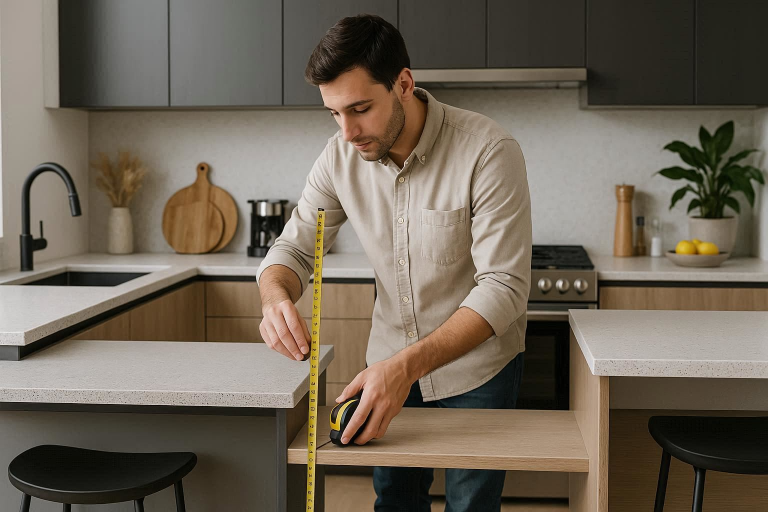
The height of your kitchen counters might seem like a minor detail, but it plays a crucial role in your cooking efficiency, comfort, and overall kitchen design. If you’ve ever found yourself hunched over your counter while chopping vegetables or struggling to reach your cabinet shelves, you know that counter height isn’t something to take lightly.
In this guide, we’ll delve into kitchen counter heights—exploring why they matter, the ideal heights for various tasks, and how to determine the right height for your specific needs. Whether you’re designing a new kitchen or just looking to optimize your existing one, understanding counter height is essential for creating a functional and comfortable space.
Why Does Kitchen Counter Height Matter?
Ergonomics: Comfort and Health
Counter height significantly impacts your comfort while working in the kitchen. Incorrect height can lead to poor posture, resulting in back, neck, and wrist strain. If your counters are too low, you might find yourself constantly Cleaning Guide for Home & Kitchen bending over, which can strain your lower back. On the other hand, counters that are too high can cause shoulder and wrist discomfort, as you’ll be reaching up all the time.
The ideal counter height ensures that your body stays in a neutral, relaxed position, reducing the risk of strain. For example, the right height can prevent you from hunching over or stretching too much while you cook or clean.
Work Efficiency: Speed and Comfort
When your counter height is just right, it boosts your efficiency in the kitchen. You’ll spend less time adjusting your posture and more time preparing meals or cleaning up. For tasks like chopping, slicing, and mixing, a comfortable counter height allows you to work faster and more accurately.
Imagine baking a cake. If your counter is too high or too low, you might need to stretch or crouch down to mix your ingredients properly, which slows you down. But with the right height, everything feels easier and more natural.
Design Aesthetics: Overall Kitchen Flow
Counter height isn’t just about comfort—it’s also about how your kitchen looks. A well-designed kitchen considers counter height to create a balanced and cohesive layout. Whether it’s a standard counter, a raised island, or a bar-height counter, height influences the flow of your kitchen’s design.
When choosing a counter height, consider the overall look of your kitchen. How do you want your counters to complement the cabinets, seating, and other kitchen elements? The right height can enhance the aesthetic appeal and functionality of your kitchen.
Standard Kitchen Counter Heights
Typical Heights for Standard Kitchens: 36 Inches
In most homes, the standard counter height is 36 inches. This measurement is generally ideal for most tasks, such as food preparation, cooking, and cleaning. It’s a height that suits the average adult’s body, offering a good balance between comfort and practicality.
However, this might not be the perfect height for everyone, and that’s why understanding the factors that affect counter height is crucial.
Factors That Affect Height: Age, User Height, and Tasks
While 36 inches is typical, your ideal counter height may differ depending on your body size, age, and the tasks you perform most often. For example:
- User Height: If you’re particularly tall or short, a 36-inch counter might not be ideal. Taller individuals may prefer a counter height closer to 38 or 40 inches, while shorter individuals may find a 34-inch height more comfortable.
- Specific Tasks: If you spend a lot of time chopping or prepping, a slightly higher counter might be beneficial. For baking, on the other hand, you may prefer a lower counter to facilitate rolling dough.
Custom Counter Heights: When to Go Non-Standard
In some cases, you may deviate from the standard height. Custom counters are common in kitchens where multiple users of varying heights share the space or when the kitchen has unique functions. If your kitchen layout includes an island, bar, or workspace with a specific purpose, consider adjusting the height accordingly.

Different Types of Countertops and Their Heights
Standard Counter Height: 36 Inches
As mentioned earlier, this is the most common height for kitchen counters. It works well for most everyday tasks, including food prep and general cooking. If you’re designing a standard kitchen without special considerations, 36 inches is a safe bet.
Island Counter Height: 42 Inches
Kitchen islands are often slightly taller than standard counters, typically around 42 inches. This height is ideal for standing, cooking, and seating. It’s also more comfortable for eating at the island or using it as a serving station.
If you’re adding a bar area to your kitchen, a 42-inch island counter height provides a more elevated experience for casual dining.
Bar-Height Counter: 42 Inches
Bar-height counters typically measure 42 inches in height. This height is designed for seated use, making it perfect for eating, chatting, or entertaining guests. The elevated height makes for comfortable bar stools and provides a more relaxed setting for gatherings.
Raised or Lowered Counters: Custom Heights
Some kitchens feature raised or lowered counters to accommodate specialized tasks. For instance, if you need a countertop for tasks like mixing or preparing large meals, a raised counter can help you avoid excessive bending. On the other hand, a lowered counter might be more useful for seated work, such as a workstation for kids or older adults.
Ideal Counter Height for Different Kitchen Tasks
Prep Work: The Right Height for Chopping, Mixing, and Slicing
When you’re preparing ingredients, you need a counter height that allows you to work with ease. A 36-inch counter is usually ideal for most food prep tasks. However, if you’re tall or frequently chop large vegetables, a slightly higher counter (around 38 inches) might help reduce strain.
Cooking: Stovetops, Ovens, and Standing Tasks
For tasks that require standing at the stove or preparing meals on the countertop, a height of 36 inches is generally comfortable. But for tasks like stirring, sautéing, or standing while cooking, some people prefer a slightly higher counter to prevent back strain.
Cleaning: Dishwashing and Tidying Up
Dishwashing can be a physically demanding task, and having the right counter height can make it much easier. A counter height that aligns with your natural stance helps minimize strain while doing dishes, cleaning countertops, or loading the dishwasher. Most people find a 36-inch height works well, but if you find yourself leaning forward while cleaning, consider a slight adjustment.
Baking and Specialized Tasks
When it comes to baking, you may prefer a counter that is slightly lower to allow for comfortable kneading, rolling dough, or using appliances like mixers. A counter height of 34 inches could be ideal for these tasks, allowing for a more comfortable stance and reducing the need to bend too much.

How to Determine the Right Counter Height for You
Measuring Your Height: General Guidelines
Your body height plays a big role in determining your ideal counter height. A common rule of thumb is to set your counter height so that your elbows are at a 90-degree angle when standing. This ensures that your arms are comfortably positioned and reduces the strain on your back and shoulders.
The Elbow Test: Practical and Simple
Here’s a simple test to help determine if your counter height is right for you: Stand in front of your counter and bend your elbows to a 90-degree angle. Your forearms should rest comfortably on the counter without you having to raise or lower your shoulders.
If your elbows feel too high or too low, adjust the counter height accordingly.
Custom Solutions: When to Opt for Custom Heights
If you and your family have varying heights or specific kitchen tasks, a customized counter height might be necessary. Working with a kitchen designer or contractor can help you create a space that meets your needs, whether that involves varying counter heights for different areas or an entirely custom setup.
Counter Height and Kitchen Design Trends
The Rise of Open Concept Kitchens
Open concept kitchens are becoming more popular, and counter height plays a significant role in maintaining flow within these spaces. A well-designed open kitchen considers how counters interact with the rest of the layout, ensuring the space feels balanced and cohesive.
Adjustable Countertops: The Future of Flexibility
Height-adjustable countertops are starting to make waves in modern kitchen design. These counters allow homeowners to adjust the height based on the task at hand, providing flexibility and comfort. While these counters may be a bit of an investment, they’re a great option for families with multiple users or people with special needs.
Height Variations in Modern Kitchens
Modern kitchens often use multiple counter heights to create an interesting design dynamic. For example, you might have a taller prep counter and a lower baking station. This variation not only makes the kitchen more functional but also adds a touch of personality to the space.
What to Do If Your Kitchen Counter Height Is Wrong
Fixing Non-Standard Heights
If your counter height feels off, there are ways to fix it. Adding or removing material from the counter is one option, though it’s more feasible when installing new counters. If your counter height is only slightly off, you might be able to adjust your seating or countertop accessories to make it more comfortable.
Using Adjustable Platforms
For a more affordable option, adjustable platforms or risers can help temporarily raise or lower your counter height. These platforms are useful if you don’t want to undergo a major renovation but still need to make adjustments for specific tasks.
Consulting a Professional
If you’re unsure about adjusting your counter height, it’s worth consulting a kitchen designer or contractor. A professional can recommend the best solutions for your space, whether that means adjusting the counter height or offering custom solutions that meet your needs.
FAQ Section
Q1: What is the standard height for kitchen counters?
A1: The typical height is 36 inches, but this can vary depending on user needs and kitchen design.
Q2: How do I know if my kitchen counters are the right height for me?
A2: Try the elbow test—your elbows should rest comfortably at a 90-degree angle when standing at the counter.
Q3: Can I adjust my counter height if it’s too high or low?
A3: Yes, you can make adjustments with custom countertops, platforms, or even temporary risers.
Q4: Why do some kitchens have higher counter heights like 42 inches?
A4: Taller counters are often used for islands or bar-height areas where seating is involved, providing more comfort for dining or entertaining.
Q5: What is the best height for a kitchen island counter?
A5: The standard height for kitchen islands is typically 42 inches, but it can be adjusted depending on your preference for seating or prep work.
Conclusion
Choosing the right kitchen counter height is about more than just comfort—it’s about creating a space where you can work efficiently and enjoy your time in the kitchen. Whether you stick with the standard 36-inch height or opt for something more customized, taking the time to assess your needs will make a big difference.
Now that you know what to consider when selecting your counter height, it’s time to take a good look at your kitchen. Whether you’re designing a new space or tweaking your current setup, ensuring that your counters are at the right height will improve both function and comfort.
If you’re unsure about making changes, don’t hesitate to consult a professional to get the best result for your kitchen.