
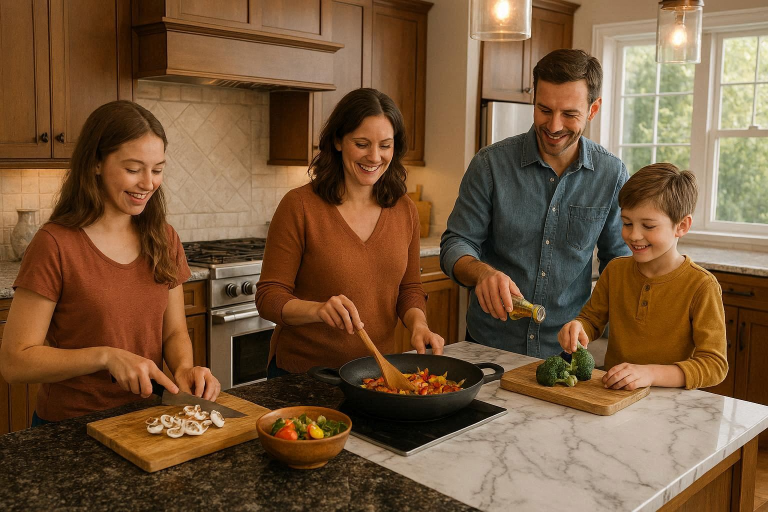
Your kitchen countertop is more than just a surface; it’s the workhorse of your home. Between chopping vegetables, setting down hot pans, and cleaning up spilled red wine, a countertop needs to be tough—it needs to be durable.
But what is the most durable kitchen countertop material? The answer isn’t simple because “durability” has several factors.
For a busy, high-traffic kitchen, you need a surface that resists four main types of damage: scratches, stains, heat, and impact. Choosing the right material ensures longevity and protects your investment for years to come.
This guide breaks down the science of countertop durability to help you find the perfect, long-lasting surface for your home.
What Does “Durable” Mean for a Kitchen Countertop?
Durability is not a single measurement. A countertop might be nearly impossible to scratch but easily stained. To properly assess a material’s longevity, we look at several key metrics:
-
Scratch Resistance: Measured on the Mohs scale of hardness, this determines how easily the surface can be permanently damaged by friction from knives, metal utensils, or dragged appliances.
-
Heat Resistance: The material’s ability to withstand high temperatures from hot pots and pans without melting, scorching, cracking (thermal shock), or discoloring.
-
Stain Resistance: How non-porous the material is. Non-porous materials prevent liquids (like wine, oil, or coffee) from seeping in and causing permanent discoloration.
-
Impact Resistance: The ability to withstand accidental drops from heavy objects, like a cast-iron skillet, without chipping or cracking.
A truly durable kitchen countertop material performs exceptionally well across all four of these categories, making it suitable for a high-traffic environment.
The Top Tier: Three Contenders for Maximum Durability
When looking for the absolute strongest countertop, three materials consistently rise above the rest: Engineered Quartz, Natural Granite, and Ultra-Compact Surfaces.
Engineered Quartz: The Low-Maintenance Champion
Engineered quartz is a manufactured product made from approximately 90–97% crushed natural quartz crystals, bound together with polymer resins. This engineering is what makes it a durability powerhouse.
Why Quartz is So Durable:
-
Non-Porous: The resin binder fills all the natural stone gaps, making the material non-porous. This means it is virtually stain-proof and never needs sealing, a huge win for low-maintenance kitchens.
-
Excellent Hardness: Quartz scores a 7 out of 10 on the Mohs scale, making it highly scratch-resistant for daily use.
-
Consistent Quality: Unlike natural stone, its uniformity is controlled in the factory, leading to fewer internal fissures or weak spots.
The Caveat: Because of the polymer resin, quartz is not as heat-tolerant as natural stone. Extreme, localized heat (like a pot straight from the stove) can scorch the resin, leading to permanent discoloration or cracking (thermal shock). Always use a trivet.
Natural Granite: The Heat and Scratch King
Granite is a classic natural stone, formed deep within the Earth under intense heat and pressure. It’s been a symbol of Kitchen Appliances for Small Homes luxury and longevity for decades for a reason.
Why Granite is So Durable:
-
Superior Heat Resistance: Granite is incredibly heat-resistant. It can handle hot pots and pans much better than quartz without the risk of scorching, as there is no resin binder to melt.
-
High Hardness: Ranking between 6 and 7 on the Mohs scale, granite is extremely scratch-resistant, second only to some specialized materials.
-
Timeless Appeal: Its enduring natural beauty adds significant resale value, reflecting its perceived long-lasting durability.
The Caveat: Granite is naturally porous. To ensure its stain resistance, it must be sealed upon installation and resealed every 1–3 years, depending on the sealant quality and use. Without sealing, spills will absorb and stain.
Ultra-Compact Surfaces (Porcelain/Dekton): The New Durability Benchmark
These materials, often sold under brand names like Dekton or Neolith, are the cutting edge of durability technology. They are made from a kitchen countertop best materials sophisticated mix of natural materials (quartz, porcelain, glass) pressed and baked at extreme temperatures.
Why Ultra-Compact Surfaces Are So Durable:
-
Impervious to Everything: They are non-porous, UV resistant, and incredibly heat-resistant—you can place a hot pot directly on the surface without worry.
-
Extreme Hardness: Many ultra-compact surfaces rank higher than quartz or granite, making them exceptionally scratch-resistant.
-
Best for Outdoor Use: Their UV resistance makes them the most durable option for outdoor kitchens, a factor no other material matches.
The Caveat: Due to their extreme hardness, they are difficult to cut and fabricate, often leading to higher installation costs. While resistant to surface scratches, a sharp, hard impact on an un-reinforced edge can cause chipping.
Durability Factor Comparison: Quartz vs. Granite vs. Porcelain
The best choice depends on which type of durability is most important for your cooking style. Here is a direct comparison of the top three durable kitchen countertop materials:
| Durability Factor | Engineered Quartz | Natural Granite | Ultra-Compact Surface (e.g., Dekton) |
| Scratch Resistance (Mohs) | Excellent (7) | Very Good (6-7) | Superior (8+) |
| Heat Resistance | Fair (Sensitive to thermal shock/resin scorch) | Excellent (Natural Stone) | Superior (Virtually Impervious) |
| Stain Resistance | Superior (Non-Porous, No Sealing Needed) | Good (Requires Regular Sealing) | Superior (Non-Porous, Zero Absorption) |
| Impact/Chip Resistance | Very Good (Can chip at edges) | Good (Can chip at edges/veins) | Good (Can chip if hit very hard) |
| Overall Maintenance | Very Low | Moderate (Due to Sealing) | Very Low |
Heat Resistance Showdown
If you are a heavy cook who constantly moves pots from the stove to the counter, Granite or Ultra-Compact Surfaces are the clear winners. Their composition is naturally or chemically designed to withstand high-temperature fluctuations.
For quartz countertops, the high concentration of polymer resin means heat is its primary weakness. Always use a trivet—it’s the simplest way to extend the longevity of this otherwise fantastic material.
Scratch and Chip Resistance
For pure scratch resistance, Ultra-Compact Surfaces take the crown, often being harder than most steel utensils. However, for everyday wear, both quartz and granite offer more than enough resistance to handle normal kitchen activities without marking.
Expert Tip: The biggest danger to any countertop is the edge profile. Rounded or beveled edges are significantly less prone to chipping from impact than sharp, square edges.
Stain and Acid Resistance (Non-Porous Factor)
This is where the engineered and ultra-compact materials, Quartz and Porcelain, shine. Because they are non-porous, spills simply sit on the surface, making them effortless to clean.
Granite, being a porous natural stone, requires regular sealing. If you spill a corrosive liquid (like lemon juice or vinegar) and it etches a soft stone like marble or limestone, that damage is much harder to repair than a simple surface mark.
Other Highly Durable Countertop Materials (The Specialist List)
While Quartz, Granite, and Ultra-Compact materials are the best all-arounders, other specialized materials offer excellent durability in specific areas.
Stainless Steel: The Professional Kitchen Powerhouse
-
The Durability Niche: Unmatched in heat resistance and hygiene. It is non-porous, antibacterial, and you can place any temperature pot on it.
-
The Trade-off: While durable, it is not scratch-proof; it will show scratches (which some consider a natural, professional patina). It can also dent from heavy impact. For extreme function, however, its longevity is superb.
Quartzite: The Harder Natural Stone
-
The Durability Niche: Often mistaken for quartz (the engineered material), quartzite is a metamorphic natural stone that is significantly harder than granite. It provides the natural look of marble but with granite-level (or better) scratch resistance.
-
The Trade-off: Like granite, it is porous and requires sealing. It also tends to be one of the most expensive natural stone options.
Solid Surface (Acrylic): The Repairable Option
-
The Durability Niche: Its core advantage is its repairability and seamless construction. Made from acrylic and mineral fillers (like Corian), it’s not as hard as stone, but any scratch, burn, or dent can be easily sanded out by a homeowner or professional.
-
The Trade-off: Poor heat resistance. Hot pans will scorch the surface. While easy to repair, it is more prone to minor scratches than stone-based materials.
Maximizing Longevity: 5 Essential Tips for Durable Countertops
Even the most durable kitchen countertop material needs proper care to maintain its look and guarantee its full lifespan. Follow these actionable steps to ensure maximum longevity from your investment.
Tip 1: Always Use a Trivet (Even on Granite!)
While granite is highly heat-resistant, rapid, localized temperature changes (thermal shock) can, in rare cases, cause hairline cracks, especially if the slab has existing micro-fissures. With quartz, it’s mandatory to prevent the resin from scorching. Make trivet use a non-negotiable kitchen habit.
Tip 2: Seal Natural Stone Countertops Properly
If you choose granite or quartzite, sealing is paramount for stain resistance.
-
Use a high-quality impregnating sealer.
-
Test for proper sealing by dropping a few beads of water on the surface. If the water beads up, the seal is good. If it soaks in within a minute, it’s time to reseal.
-
A correctly sealed natural stone surface can rival the stain resistance of engineered quartz.
Tip 3: The Importance of Edge Profile
As mentioned, corners and edges are the most vulnerable points for impact damage, which often results in a chip.
-
Opt for a softer, rounded profile like a bullnose or eased edge.
-
These profiles dissipate the force of a dropped item much better than a sharp, 90-degree square edge.
Tip 4: Clean with the Right Products
Acidic cleaners like vinegar, or abrasive scrubbers, can ruin a countertop’s finish.
-
For daily cleaning on all materials, use a simple pH-neutral soap and water.
-
Avoid highly acidic or chemical-heavy cleaners, especially on natural stone, as they can degrade the sealant and etch the surface.
The Most Common Countertop Durability Mistakes to Avoid
The life of your countertop is often shortened not by accidents, but by repeated poor habits. Avoid these common mistakes:
-
Using the Counter as a Cutting Board: Even on scratch-resistant granite or quartz, repeated cutting will dull your knives and can eventually cause minor scratches. More importantly, it can compromise a stone’s sealant, allowing bacteria to penetrate. Always use a cutting board.
-
Leaving Acidic Spills on Natural Stone: The number one enemy of marble and limestone (and unsealed granite/quartzite) is acid. A spill of tomato sauce, citrus juice, or wine must be wiped up immediately to prevent permanent etching or staining.
-
Ignoring a Chip or Crack: Small chips, especially on engineered materials like quartz, can spiderweb or get worse over time if not professionally filled. Address minor damage quickly to ensure the longevity of the entire surface.
-
Improper Installation: Even the most durable kitchen countertop material can fail if the installation is poor. A surface that isn’t level or properly supported can crack under its own immense weight (especially granite and concrete). Always hire certified, professional installers.
The Durability vs. Cost Breakdown (Quick Guide)
| Material | Durability Rating (Out of 5) | Average Cost (Per Square Foot, Installed) | Key Maintenance |
| Engineered Quartz | ⭐⭐⭐⭐ | $60 – $120 | No Sealing Required; Use Trivets |
| Natural Granite | ⭐⭐⭐⭐ | $50 – $150 | Regular Sealing Required; Excellent Heat |
| Ultra-Compact | ⭐⭐⭐⭐⭐ | $90 – $200 | Virtually None; Best Overall Performance |
| Stainless Steel | ⭐⭐⭐⭐ | $70 – $150 | Shows Fingerprints/Scratches; Impervious to Heat |
| Quartzite | ⭐⭐⭐⭐ | $80 – $250 | Regular Sealing Required; High Scratch Resistance |
| Solid Surface | ⭐⭐⭐ | $40 – $100 | Easy Repair/Sanding; Poor Heat Resistance |
FAQs:
Is Quartz or Granite more durable overall?
Quartz is often considered more durable in a modern, low-maintenance context because it is non-porous and therefore virtually stain-proof and requires no sealing. However, granite has a clear advantage in heat resistance. For all-around, real-world use in a busy home, they are both top-tier contenders.
What is the least maintenance countertop material?
The non-porous materials require the least maintenance. Engineered Quartz and Ultra-Compact Surfaces (like Porcelain and Dekton) need no sealing and are easy to clean with basic soap and water, making them ideal for a low-maintenance, high-traffic kitchen.
What is the hardest countertop material on the Mohs scale?
Purely on the Mohs scale of mineral hardness, Ultra-Compact Surfaces (often 8+) and Porcelain are the hardest, followed closely by Quartzite and Engineered Quartz (7). This high rating translates to exceptional scratch resistance.
Do durable countertops add resale value to a home?
Yes. Materials known for their longevity and performance, like granite and quartz, are highly desirable to home buyers. They are considered significant upgrades that suggest low future maintenance and high-quality construction.
Can hairline cracks in granite be fixed?
Yes. Small chips and hairline cracks in natural stone can often be repaired by a professional using color-matched epoxy resin. While the repair is permanent, the longevity of the repair relies heavily on the quality of the workmanship.
Conclusion:
The quest for the most durable kitchen countertop material ultimately leads to a top three: Engineered Quartz, Natural Granite, and Ultra-Compact Surfaces.
For the homeowner seeking a blend of high-end looks, low maintenance, and exceptional stain resistance, Quartz is the champion. It’s the material that handles the chaotic life of a kitchen with minimal fuss.
If your priority is pure, natural heat resistance and a material that can withstand high temperatures without question, Granite remains the timeless classic.
Finally, if you require the absolute maximum in longevity and are willing to pay a premium for a virtually impervious, next-generation surface, the Ultra-Compact Surfaces are your new benchmark for durability.
By considering your daily habits—whether you’re a messy cook, a frequent baker, or someone who occasionally places hot items down—you can match your lifestyle to the material that offers the best long-term durability.