
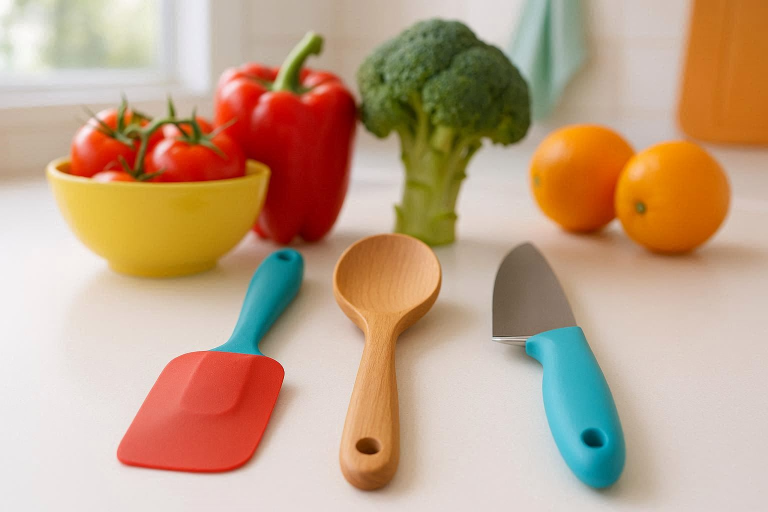
When you’re focusing on healthy eating, you probably spend a lot of time scrutinizing food labels, but have you ever stopped to consider the tools you use to prepare that food?
The spatula you use to flip your eggs, the spoon you stir your soup with, and even the tongs you use for grilling can all be a hidden source of chemical exposure.
The truth is, many common kitchen utensil materials can degrade under heat, friction, or exposure to acidic foods, potentially leaching harmful compounds into your meals.
If you’re tired of worrying about microplastics or “forever chemicals,” this guide is for you. We’ll break down the definitive safest choices, teach you how to spot a quality product, and provide the care instructions necessary to keep your tools safe and effective for years.
What is the Safest Kitchen Utensil? (The Quick Answer)
While several materials are excellent non-toxic choices, high-quality, food-grade stainless steel is generally considered the safest and most durable overall option for most kitchen tasks.
It is completely non-reactive, can withstand extreme heat, is easy to clean, and will not break down or leach chemicals into your food. It is the gold standard for hygiene and longevity.
However, stainless steel isn’t always Non-Toxic Cooking Utensils the best choice—especially if you’re cooking with non-stick or ceramic-coated pans. For a complete, non-toxic kitchen, a combination of three materials is ideal:
-
Stainless Steel (For general stirring, serving, and high-heat)
-
Food-Grade Silicone (For non-stick cookware and baking)
-
Natural Wood or Bamboo (For gentle mixing and aesthetic appeal)
Why Your Kitchen Utensils Matter: Understanding the Risks
Your utensils are arguably more important than your cookware because they are in direct, constant contact with your food while it is often hot—the exact scenario that triggers chemical leaching.
Heat, friction (scraping), and acidity (like tomatoes or lemon juice) can all accelerate the breakdown of certain materials.
The Dangers Lurking in Common Kitchen Materials
Many common kitchen items are made from various forms of plastic or synthetic coatings, which carry specific health risks. Knowing what these chemicals are is the first step toward building a safer kitchen.
| Toxin/Chemical | Material Found In | Primary Health Concern |
| BPA/BPS/BPF | Polycarbonate plastics (often #7), low-grade plastic handles | Endocrine disruptors, linked to hormone-related issues. |
| Phthalates | Soft, flexible plastics (used to make PVC soft) | Endocrine disruptors, linked to fertility and developmental issues. |
| PFAS/PFOA/PTFE | Older, damaged, or overheated non-stick coatings | “Forever chemicals” linked to serious health conditions. Primarily found in non-stick cookware, but can be in some spatula coatings. |
| Melamine | Hard plastic-like resin used in certain bowls and cheap utensils | Can leach into acidic, hot food, potentially leading to kidney issues. |
The key takeaway is that when a synthetic material is scratched, melted, or warped, it increases the likelihood of these compounds leaching into your meal, often in the form of microplastics or chemical residue. This is why durability is so closely tied to safety.
The Top 4 Safest Kitchen Utensil Materials
When selecting new tools, prioritize these four non-toxic, highly durable materials that have stood the test of time and modern safety scrutiny.
Stainless Steel: The Gold Standard for Durability and Safety
Stainless steel is an iron alloy that resists corrosion and rust, Healthy Cooking Gadgets Every Home making it incredibly durable and low-maintenance. It is non-reactive, meaning you can stir a piping-hot, acidic tomato sauce for hours, and the utensil will not break down or affect the food’s flavor.
This makes it perfect for high-heat cooking, stirring, serving, and tasks like flipping items on a grill.
Understanding Stainless Steel Grades: 18/8 vs. 18/10 vs. 18/0
The grade numbers (e.g., 18/10) refer to the percentage of chromium and nickel in the alloy, which impacts its resistance to corrosion and its overall look.
-
18/10 Stainless Steel: Considered the premium grade. It contains 18% chromium (for rust resistance) and 10% nickel (for shine and corrosion resistance). This is the best balance of safety, appearance, and longevity.
-
18/8 Stainless Steel: Very common and safe, with 18% chromium and 8% nickel.
-
18/0 Stainless Steel: Contains 18% chromium and 0% nickel. This is the ideal choice for individuals with a nickel sensitivity or allergy, as it eliminates that potential trace metal exposure.
Pro Tip: For maximum safety, look for a single-piece stainless steel design without any glued or riveted handles, as these parts can degrade over time.
Food-Grade Silicone: The Non-Stick Cookware Companion
Silicone is a synthetic polymer derived from silica (sand) and oxygen. Unlike petroleum-based plastic, it is highly heat-resistant (often up to $500^\circ\text{F}$ or higher) and non-reactive.
Silicone utensils are essential for cooking with non-stick or ceramic-coated pots and pans because they are soft and flexible, preventing scratches that could release chemicals from damaged non-stick coatings.
How to Identify High-Quality, Non-Toxic Silicone
Not all silicone is created equal. Cheap silicone often contains fillers that can leach into food when heated.
-
Look for Certifications: The best silicone is labeled as “Food-Grade Silicone,” “FDA-Approved,” or “LFGB-Certified.” LFGB (a German standard) is a more rigorous certification than FDA and a strong indicator of high quality.
-
Check for Platinum Curing: Platinum-cured silicone is a purer, more durable, and more heat-stable form, often called “medical-grade.” It is free from potential byproducts left by other curing methods.
-
Perform the “Pinch Test”: Pinch a section of the silicone and twist it. If the color changes to white, it likely contains plastic fillers. High-quality, pure silicone will retain its color.
Natural Wood and Bamboo: The Timeless, Antimicrobial Choice
Wooden spoons, spatulas, and tongs have been kitchen staples for centuries for a reason. They are naturally non-toxic, do not conduct heat (preventing burns), and are extremely gentle on all cookware surfaces.
Furthermore, untreated natural hardwoods like maple, cherry, olive, and bamboo possess natural antimicrobial properties, which help to kill bacteria on their surface.
The key to keeping wood and bamboo safe is in the finish and care. Always choose untreated wood or wood treated only with natural, food-grade finishes like beeswax or mineral oil. Avoid any utensils with shiny lacquers, dyes, or solvent-based finishes, as these can chip and contaminate food.
Cast Iron and Carbon Steel: Traditional, Non-Coated Options
While primarily cookware materials, utensils like flat-bottomed spatulas, serving spoons, and even certain tongs can be made from cast iron or carbon steel.
These materials are safe because they are pure metals with no synthetic coating. When properly seasoned, they develop a natural, non-stick patina. They can even leach a beneficial, trace amount of dietary iron into your food.
The only drawbacks are their high weight, which makes them less comfortable for general stirring, and the fact that they must be kept dry and seasoned to prevent rust.
Kitchen Materials You Should Avoid (And Why)
For a truly safe kitchen, it’s best to phase out any utensils made from or coated with the following materials, especially when high heat is involved.
Plastic and Melamine: The Heat-Related Leaching Risk
This includes cheap nylon spatulas and black plastic utensils. While some high-quality, heat-resistant nylon or BPA-free plastics are available, they are generally not recommended for cooking.
-
Low Melting Point: Standard plastics can melt or warp at high cooking temperatures, leading to chemical leaching and the release of microplastics directly into your food.
-
Scratches Increase Risk: Any scratch, crack, or discoloration in a plastic utensil is a sign that its surface integrity is compromised, making it more likely to shed chemicals into your meal.
-
Melamine Warning: Melamine bowls or serving tools are fine for cold foods, but heating them (like serving hot soup) can increase the rate at which the melamine plasticizer leaches into the food.
Aluminum (Uncoated)
Uncoated aluminum is lightweight and an excellent heat conductor, but it can react with highly acidic foods (like tomato sauce, vinegar, or citrus) and leach aluminum into your food. While the link to neurological disease is debated, it’s safer to stick to non-reactive materials like stainless steel for stirring and serving.
Choosing the Right Utensil for the Job
Safety isn’t just about the material; it’s about using the right material for the specific cooking task.
Best for High-Heat Cooking
When frying, deep-frying, or searing:
-
Stainless Steel: Completely safe at any temperature. Excellent for scraping and high-intensity stirring.
-
Cast Iron/Carbon Steel: Ideal for high-heat flipping and scraping on compatible cookware.
Best for Non-Stick Cookware
When working with delicate Teflon-coated or ceramic non-stick pans:
-
Food-Grade Silicone: The top choice. Its flexibility and soft surface ensure you don’t scratch the non-stick coating.
-
Natural Wood/Bamboo: A great, rigid alternative that will not scratch or damage the non-stick surface.
Best for Acidic Foods
When simmering a marinara sauce, chili, or any vinegar-based dish:
-
Stainless Steel: The best option, as it is 100% non-reactive.
-
Glass/Ceramic: If using measuring cups or mixing bowls, non-porous glass or certified lead-free ceramic are completely safe.
| Scenario | Safest Utensil Material | Why? |
| Flipping Pancakes on Non-Stick | Food-Grade Silicone, Wood | Won’t scratch delicate surface; high heat resistance. |
| Stirring Tomato Sauce for Hours | Stainless Steel | Completely non-reactive to acid; won’t leach chemicals. |
| Serving from a Hot Pot | Stainless Steel, Wood | Highly durable, won’t melt or warp under prolonged heat. |
| Mixing Batter in a Ceramic Bowl | Silicone, Wood | Gentle on the bowl surface; no metal transfer. |
Essential Tips for Maintaining Safe Kitchen Utensils
Even the safest utensil materials can become less hygienic or lose their integrity if not properly maintained.
Wood & Bamboo Utensil Care
Proper care for wood and bamboo is vital to prevent cracking, splintering, and the absorption of strong odors or deep stains.
-
Hand Wash Only: Never put wooden or bamboo items in a dishwasher. The prolonged exposure to high heat and water will cause them to warp, crack, and splinter.
-
Avoid Soaking: Do not leave them submerged in water, even for a short time. Wash immediately with mild soap, rinse, and dry completely with a towel.
-
Oil Regularly: Condition your utensils every 3–6 months with a food-safe mineral oil or beeswax. This hydrates the wood, prevents cracking, and enhances its natural resistance to bacteria and moisture.
Silicone Utensil Care
High-quality silicone is low maintenance, but you may need to refresh it occasionally to prevent a greasy film from developing.
-
Dishwasher Safe: Most food-grade silicone is dishwasher-safe and can handle the heat.
-
Stain and Oil Removal: If your silicone starts to look greasy or holds onto the scent of a strong spice, soak it in a mixture of white vinegar and baking soda for an hour, then wash and dry normally.
Stainless Steel Utensil Care
Stainless steel is incredibly hardy, but proper washing is important for longevity.
-
Use Non-Abrasive Cleaners: While stainless steel is scratch-resistant, avoid using steel wool or highly abrasive scrubbing pads, which can damage the surface polish and potentially compromise the metal structure over a long period.
-
Baking Soda for Stains: For minor discoloration or dried food, a paste made of baking soda and water works wonders to restore the shine without harsh chemicals.
When is it Time to Replace Your Kitchen Tools?
Knowing when to retire an old tool is a critical safety measure, especially with materials that can degrade.
-
Plastic/Nylon: Discard immediately if you see cracks, scratches, discoloration, or any sign of warping or melting. These are clear pathways for chemical leaching and microplastic shedding.
-
Silicone: Replace if it has developed deep cracks, shows signs of tearing/fraying, or if it has a permanent greasy residue that won’t wash off, which indicates a breakdown of the material.
-
Wood/Bamboo: Replace if you see deep cracks, splinters, or permanent black/green discoloration (a sign of mold) that cannot be sanded out. A surface stain is fine, but structural damage is not.
-
Stainless Steel: Replace if the tool is severely bent, warped, or shows persistent rust spots that cannot be scrubbed off.
FAQs
Is all stainless steel safe for cooking utensils?
Generally, yes, but look for food-grade stainless steel like 18/8 or 18/10 (chromium/nickel content). If you have a nickel sensitivity, opt for 18/0. Avoid very cheap, lightweight utensils that don’t specify their grade, as they may be lower quality or contain more trace contaminants.
Can food-grade silicone leach chemicals when heated?
High-quality, certified food-grade silicone (especially LFGB or platinum-cured) is extremely stable and can withstand high temperatures (typically up to $450^\circ\text{F}$ to $500^\circ\text{F}$) without leaching chemicals like BPA or phthalates. Low-quality silicone with fillers is the primary risk, so always check for certification.
Are wooden utensils truly hygienic, or do they harbor bacteria?
High-quality natural hardwoods and bamboo are inherently hygienic because they possess natural antimicrobial properties. Studies have shown that bacteria do not thrive on wood surfaces. The key is maintenance: wash them by hand immediately, dry them completely, and oil them regularly to prevent moisture retention and cracking, which are the real causes of bacteria build-up.
Why should I avoid using plastic spatulas for high-heat cooking?
Plastic can melt, warp, or chemically degrade at high cooking temperatures. This degradation causes the plastic to release toxic chemicals like BPA/BPS and microplastic particles directly into your hot food. A soft-tipped plastic utensil should never be used on a surface hotter than medium heat.
What does the LFGB certification mean for kitchen utensil safety?
LFGB stands for Lebensmittel- und Futtermittelgesetzbuch, which is the German Food and Feed Code, a highly strict European standard for food contact materials. Products with an LFGB certification have undergone rigorous testing for chemical leaching and material composition, offering an even higher assurance of safety than the basic FDA-approved label.
Final Summary: Building Your Safest Kitchen
Making the switch to safer kitchen tools is one of the most practical and impactful decisions you can make for your long-term health. It’s an investment that lasts decades.
The safest kitchen utensils are a balanced collection built on materials that are non-reactive, heat-stable, and durable. By prioritizing 18/10 stainless steel, certified food-grade silicone, and well-cared-for natural wood or bamboo, you eliminate the worry of chemical leaching and microplastic contamination.
Move away from cheap, thin plastics and low-grade metals. Invest in tools that maintain their integrity under the everyday stress of cooking. Your health—and your home-cooked meals—deserve nothing less than the gold standard in safety.