Painting your kitchen cabinets is one of the most transformative and cost-effective home improvement projects you can undertake. A fresh coat of paint can instantly modernize an outdated kitchen, brighten a dark space, and add thousands to your home’s value.
However, the key to a lasting, professional-looking cabinet finish isn’t just about the color you choose—it’s about the type of paint you use.
Kitchen cabinets are high-traffic, high-abuse surfaces. They face steam, grease, moisture, constant handling, and scrubbing. This demanding environment requires a tough, specialized paint that goes far beyond what you’d put on your walls.
This ultimate guide will break down the best paint types, finishes, and top-rated products to ensure your painted cabinets look fantastic and hold up for years.
Why Your Kitchen Cabinets Need a Specialty Paint (and Not Wall Paint)
Many DIYers are tempted to use the same leftover Ideas for Kitchen & Living Room latex paint they used on their kitchen walls. This is a crucial mistake that will lead to a quickly-failing finish.
Standard wall paint is formulated for adhesion to drywall and resistance to light scuffing. It’s too soft and flexible for the rigorous demands of cabinetry.
Cabinets require a durable, hard-curing, enamel-grade product.
-
Durability and Chip Resistance: Cabinet paint is formulated with higher concentrations of resin and binders, which cure into a tough, hard “shell.” This is essential for resisting chipping around handles and scuffing from everyday bumps.
-
Moisture and Grease Resistance: Kitchens generate moisture and airborne grease. A quality cabinet paint creates a non-porous finish that repels these contaminants, making it easy to wipe down.
-
Self-Leveling Properties: The best cabinet paints, especially the waterborne alkyds, are designed to “self-level” as they dry. This eliminates the tell-tale streaks of a brush or roller, resulting in the coveted factory-smooth finish.
Comparing the Best Types of Paint for Kitchen Cabinets
When you ask, “What paint should I use for kitchen cabinets?“, the modern answer is almost always a hybrid or specialized enamel. Traditional categories like oil and standard latex have been mostly superseded by newer, superior formulations.
Waterborne Alkyd Enamel (The Professional’s Choice)
This is the top recommendation for a durable, furniture-like finish. Waterborne alkyd is a modern hybrid that has revolutionized cabinet painting.
| Pros | Cons |
| $\checkmark$ Exceptional Durability and hardness (similar to oil). | $\times$ Can be more expensive than standard latex. |
| $\checkmark$ Self-leveling properties for a smooth, brush-stroke-free finish. | $\times$ Dry/recoat time is often longer than regular latex (though faster than oil). |
| $\checkmark$ Easy water cleanup (like latex). | $\times$ Requires excellent prep and priming. |
| $\checkmark$ Low Odor/Low VOCs. | $\times$ Some brands require a longer “curing” period (up to 30 days) to reach maximum hardness. |
In a Nutshell: Waterborne Alkyd Enamels offer the best balance of oil-paint durability with the easy cleanup and lower odor of water-based paint. If you want a truly professional result, this is your go-to.
Urethane Acrylic/Hybrid Paint (Best of Both Worlds)
Urethane acrylics are similar to waterborne alkyds in that they are designed specifically for doors, trim, and cabinets. The addition of urethane to the acrylic base adds significant flexibility and strength, resulting in excellent chip resistance.
-
Key Feature: The added urethane makes the finished paint film highly resistant to blocking (where two painted surfaces stick together) and impact damage.
-
Top Products: INSL-X Cabinet Coat and specialized Sherwin-Williams formulations fall into this high-performance category.
100% Acrylic Latex Paint (The Budget-Friendly Option)
Only use a premium, 100% acrylic cabinet-specific latex product—not standard wall paint.
-
Pros: Quick drying, very low odor, and the most affordable option. Easy soap and water cleanup.
-
Cons: Generally less durable and chip-resistant than alkyd or urethane hybrids. While modern formulas are improved, they rarely achieve the same hard enamel finish.
-
Best Use: For low-traffic areas or on top of a previous, high-quality paint job where minimal wear is expected.
Oil-Based Paint (The Classic, But Fading Choice)
Traditional oil-based (or solvent-based) paint was once the gold standard for durability and a perfectly smooth finish. However, its significant drawbacks have led to it being largely replaced by the modern hybrids.
-
Drawbacks: Extremely strong fumes (High VOCs), long drying time (up to 24 hours per coat), yellows over time (especially white paints), and requires mineral spirits for cleanup.
-
Modern Take: Most professionals now agree that a quality waterborne alkyd or urethane acrylic enamel provides comparable durability without any of the major oil-based headaches. It’s often reserved for very specific, older projects.
| Paint Type | Durability | Smoothness/Leveling | Cleanup | Odor/VOCs | Dry Time |
| Waterborne Alkyd | Excellent (Hard shell) | Excellent (Self-leveling) | Water | Low | Moderate |
| Urethane Acrylic | Excellent (Chip-resistant) | Very Good | Water | Low | Moderate/Fast |
| Premium Latex | Good/Very Good | Good | Water | Very Low | Fast |
| Oil-Based | Excellent (Very hard) | Excellent | Mineral Spirits | High | Slow |
Choosing the Right Sheen: Satin vs. Semi-Gloss vs. Gloss
The paint sheen is just as important as the paint type. It directly affects the durability, cleanability, and overall look of your finished cabinets. For kitchen cabinets, you should AVOID flat or matte finishes. They are porous, difficult to clean, and scratch easily.
Satin Finish: Soft Look, Good Durability
Satin is the least glossy sheen recommended for cabinets. It offers a soft, subtle glow that hides minor imperfections on the cabinet surface.
-
Look: Muted, velvety, and contemporary.
-
Maintenance: Easy to wipe clean, but repeated scrubbing in the same spot could dull the finish over time.
-
Best For: Cabinets with existing imperfections or a preference for a non-reflective, modern aesthetic.
Semi-Gloss Finish: High Durability, Easy to Clean (Most Popular)
Semi-gloss is the consensus choice among designers and professional painters for kitchen cabinets. It strikes the perfect balance.
-
Look: Noticeable sheen that reflects light, making the kitchen feel brighter. It helps define the cabinet details (shaker lines, beading).
-
Maintenance: Highly durable and extremely easy to wipe clean—it can stand up to regular scrubbing without damage.
-
Best For: Virtually all kitchen styles. Its excellent cleanability makes it ideal for homes with kids or high-traffic cooking.
High-Gloss Finish: Maximum Durability, Modern Look
High-gloss is the most durable, non-porous finish available.
-
Look: Very reflective and mirror-like. Creates a sleek, modern, or lacquered European aesthetic.
-
Maintenance: Maximum durability and effortless cleaning.
-
Drawback: It unforgivingly highlights every single imperfection, including small dents, scuff marks, or minor brush strokes. Requires flawless surface preparation and a top-tier self-leveling paint applied by a sprayer.
Top-Rated Kitchen Cabinet Paint Brands & Products (LSI: Best Cabinet Paint 2025)
For the best cabinet paint 2025, professionals consistently recommend specialized, enamel-grade products from trusted manufacturers. Investing in a high-quality product in this category is worth the extra cost.
Sherwin-Williams Emerald Urethane Trim Enamel
-
Type: Water-based Urethane Alkyd Hybrid.
-
Why it’s loved: Exceptional durability and chip resistance from the urethane component. It has fantastic flow and leveling properties, resulting in a smooth finish even when brushed or rolled. Its relatively quick recoat time is a major plus for DIY projects.
Benjamin Moore Advance Waterborne Alkyd
-
Type: Waterborne Alkyd.
-
Why it’s loved: Considered a classic among the newer waterborne alkyds. It has an extended open time, which means the paint stays wet longer, allowing it to self-level for a glass-smooth finish. Its only drawback compared to the SW option is a longer recommended recoat time (often 16+ hours).
INSL-X Cabinet Coat (Urethane Acrylic)
-
Type: Urethane Acrylic Enamel.
-
Why it’s loved: Excellent adhesion and block resistance. It’s known for being one of the best “cabinet specific” paints that can be applied directly to laminates or old, hard finishes after proper degreasing. It provides a durable, hard finish comparable to the top brands but is often more budget-friendly.
Essential Tips for a Flawless, Factory-Smooth Finish
Achieving that high-end, smooth look is all about process. Here are three critical steps to master.
The Role of the Right Primer
Primer is the adhesive layer between your old cabinet surface and the new topcoat. Do not skip this step!
-
For Wood/Previously Painted Cabinets: Use a high-adhesion primer like Sherwin-Williams Extreme Bond Primer or a quality oil-based primer (for superior stain-blocking).
-
For Laminate/Melamine: Use a specialty bonding primer like Kilz or Stix to ensure the paint has something to grip onto the slick, non-porous surface.
-
Tip: If you are painting a light color over a dark stain (like oak), use a stain-blocking primer to prevent “bleeding” or yellowing.
Application Method: Brush, Roller, or Sprayer
The application method heavily influences the final smoothness.
-
Brush/Roller: For most DIYers, a high-quality synthetic brush (like Purdy) for details and a high-density foam roller for flat surfaces will work well with a self-leveling paint (like Waterborne Alkyd). Apply thin, even coats.
-
Sprayer: The absolute best way to achieve a factory-smooth, professional finish. It atomizes the paint, eliminating all brush/roller marks. This requires proper ventilation, masking, and a learning curve, but the results are unmatched.
Allowing Full Curing Time
Drying and Curing are not the same thing.
-
Dry Time: The time until the paint is dry to the touch, usually a few hours. This is when you can apply the next coat.
-
Cure Time: The time until the paint has reached its maximum hardness and durability. For most high-quality cabinet paints, this can be 7 to 30 days.
Actionable Step: Handle the cabinets with care and avoid scrubbing or chipping them until the full cure time has passed. The finish is still relatively soft in the first few days.
Kitchen Cabinet Paint Color Trends for 2025
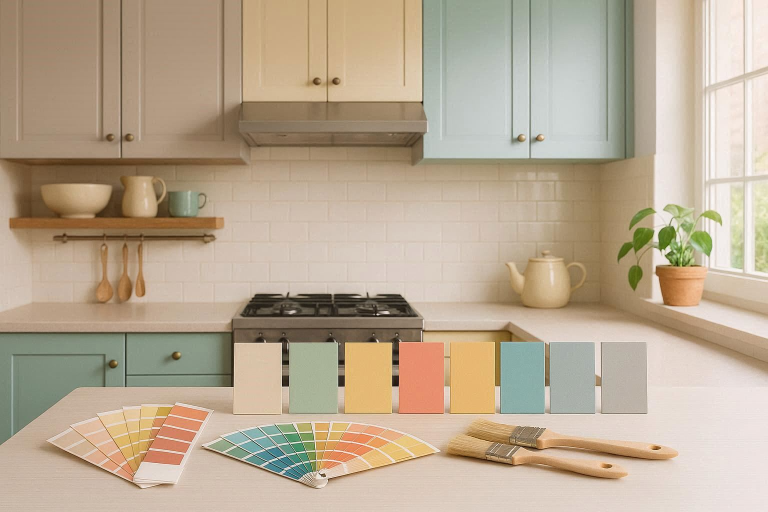
While classic white will never go out of style, the color trends for 2025 are leaning toward warmth, nature, and depth.
Warm Neutrals and Creams
Cool grays are out; warm neutrals are in. Shades like creamy beige, soft taupe, and rich pale cream are replacing stark white and icy gray. These colors create an inviting, comforting, and grounded aesthetic.
Nature-Inspired Greens and Blues
Deep blues and rich greens remain a perennial favorite.
-
Greens: Think muted sage, moss green, and deep forest green. These connect the kitchen to nature, promoting a calm and wellness-focused environment.
-
Blues: Navy and deep indigo add a sophisticated, timeless elegance, often paired with warm brass hardware.
Bold Accent Colors (Two-Tone Kitchens)
The two-tone kitchen remains a major trend. This involves pairing a light color on the upper cabinets with a darker or bolder color on the lower cabinets or the island. This adds depth, prevents the dark color from overwhelming the room, and allows for a pop of personality using trending shades like:
-
Deep Charcoal/Black
-
Butter Yellows
-
Deep Burgundies/Reds
Common Mistakes to Avoid When Painting Cabinets
Don’t let a great paint choice be ruined by poor execution. Avoid these major pitfalls.
Skipping Proper Prep Work (Cleaning and Sanding)
The Finish is Only as Good as the Prep. Your cabinets are covered in years of oil, grease, and grime. If you paint over it, the paint will peel and fail.
-
Actionable Step: Deep-clean every surface with a professional degreaser like Krud Kutter or a TSP substitute. Lightly sand (scuff-sand) every surface with 180-220 grit sandpaper to create a profile for the primer to bond to.
Using the Wrong Sheen (Avoid Flat/Matte)
As mentioned, flat or matte paint has a porous surface that absorbs stains and is impossible to clean without damaging the paint film. Stick to Satin or Semi-Gloss for any cabinet that sees regular use.
Rushing the Drying and Curing Process
Applying a second coat too soon or reinstalling hardware before the paint has properly dried leads to tackiness, peeling, and fingerprints. Follow the manufacturer’s recoat time exactly, and allow the full 7-30 day curing process before being rough with the cabinets. Patience is the secret ingredient to a durable finish.
FAQ
Is semi-gloss or satin better for kitchen cabinets?
Semi-gloss is generally better for kitchen cabinets. It is more reflective, which makes the kitchen look brighter, and its higher resin content makes it significantly more durable and easier to clean and scrub than a satin finish.
Do I need to sand kitchen cabinets before painting?
Yes, you should always scuff-sand (lightly sand) your cabinets before painting, even if they are clean. Sanding with 180- to 220-grit paper creates microscopic grooves (a “tooth”) for the primer to grip, ensuring superior adhesion and preventing the paint from peeling later.
What is the most durable paint for kitchen cabinets?
The most durable modern paints are Waterborne Alkyd Enamels (like Benjamin Moore Advance) or Urethane Acrylic/Hybrid Paints (like Sherwin-Williams Emerald Urethane Trim Enamel). These cure into a hard, non-porous enamel shell that resists chipping, scratching, and moisture better than standard latex.
Can I use latex paint on kitchen cabinets?
You can use premium, 100% acrylic latex paint specifically marketed for cabinets, but you should never use standard flat or eggshell wall latex paint. High-quality cabinet-grade latex offers easy cleanup and fast drying, but it is typically less durable than a waterborne alkyd hybrid.
How long does painted kitchen cabinet finish last?
If you use a high-quality specialty cabinet paint, follow all prep and priming steps correctly, and allow for full curing, the finish should last 7 to 15 years or more before needing a touch-up or refresh.
What are the best kitchen cabinet paint colors for 2025?
The top color trends for 2025 include: Warm Neutrals (creams, taupes, greiges), Nature-Inspired Greens (sage, moss), and Deep Blues (navy, indigo). Dark accent colors on islands, such as charcoal or even muted butter yellow, are also popular.
Conclusion
Choosing the right paint for your kitchen cabinets boils down to a single decision: prioritizing durability over ease of application.
-
Select the Type: Opt for a Waterborne Alkyd Enamel or a Urethane Acrylic/Hybrid paint. These products combine the hard, durable shell of old oil paint with the easy, low-VOC cleanup of modern water-based formulas.
-
Select the Sheen: Choose Semi-Gloss for the best balance of cleanability, durability, and light reflection. Satin is a great alternative if you prefer a less reflective finish.
-
Execute the Prep: No matter the paint, the success of your project rests on proper cleaning, sanding, and priming.
By selecting a specialty enamel, you are ensuring your hard work results in a professional-grade finish that can withstand the daily rigors of a busy kitchen for years to come.