
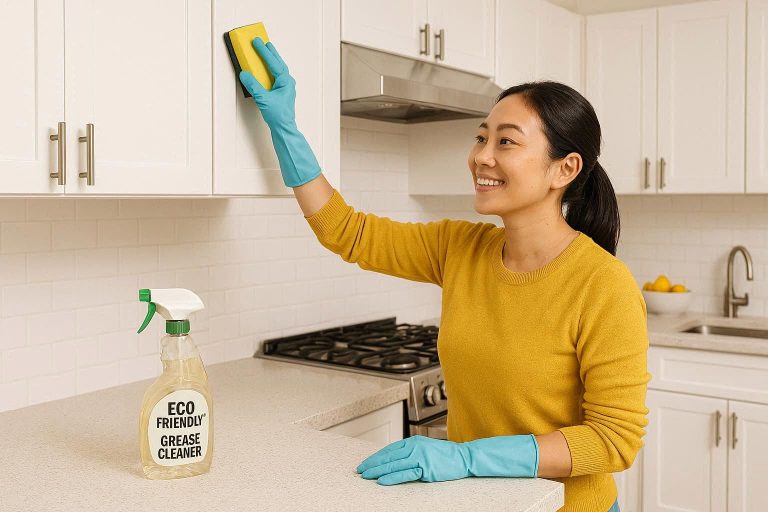
Your kitchen is the heart of your home, and your cabinets bear the brunt of all that delicious cooking. Over time, that constant cooking action creates an invisible, sticky enemy: airborne kitchen grease.
This is more than just a cosmetic issue. That sticky grime traps dirt and dust, creating a tough, unsanitary film that is nearly impossible to wipe away with simple soap and water.
The good news? You don’t need expensive, harsh chemicals. We’ve broken down the four most effective, safe, and expert-approved ways to clean grease off kitchen cabinets, ensuring you protect your cabinet finish while achieving a spotless, sparkling result.
Whether you have wood cabinets, painted doors, or laminate surfaces, this guide will show you how to cut through the stickiest residue and restore your kitchen’s shine.
Why Kitchen Cabinets Get Greasy (And Why It Matters)
Before grabbing your sponge, it helps to understand why this stubborn film appears in the first place.
The Science of Airborne Grease
Every time you fry, sauté, or boil food, tiny particles of heated fat and oil are released into the air. If you don’t have a powerful extractor fan, these Cleaning Guide for Home & Kitchen particles travel on the airflow and settle on the nearest cool surfaces—the tops and fronts of your kitchen cabinets.
Over time, this invisible layer mixes with airborne dust, forming a tacky, sticky residue that feels impossible to remove. The grease itself is hydrophobic (water-repelling), which is why plain water doesn’t work and you need a dedicated grease-cutting solution.
The Damage Grease Can Do to Your Cabinets
Beyond the unsanitary and unattractive appearance, grease buildup can cause real damage.
-
Finish Degradation: Grease and grime can etch or soften the protective cabinet finish, especially on painted or lacquered surfaces.
-
Attraction of Pests: Sticky areas are magnets for kitchen pests, which are drawn to the residue.
-
Difficult Cleaning: The longer the grease sits, the harder it hardens and bonds to the surface, making deep clean efforts much more difficult later on.
Essential Prep: Gather Your Tools & Test Your Solution
A little prep goes a long way toward protecting your cabinets and making the job easier.
Tools and Materials You’ll Need:
-
Cleaning Agents: Mild dish soap (Dawn is a popular choice), white vinegar, baking soda, commercial degreaser (optional).
-
Cleaning Cloths: Several microfiber cloths (non-abrasive is key).
-
Scrubbing Aids: A soft-bristle toothbrush or a non-scratch scrub sponge.
-
Containers: A bucket or bowl for warm water and a spray bottle (optional).
-
Protection: Rubber gloves.
❗️ Mandatory Pre-Test Tip: No matter which method you choose, always test the solution on a small, inconspicuous area of the cabinet first (like the inside of a door) to ensure it doesn’t damage or discolor the cabinet finish.
The 4 Proven Methods to Clean Grease Off Kitchen Cabinets
Here are the most effective cleaning methods, ordered from the gentlest for light buildup to the strongest for heavy-duty grime.
Method 1: Dish Soap and Hot Water (The Gentle Default)
This is the fastest, safest, and most budget-friendly method for light-to-moderate, routine degreasing. Dish soap contains surfactants that bind to both oil and water, lifting the grease right off the surface.
How to Use It:
-
Mix Solution: Fill a bucket with the hottest water you can comfortably tolerate (hot water helps to melt and soften the grease). Add a few drops of mild dish soap.
-
Apply and Wait: Dip a microfiber cloth or soft sponge into the solution and wring it out until it is damp, not dripping.
-
Wipe Gently: Wipe down the greasy areas, working in small sections. For tougher spots, simply dab the hot, soapy cloth on the area and let it sit for 2–3 minutes before wiping.
-
Rinse and Dry: Use a separate clean, damp cloth (rinsed with plain warm water) to remove all soap residue. Dry thoroughly with a clean, soft towel to prevent streaks or water damage, especially on wood cabinets.
Method 2: White Vinegar Solution (For Moderate Buildup)
Vinegar’s natural acidity works wonders as a grease-cutter, making it an excellent natural, non-toxic alternative for slightly heavier buildup.
How to Use It:
-
Create Solution: Mix equal parts white vinegar and warm water in a spray bottle (a 50/50 mix). You can add a few drops of dish soap for extra degreasing power.
-
Spray: Mist the solution directly onto the cabinet door or frame. Avoid oversaturating, especially with wood.
-
Dwell Time: Allow the solution to sit for 2–5 minutes. This gives the acetic acid time to break down the grease bonds.
-
Scrub and Rinse: Use a soft sponge or microfiber cloth to gently scrub the area, paying attention to the edges and handles. Rinse with a clean, water-damp cloth and dry immediately.
Tip: If the vinegar smell is too strong, you can add a small amount of lemon juice or a few drops of an essential oil (like lemon or orange) to the solution. Citrus acts as a natural degreaser.
Method 3: Baking Soda Paste (For Stubborn, Sticky Grime)
When grease has hardened into a thick, sticky residue, you need a mild abrasive to gently lift it off. Baking soda (sodium bicarbonate) is the perfect solution—it’s gentle enough not to scratch but powerful enough to work through the thickest grime.
How to Use It:
-
Make Paste: Mix 2 parts baking soda with 1 part water (or 1 part coconut oil for extra conditioning on wood cabinets) to form a thick, spreadable paste.
-
Apply: Use a cloth or your gloved finger to smear the paste directly onto the stubborn grease spots.
-
Soften: Let the paste sit for 5–10 minutes.
-
Gentle Scrub: Using a soft-bristle toothbrush or non-scratch sponge, gently scrub the paste into the grease in a circular motion. The baking soda acts as a mild scouring agent.
-
Clean Up: Wipe the paste and lifted grease away with a clean, damp cloth. Follow up with a plain water rinse and a thorough drying with a towel.
Method 4: Commercial Degreasers (For Heavy-Duty Cleaning)
If DIY methods don’t cut it, a commercial degreaser might be necessary. Look for non-toxic, citrus-based formulas, as citrus is a powerful natural grease-cutter.
How to Use It:
-
Choose Wisely: Select a cleaner specifically labeled for kitchen cabinets or multi-surface degreasing. Avoid industrial-strength cleaners, which can easily strip the finish.
-
Test: Perform the spot test.
-
Apply Indirectly: Spray the product onto a microfiber cloth first, never directly onto the cabinet door.
-
Wipe: Wipe the greasy areas gently. Follow the manufacturer’s instructions for dwell time.
-
Rinse and Dry: Rinse well with a clean, damp cloth to remove all chemical residue, and dry immediately.
Cleaning Grease Off Specific Cabinet Materials (Protecting Your Finish)
The right method depends entirely on what your kitchen cabinets are made of. The goal is to remove the grease without damaging the underlying finish.
Wood and Wood Veneer Cabinets
Wood cabinets are the most delicate. Excess water is their enemy, as it can cause warping or water spots.
-
Best Method: Dish soap and hot water (Method 1) is ideal. Use a slightly stronger dish soap mixture for a deep clean.
-
The Pro Tip: After cleaning and drying, use a small amount of wood-specific polish (like Murphy’s Oil Soap) to restore shine and condition the wood, making it slightly more resistant to future grease.
-
Avoid: White vinegar and high concentrations of baking soda can dull or damage the wood’s protective varnish over time.
Painted and Laminate Cabinets
Painted and laminate surfaces are less porous than wood but are susceptible to scratching and paint stripping.
-
Best Method: Method 1 or Method 2. The diluted white vinegar and water solution is great for cutting through grease on these durable, non-porous surfaces.
-
The Pro Tip: Be very gentle. The biggest risk is using an abrasive tool or harsh chemical that physically scratches or dissolves the paint/laminate coating.
-
Avoid: Any abrasive scrubbers, steel wool, or concentrated alcohol-based cleaners.
Cabinet Hardware (Knobs, Pulls, and Hinges)
Cabinet hardware is a major magnet for grease and sticky fingerprints.
-
Best Method: The baking soda paste is fantastic for this area.
-
The Pro Tip: For a truly deep clean, remove the knobs and pulls and let them soak in a bowl of hot, soapy water for 15–30 minutes. Use a soft-bristle toothbrush to gently scrub the grime out of the crevices. Dry thoroughly before reattaching to prevent rust or corrosion on the hinges.
Pro Tips for a Streak-Free, Grease-Free Finish
Achieve professional results with these final touches:
-
The Power of Heat: Before tackling stubborn grease, a professional trick is to warm the area slightly. Use a hair dryer on a low setting for 30–60 seconds. The heat will soften the hardened sticky residue, making the degreasing process much easier.
-
Follow the Grain: If you have wood cabinets, always wipe in the direction of the wood grain to ensure you clean the grease out of the small crevices and avoid minor scratches.
-
Focus on the Hottest Zones: The cabinets directly above the stove and the handles/edges of frequently opened cabinet doors accumulate the most grime. Focus your strongest methods (like the baking soda paste) here.
Common Mistakes to Avoid When Degreasing Cabinets
Knowing what to clean grease off kitchen cabinets with is only half the battle. Knowing what not to use is critical for preserving your investment.
| Mistake to Avoid | Why It’s Harmful | Safe Alternative |
| Using Bleach or Ammonia | These harsh chemicals can permanently discolor and strip the cabinet finish, especially on wood and painted surfaces. | Dish soap, diluted white vinegar, or a gentle, non-toxic commercial degreaser. |
| Abrasive Scrubbers | Steel wool, green scrubbing pads, or Magic Erasers (used aggressively) can scratch or dull the surface, leading to permanent damage. | Microfiber cloth, soft sponge, or soft-bristle toothbrush. |
| Leaving Surfaces Wet | Allowing water or cleaning solutions to sit on the cabinets, especially wood, can lead to warping, bubbling, or discoloration. | Always rinse thoroughly with a clean, water-damp cloth and dry thoroughly immediately afterward. |
| Spraying Directly on Wood | Spraying liquid directly can cause excess moisture to seep into joints and porous wood, leading to swelling or damage. | Spray the solution onto a microfiber cloth first, then apply to the cabinet. |
How to Prevent Future Grease Buildup (Long-Term Maintenance)
An ounce of prevention is worth a pound of scrubbing. A consistent maintenance routine will eliminate the need for future deep clean efforts.
-
Use Your Vents: Turn on your extractor fan or range hood every time you cook with oil or fat, even for a few minutes. This pulls the airborne grease up and out.
-
The Weekly Wipe-Down: Once a week, quickly wipe down weekly the cabinet doors and frames near the stove using a cloth dampened with warm water and a drop of dish soap.
-
Catch Spills Immediately: Wipe up any oil spatters or food spills the moment they happen. Grease only gets harder to clean the longer it sits and bonds.
-
Protect the Top: For the hard-to-reach area on top of the cabinets, lay down a layer of wax paper or newspaper. When it gets greasy, you can simply roll it up and replace it, saving you a massive deep clean effort.
FAQs
How often should I clean my kitchen cabinets?
You should wipe down weekly the high-traffic areas (near the stove, handles) with a mild soap solution. A comprehensive deep clean of all cabinet doors and frames should be done at least monthly, or quarterly for kitchens with less frequent cooking.
Can I use a Magic Eraser to clean kitchen grease?
While a Magic Eraser (melamine foam) is excellent at lifting stains, it is a micro-abrasive. Use it only as a last resort on a hidden test spot, and scrub very lightly. It can dull the sheen or remove the finish from painted cabinets or wood if used aggressively. A baking soda paste is a safer abrasive alternative.
What is the best commercial degreaser for cabinets?
Many cleaning experts recommend mild, citrus-based degreasers (like Simple Green or Method) because the citrus acts as a natural, powerful grease-cutter. Dawn dish soap is also a professional favorite, as its formula is designed to cut through heavy grease without harsh chemicals.
Will vinegar damage my cabinet finish?
Diluted white vinegar (50/50 with water) is safe for most laminate and well-sealed painted cabinets. However, it is not recommended for unsealed or naturally finished wood cabinets, as the acid can break down the protective layer and leave the wood dry or dull. Always test first.
How can I clean the grease from the top of my kitchen cabinets?
The top of the cabinets accumulates the thickest sticky residue. Use Method 3 (Baking Soda Paste) or Method 4 (a strong commercial degreaser). After cleaning, apply the Pro Tip and cover the top surface with wax paper, parchment paper, or newspaper for easy disposal and prevention.
Conclusion:
Cleaning grease off kitchen cabinets can seem like a daunting task, but with the right non-abrasive tools and the power of simple grease-cutting agents like dish soap, white vinegar, and baking soda, you can achieve a professional-level clean.
By following the four proven methods and maintaining a regular, light wipe down weekly routine, you will keep that sticky, unsightly grime at bay and ensure your kitchen cabinets remain the centerpiece of a fresh, healthy, and spotless kitchen for years to come.