
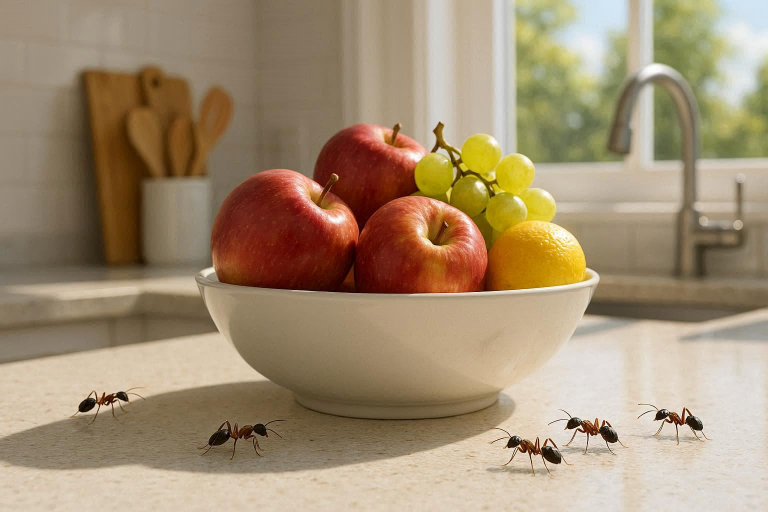
It starts innocently enough. You walk into your kitchen to grab a morning coffee, and you see one solitary ant crawling across the counter. You squash it and move on.
Two hours later, that single ant has been replaced by a marching line of hundreds, creating a highway across your backsplash and into your pantry. It is one of the most frustrating household problems to face. You might be asking yourself,
Why am I getting ants in my kitchen when I clean every day?
The truth is, cleanliness is only half the battle. Ants are biologically engineered survival machines, and your kitchen is their ideal ecosystem. Whether you are dealing with tiny nuisance ants (often called sugar ants) or destructive Cleaning Guide for Home & Kitchen carpenter ants, understanding why they are there is the only way to get them out.
Here is your comprehensive guide to the causes of kitchen ant infestations and exactly how to stop them.
The Biology of the Invasion: The Scout Ant
Before we blame the crumbs on the floor, we need to understand the culprit: The Scout Ant.
Ant colonies do not move en masse without intelligence. They send out scouts—lone foragers looking for resources. That single ant you saw earlier? That was a scout.
When a scout finds a source of food or water, it heads back to the colony. On its return trip, it lays down a pheromone trail. This is an invisible chemical scent map that tells the rest of the colony, “Follow me, I found the jackpot.”
If you kill the ants without removing the pheromone trail, new ants will simply follow the scent right back to where the old ones died.
Reason #1: The Buffet (Food Sources You Might Miss)
The most obvious answer to “why am I getting ants in my kitchen” is food. However, ants can detect food sources that are invisible to the human eye. You don’t need a messy kitchen to have an ant problem; you just need one unsealed opportunity.
Sugary Residue and Crumbs
Ants have an incredible sense of smell. A drop of juice that dried under the fridge three months ago is like a beacon to a sugar ant.
-
Sticky Jars: Honey jars, syrup bottles, or jelly containers often have a microscopic layer of sticky residue on the outside.
-
Toaster Trays: The crumb tray at the bottom of your toaster is a common feast for ants.
-
Fruit Bowls: Overripe fruit releases ethanol and sugars that attract pests instantly.
The Pet Food Bowl Trap
This is the number one overlooked cause of kitchen infestations. We often leave dog or cat food out all day. To an ant, a bowl of dry kibble is an all-you-can-eat buffet.
-
Tip: If possible, switch to scheduled feeding times and pick up the bowl between meals. If you must leave food out, place the pet bowl inside a larger shallow pan filled with water to create a “moat” ants cannot cross.
Grease and Oil Splatters
While “sugar ants” love sweets, other species like the Odorous House Ant or Pharaoh Ant crave proteins and fats. Grease splatters on the stove or behind the oven provide the high-calorie diet these colonies need to grow.
Reason #2: The Oasis (Moisture Issues)
If your kitchen is spotless but you still have ants, the issue might be water, not food. Like all living things, ants need hydration to survive.
Leaky Pipes and Condensation
Check under your sink. Is there a slow drip from the P-trap? Is there condensation on the pipes?
-
Little Black Ants often nest in wall voids near plumbing leaks.
-
Even a damp sponge left in the sink can attract thirsty foragers during a dry spell.
Damp Wood (The Carpenter Ant Danger)
If you see large black ants (Carpenter Ants), be very careful. Unlike other ants that just want your food, Carpenter Ants excavate wood to build nests. They are attracted to wet, rotting wood.
-
Check the window sills above your sink.
-
Inspect the dishwasher seal for leaks that might be rotting the subfloor.
-
Warning: Carpenter ants can cause structural damage. If you suspect these, you need to act fast.
Reason #3: The Fortress Breach (Entry Points)
You are keeping the air conditioner in; they are trying to get in. Ants are tiny enough to crawl through the eye of a needle.
Weather Stripping and Cracks
Inspect the perimeter of your kitchen.
-
Windows: Is the caulking around the window frame cracked?
-
Doors: Does the weather stripping under the back door seal tightly?
-
Foundation: Small cracks in your home’s foundation are the superhighways for pavement ants.
Vegetation Bridges
Go outside and look at your kitchen window. Are there tree branches or bushes touching the house? These act as bridges, allowing ants to bypass the treated soil on the ground and walk directly onto your siding and into your home.
Pro Tip: Keep all vegetation trimmed at least 12 inches away from your home’s exterior walls.
Reason #4: Environmental Factors (Why Now?)
“Why am I getting ants in my kitchen all of a sudden?”
If nothing has changed in your home, check the weather.
Seasonal Shifts: Heat, Drought, and Rain
-
Heavy Rain: When the ground becomes saturated, ant colonies that live underground are at risk of drowning. They seek higher, drier ground—which is often the inside of your kitchen walls.
-
Drought/Heat: conversely, when it is blazing hot and dry, ants enter homes desperately seeking water. This is why summer is often “ant season.”
How to Get Rid of Ants in the Kitchen (Step-by-Step)
Now that we know the why, let’s discuss the how. Stop the invasion with this three-step protocol.
Step 1: Erase the Pheromone Trail
Killing the visible ants is useless if the scent trail remains.
-
Mix a solution of 50% water and 50% distilled white vinegar.
-
Spray the area where you saw the ants walking.
- Wipe it down thoroughly.The vinegar neutralizes the pheromone markers, confusing the colony and stopping the reinforcement troops.
Step 2: Baiting vs. Spraying (The Golden Rule)
This is where most homeowners fail.
-
Do NOT Spray: If you spray a repellant (like Raid) on a line of ants, you kill the ones you see. But the colony senses the danger and may undergo “budding.” This is where the colony splits into two or three smaller colonies to survive, actually making your problem worse.
-
DO Use Baits: Use slow-acting poison baits (like Borax-based liquid traps). The worker ants eat the bait, carry it back to the nest, and feed it to the queen. It takes a few days, but it destroys the entire colony from the inside out.
Step 3: Natural Repellents
Once the infestation is under control, use natural scents to keep them away. Ants hate strong smells.
-
Peppermint Oil: Soak cotton balls in peppermint essential oil and place them in cabinets.
-
Cinnamon: Sprinkle ground cinnamon near entry points.
-
Diatomaceous Earth (Food Grade): Sprinkle this fine powder behind appliances. It is safe for pets but dehydrates ants upon contact.
Common Mistakes People Make
-
Ignoring the First Ant: Never ignore the scout. If you see one, kill it and wipe the surface immediately.
-
Using the Wrong Bait: Sugar ants want sweet bait. Grease ants want protein bait (like peanut butter mixed with Borax). If the ants aren’t eating your bait, switch the “flavor.”
-
Stopping Treatment Too Early: You might see the ants disappear after one day of baiting. Do not remove the traps. Keep them there for at least a week to ensure the queen is eliminated.
Comparison: DIY vs. Professional Exterminator
| Feature | DIY Methods | Professional Exterminator |
| Cost | Low ($10 – $50) | Moderate/High ($150 – $400+) |
| Speed | Varies (3-10 days) | Fast results |
| Chemicals | Consumer-grade | Commercial-grade |
| Best For | Garden ants, small invasions | Carpenter ants, recurring infestations |
When to Call a Pro
If you are dealing with Carpenter Ants (wood damage), Fire Ants (painful bites), or if you have tried baiting for two weeks with no reduction in activity, it is time to call a professional. They have access to non-repellent insecticides that transfer effectively throughout the colony.
FAQs
Does bleach kill ant trails?
Yes, bleach cleans the surface, but vinegar is often more effective at specifically neutralizing the pheromone scent markers without leaving harsh chemical fumes in your kitchen.
Why do ants come back after I spray them?
Spraying only kills the worker ants. The queen is still in the nest laying eggs. Furthermore, the pheromone trail is likely still active, inviting new ants to replace the dead ones.
Are ants in the kitchen harmful?
Most nuisance ants (like odorous house ants) are not dangerous, though they can contaminate food. However, Pharaoh ants can transmit diseases like salmonella and Staphylococcus, and Carpenter ants cause structural damage.
How do I find the ant nest?
It is difficult to find the main nest. The best method is to follow the trail. Watch where the ants are coming from and where they are returning to. Usually, they will lead you to a crack in the wall or a gap in the floorboard.
Can potted plants bring ants inside?
A: Absolutely. Ants often build nests in the soil of potted plants. If you bring outdoor plants inside for the winter, check the soil carefully first.
Conclusion
Asking “why am I getting ants in my kitchen” is the first step toward reclaiming your home. It isn’t a sign that your home is dirty; it is a sign that your home provides the three things ants need: food, water, and shelter.
By sealing entry points, eliminating moisture, and using the “Bait and Wait” method rather than panic-spraying, you can eliminate the colony. Remember: remove the food, erase the trail, and patience is your best weapon.