
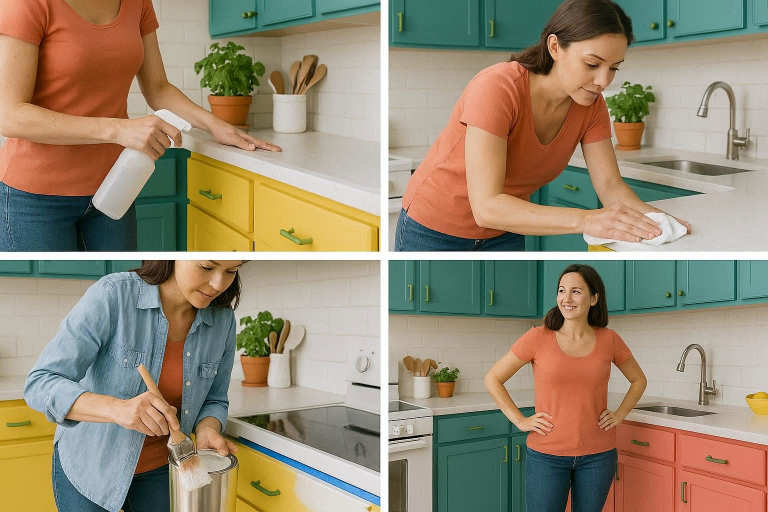
Are you looking to give your kitchen a fresh new look without the mess and labor of sanding down every surface? Well, you’re in the right place! In this guide, we’ll show you how to paint kitchen cabinets without sanding. We’ll walk you through every step of the process, including the tools and products you’ll need, tips for success, common mistakes to avoid, and more. Let’s dive in!
Why Skip Sanding?
Sanding cabinets is traditionally a crucial step in any painting project. It helps create a smooth, rough surface for paint to adhere to. But sanding can be time-consuming, messy, and require a lot of prep work. For some homeowners, it’s a dealbreaker.
Luckily, there are alternatives to sanding that still provide fantastic results. Techniques like using a deglosser (or liquid sandpaper) and selecting the right primer and paint allow you to skip the sanding process altogether.
Benefits of a No-Sanding Approach
The no-sanding method comes with several benefits, including:
-
Time-Saving: Skipping the sanding step significantly reduces your prep time, especially for larger kitchen cabinets.
-
Mess-Free: You won’t have to deal with dust and debris scattered throughout your kitchen. This is a huge bonus for those who want to avoid the hassle of cleaning up after sanding.
-
Simplified Process: You can achieve a high-quality finish with less effort, making it an ideal project for DIYers who are new to painting.
When You Must Sand (Or Lightly Scuff)
While the no-sanding approach works for many, there are some situations where sanding is necessary. For example, if your cabinets have Cleaning Guide for Home & Kitchen peeling paint or significant damage, you’ll need to sand them smooth before applying new paint.
Additionally, if you have very high-gloss or shiny surfaces, the deglosser alone may not be enough to ensure proper paint adhesion. In this case, lightly sanding the surface may be the best option for optimal results.

Assessing Your Cabinets for a No-Sanding Project
Before you start painting, it’s important to assess whether your cabinets are suitable for a no-sanding approach.
Material, Finish & Condition Checklist
-
Wooden Cabinets: Wood is a great surface for painting without sanding. Just ensure they’re clean and free from grease, oils, and old finishes.
-
Laminate Cabinets: Laminate surfaces are a bit trickier. They are often too smooth and glossy for paint to stick unless you use a special bonding primer.
-
Thermofoil Cabinets: These are similar to laminate and typically need special preparation, such as deglossing, to get the paint to adhere properly.
-
Previous Paint Job: If your cabinets have been painted before, check the condition of the paint. If it’s peeling or chipped, you may need to do some sanding, but if it’s still intact, the no-sanding method will work well.
Glossy, Laminate, Or Already Painted Surfaces
If your cabinets are glossy or laminate, you’ll need a deglosser or liquid sandpaper. This product will break down the finish and allow the primer to stick. It’s a quick and easy solution for surfaces that are too smooth for paint to adhere properly.
The Essential Tools & Products You’ll Need
To successfully paint your kitchen cabinets without sanding, you’ll need a few key tools and materials. Here’s a breakdown of the essentials:
Cleaning & Degreasing Supplies
Before applying paint, your cabinets need to be cleaned thoroughly. Any grease, dust, or grime will interfere with the paint adhesion.
-
TSP (Trisodium Phosphate) Cleaner: This cleaner is a powerful degreaser that will help remove grease and grime from your cabinets.
-
Microfiber Cloths: Use these to wipe down the surfaces and remove any remaining dust after cleaning.
Deglosser / Liquid Sandpaper vs. Traditional Sanding
Instead of sanding, use a deglosser or liquid sandpaper to prepare the surface. These products work by chemically breaking down the finish on the cabinets, making them more receptive to the primer and paint. The beauty of using a deglosser is that it’s quick, easy, and mess-free.
-
How to Use a Deglosser: Apply the product with a clean cloth, following the manufacturer’s instructions. This usually involves wiping the deglosser on the cabinets and letting it sit for a few minutes before wiping it off.
Bonding Primers & Special Paints for Cabinets
A bonding primer is key to ensuring that your paint sticks to the surface without sanding. This type of primer is designed to adhere to smooth, slick surfaces like laminate and glossy finishes.
For the paint itself, choose a high-quality enamel or cabinet-specific paint. These paints are durable, self-leveling, and designed to handle the wear and tear that kitchen cabinets endure.

Step-by-Step Process: How to Paint Kitchen Cabinets Without Sanding
Now that you have all the tools and products, it’s time to start painting your kitchen cabinets. Here’s the step-by-step process:
Preparation: Remove Hardware, Clean, Mask Off
Before you start painting, you’ll need to remove any hardware like knobs, pulls, and hinges. This ensures that no paint gets on the hardware and gives you a cleaner finish.
Step 1: Remove Hardware
-
Use a screwdriver to take off all hardware from the cabinets and doors.
-
Store the hardware in a safe place to prevent losing any small pieces.
Step 2: Clean & Degrease Surfaces
-
Use your degreaser or TSP cleaner to thoroughly clean the cabinet surfaces.
-
Pay extra attention to areas near the stove, sink, or high-touch zones where grease and oils can build up.
-
Wipe away any residue with a clean cloth.
Step 3: Mask Off the Area
-
Use painter’s tape to cover any areas you don’t want painted, like the edges of the walls, countertops, and the floor.
-
Protect the surrounding area with a drop cloth or plastic sheets.
Applying Deglosser or Liquid Abrader
Once your cabinets are clean and dry, it’s time to apply the deglosser. This product will break down any shiny finish and ensure that your primer and paint adhere well.
Step 4: Apply the Deglosser
-
Using a clean cloth, apply the deglosser in a circular motion to each cabinet surface.
-
Allow the deglosser to sit on the cabinets for a few minutes before wiping it off with a dry cloth.
Priming (If Needed) and Painting
Now that your cabinets are prepared, it’s time to prime and paint.
Step 5: Apply the Primer
-
Use a high-quality bonding primer designed for smooth surfaces like laminate or gloss finishes.
-
Apply a thin, even coat of primer with a brush or foam roller. Be sure to cover every inch of the surface.
-
Allow the primer to dry completely before moving on to the next step.
Step 6: Apply Paint
-
Once the primer is dry, you can start applying the paint. Use a high-quality enamel or cabinet-specific paint.
-
Apply the paint in thin coats, allowing each coat to dry completely before applying another.
-
Use a brush for edges and detailed areas, and a foam roller for large, flat surfaces to avoid streaks.
Finishing Touches & Curing
After your final coat of paint is applied, allow the cabinets to dry thoroughly.
Step 7: Reattach Hardware
-
Once the paint has fully dried and cured, reattach the hardware you removed earlier.
-
Be gentle when screwing in the hardware to avoid scratching the paint.
Step 8: Let It Cure
-
Allow the cabinets to cure for several days before putting them into regular use. This will help ensure that the paint hardens properly and provides a durable finish.
Tips for Long-Lasting Results
To ensure that your newly painted cabinets last for years to come, follow these expert tips:
-
Thin Coats, Not Thick: Apply paint in multiple thin layers rather than one thick coat. Thin coats dry more evenly and reduce the risk of drips.
-
Use a High-Quality Paint and Primer: Don’t skimp on quality when it comes to primers and paints. Quality products yield better results and longer-lasting finishes.
-
Allow Proper Drying Time: Don’t rush the drying and curing process. Allow each layer to dry completely before applying the next one.
-
Clean Gently: Once your cabinets are painted, use gentle cleaners and soft cloths to wipe down the surfaces to preserve the finish.
Common Mistakes to Avoid
While the no-sanding method is straightforward, there are some common mistakes that can ruin your project.
-
Skipping the Cleaning Step: If you don’t thoroughly clean the cabinets before painting, grease and grime can prevent the paint from adhering properly.
-
Using the Wrong Primer or Paint: Always choose a bonding primer and paint specifically designed for cabinets to ensure good adhesion and durability.
-
Not Letting the Paint Dry Long Enough: Be patient! Let the primer and paint dry completely between coats to avoid smudges and streaks.
-
Not Using Thin Coats: Applying thick layers of paint can cause drips and uneven coverage. Stick to thin coats for the best results.
Sanding vs. No-Sanding – Which Should You Choose?
Both sanding and no-sanding methods can result in a great finish, but each has its pros and cons.
| Feature | Sanding | No-Sanding |
|---|---|---|
| Time | Takes longer | Quick and easy |
| Mess | Messy and dusty | Clean and mess-free |
| Durability | Longer-lasting results | May need more maintenance |
| Surface Prep | Roughens surface for better paint adhesion | Requires deglossing for smooth surfaces |
For a quick, easy project with a clean result, the no-sanding method is the way to go. However, if you want to ensure maximum durability, especially on older cabinets, sanding might be worth considering.
Frequently
-
Can you really paint kitchen cabinets without sanding?
Yes! Using deglossers, bonding primers, and cabinet-specific paints, you can achieve a durable finish without sanding. -
What kind of primer do I need if I skip sanding?
Choose a bonding primer designed for smooth or glossy surfaces, as this helps the paint adhere properly. -
How long should I wait after painting cabinets before using them again?
Allow the cabinets to cure for at least 24 to 48 hours before using them. Full curing can take up to a week. -
Will the paint stick to glossy cabinets without sanding?
Yes, as long as you use a deglosser and bonding primer, the paint should adhere well to glossy surfaces. -
What happens if I paint cabinets without sanding and the surface is chipped or peeling?
If the surface is damaged, light sanding may be required to smooth it out before painting.
Conclusion
Painting your kitchen cabinets without sanding is an easy, efficient way to give your kitchen a makeover. With the right preparation, products, and techniques, you can achieve beautiful results without all the dust and hassle of sanding. Follow the steps we’ve outlined in this guide, and you’ll have cabinets that look professionally painted in no time!