
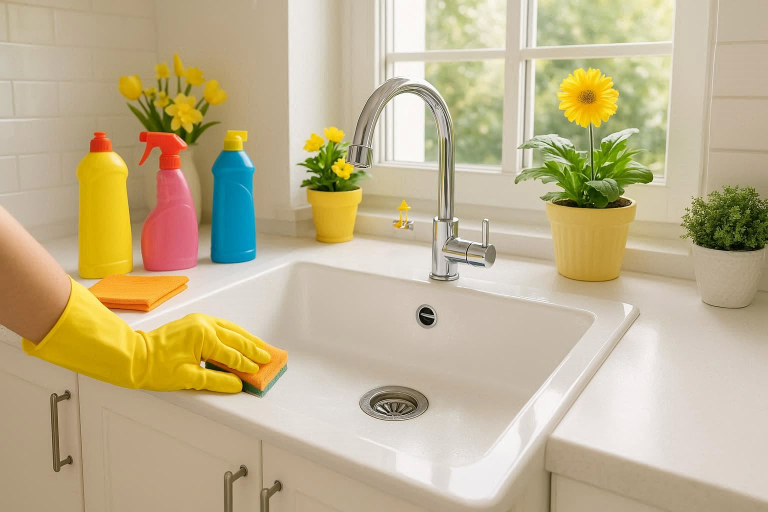
Your kitchen sink is one of the most frequently used areas in your home. Whether you’re washing dishes, prepping food, or just rinsing your hands, the sink is constantly in action. But, with all that use comes the inevitable: a buildup of grime, grease, stains, and odors. Keeping your kitchen sink clean isn’t just about aesthetics—it’s also about hygiene and functionality. In this guide, we’ll walk you through why cleaning your kitchen sink regularly is so important, what tools and products you need, and a step-by-step process to keep your sink looking like new.
Why Regularly Cleaning Your Kitchen Sink Matters
Hygiene & Health
A dirty kitchen sink is a breeding ground for bacteria. You might think that the kitchen countertop or stovetop are the main places where germs can lurk, but your sink can actually harbor more bacteria than any other surface in the kitchen. Food scraps, grease, and leftover water droplets provide a perfect environment for bacteria to multiply. A clean sink helps eliminate harmful pathogens that could be transferred to your dishes and food.
Aesthetic Appeal
Let’s face it—no one likes a dirty, grimy sink. A clean kitchen sink is not only more appealing but can make your entire kitchen look well-maintained. Stains, water spots, and grease buildup can make even the most pristine kitchen look neglected. Regular cleaning ensures your sink always looks spotless and enhances the overall aesthetic of your kitchen.
Functionality
A dirty sink can affect its functionality in various ways. For example, grease buildup can block drains, leading to clogs and slow drainage. Regularly cleaning your sink helps maintain its performance, ensuring water flows freely and you don’t end up with a backup of dishes in the sink or an unpleasant odor wafting through the room.

Essential Tools and Products for Cleaning Your Kitchen Sink
To clean your kitchen sink effectively, you don’t need a ton of fancy cleaning products. In fact, many natural ingredients work wonders. Here’s a breakdown of the tools and products you’ll need:
Cleaning Agents
- Baking Soda: It’s great for scrubbing away stains and grease without being too abrasive. It also neutralizes odors.
- Vinegar: Excellent for tackling hard water stains, soap scum, and mineral buildup. It’s a powerful natural disinfectant.
- Dish Soap: A mild dish soap is perfect for daily cleaning. It’s gentle yet effective at breaking down grease and grime.
- Commercial Cleaners: If you prefer store-bought products, look for gentle, non-toxic options designed for kitchen sinks.
Tools Needed
- Scrub Brushes: A good scrub brush helps you clean hard-to-reach spots in the sink and around the drain.
- Microfiber Cloths: These are ideal for drying and polishing your sink after cleaning. They also reduce the chance of water spots.
- Sponges: Use a sponge for daily cleaning and light scrubbing.
- Gloves: Protect your hands from harsh chemicals or prolonged exposure to cleaning solutions.
Optional Tools
- Old Toothbrush: Use it for scrubbing around faucets and drains where grime accumulates.
- Steel Wool: For stubborn stains or heavy grease buildup (be careful with this on delicate surfaces like porcelain).
Step-by-Step Guide on How to Clean a Kitchen Sink
Step 1: Clear the Sink
Before you start, clear your sink of all dishes, food scraps, and any other items. This will give you full access to the sink and allow you to clean every nook and cranny.
Step 2: Rinse the Sink
Run warm water over the sink to rinse out food particles, grease, or leftover soap. This step helps loosen any grime so it’s easier to clean.
Step 3: Apply Cleaning Solution
Now it’s time to apply your cleaning solution. If you’re using a store-bought cleaner, spray it evenly across the sink. For a more natural approach, sprinkle baking soda over the surface and follow up with a generous spray of vinegar. You’ll notice a fizzing reaction, which means the cleaning action has begun.
Step 4: Scrub Away Stains
Use your scrub brush or sponge to scrub the entire sink, focusing on areas with stains or buildup. For tougher stains, like watermarks or grease spots, sprinkle a bit more baking soda and let it sit for a few minutes. For stubborn stains, you may need to use steel wool (on stainless steel only) or an old toothbrush to get into smaller areas, like around the faucet or drain.
Step 5: Clean Around the Faucet and Drain
The faucet and drain are often where grime builds up the most. Use your toothbrush to clean around these areas. For hard water stains, you can use vinegar directly on the affected areas. To tackle lime scale or soap scum buildup, apply a paste of baking soda and vinegar, let it sit for a few minutes, and scrub away.
Step 6: Rinse and Dry
Once you’ve scrubbed every part of the sink, rinse it thoroughly with warm water to wash away all the cleaning solution and debris. Dry the sink with a microfiber cloth to prevent water spots and keep the surface gleaming.

Tips for Maintaining a Clean Kitchen Sink
- Daily Maintenance: A quick wipe-down after each use will keep your sink looking fresh. Rinse your sink after every meal to prevent food from sticking to the surface.
- Weekly Deep Cleaning: Even with daily maintenance, a weekly deep clean will ensure your sink stays in top condition. Use vinegar, baking soda, and dish soap for a more thorough clean.
- Preventing Stains: Don’t let food sit in the sink for too long. Use a drain strainer to catch food particles and prevent them from clogging your pipes.
How to Tackle Common Kitchen Sink Issues
Stubborn Stains
For tough stains, try using a mixture of baking soda and lemon. The acidity of lemon helps break down stains, while the abrasiveness of the baking soda scrubs them away. If your sink is stainless steel, avoid using harsh abrasive cleaners that could scratch the surface.
Bad Odors
To get rid of unpleasant odors, pour a mixture of baking soda and vinegar down the drain. Let it sit for a few minutes before running hot water to flush it out. You can also use lemon slices or a few drops of essential oil in the drain for a fresh, pleasant scent.
Clogged Drains
To prevent clogged drains, avoid letting grease and food scraps go down the drain. Regularly flush the drain with hot water, and once a week, pour a mixture of vinegar and baking soda down to keep things flowing smoothly.
How to Clean Different Types of Kitchen Sinks
Stainless Steel Sinks
Stainless steel is durable but can show water spots and scratches. To clean it, use a gentle dish soap and a non-abrasive sponge. To avoid scratches, scrub in the direction of the grain. For tough stains, apply a mixture of baking soda and water, let it sit, then scrub gently.
Ceramic/Porcelain Sinks
Ceramic and porcelain sinks are delicate and can be scratched easily. Use a non-abrasive cleaner like dish soap and a soft sponge. Avoid harsh scrubbing pads, and instead, focus on using mild cleaners to prevent damage.
Granite or Composite Sinks
Granite and composite sinks need special care to avoid damaging the finish. Use gentle, pH-balanced cleaners, and avoid acidic cleaners like vinegar, as they can etch the surface. A soft sponge and a mild dish soap should suffice for regular cleaning.
Common Mistakes to Avoid When Cleaning Your Kitchen Sink
Using Harsh Chemicals
Using bleach or other harsh chemicals can damage your sink’s surface, especially if it’s porcelain or granite. Stick to gentler, natural cleaning agents to preserve the integrity of the material.
Neglecting the Faucet and Drain
Many people focus on the sink basin and neglect the faucet and drain. Buildup in these areas can spread to the rest of the sink, causing odors and unsightly stains. Make sure to clean around the faucet and drain regularly.
Not Drying Properly
Leaving your sink wet can result in water spots and rust, particularly in stainless steel sinks. Always dry your sink with a microfiber cloth to keep it looking pristine.
Frequently Asked Questions
Q1: How often should I clean my kitchen sink?
Answer: It’s best to clean your sink daily with a quick wipe-down, but aim for a deeper cleaning once a week to keep it fresh and hygienic.
Q2: What is the best way to remove hard water stains from a kitchen sink?
Answer: A mixture of vinegar and baking soda is great for removing hard water stains. Apply it to the affected areas, let it sit, then scrub with a sponge or brush.
Q3: Can I use bleach to clean my kitchen sink?
Answer: Yes, but only on stainless steel sinks, and use it sparingly. Bleach can damage other materials like porcelain and granite.
Q4: How do I get rid of kitchen sink odors?
Answer: Pour a mixture of baking soda and vinegar down the drain or use lemon slices to freshen things up.
Q5: Why is my kitchen sink still dirty after cleaning?
Answer: If your sink isn’t coming clean, you might not be scrubbing enough, or you may need a stronger cleaning solution. Try switching up your products or techniques.
Conclusion
A clean kitchen sink is more than just a visual perk—it’s a necessity for maintaining a hygienic and functional kitchen. With regular cleaning and the right tools, you can keep your sink looking and performing at its best. Make it a habit to clean your sink daily and give it a deep clean once a week to avoid stubborn stains, odors, and clogs. A little effort goes a long way in prolonging the life of your sink and keeping your kitchen in top shape.