
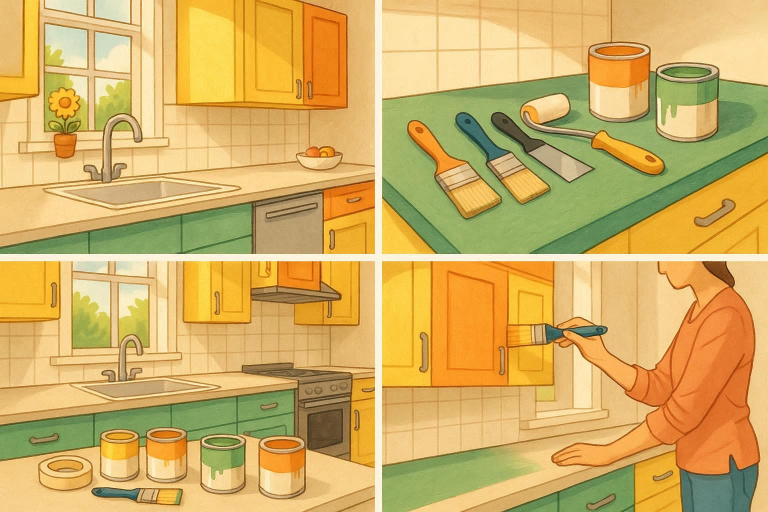
Updating your kitchen can feel like a daunting task, but one of the most impactful ways to breathe new life into the space is by repainting your kitchen cabinets. Whether your cabinets are showing signs of wear and tear or you’re looking for a style change, repainting is an affordable, sustainable, and aesthetically pleasing way to transform your kitchen.
In this guide, we’ll walk you through the benefits of repainting, the supplies you’ll need, and a step-by-step process to achieve professional-looking results. By the end, you’ll feel confident in your ability to repaint your kitchen cabinets and create a fresh, updated look for your home.
Why Repainting Kitchen Cabinets is a Great Option
When it comes to updating your kitchen, many homeowners consider replacing their cabinets altogether. However, replacing cabinets can be expensive, time-consuming, and environmentally costly. Repainting offers a Home Organization Ideas for Kitchen and Living Room number of advantages over replacement:
Cost-Effectiveness
Repainting your kitchen cabinets is much more affordable than replacing them entirely. In fact, the cost of paint, tools, and supplies can be a fraction of the price of new cabinets and installation. Plus, if you’re willing to invest some time and effort, you can complete the project on your own, saving on labor costs.
For example, a complete cabinet replacement can run anywhere from $3,000 to $10,000 depending on the size of your kitchen and the materials chosen. In contrast, repainting cabinets might cost you between $200 and $600 for high-quality paint and necessary supplies, offering a significant savings.
Sustainability
Repainting cabinets is also an eco-friendly choice. Rather than contributing to landfill waste by tearing out old cabinets, you’re giving them a second life. This small change in how you approach your kitchen renovation can make a big difference in reducing your overall carbon footprint.
Customization
One of the best things about repainting your cabinets is the ability to personalize them. You can choose from a variety of colors, finishes, and techniques to match your kitchen’s décor or even create a new style altogether. Whether you’re going for a sleek, modern look or a classic country vibe, there’s a paint color and finish that will work for you.
Time Efficiency
Repainting your cabinets can be completed much faster than installing new ones. A full cabinet replacement could take weeks of work, while repainting can typically be finished in a few days. This makes it an excellent option for homeowners who want a quick and impactful kitchen makeover.
Supplies You’ll Need to Repaint Kitchen Cabinets
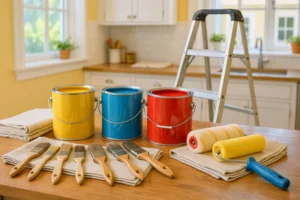
Before you start painting, it’s important to gather the right tools and materials. Here’s a list of what you’ll need:
Paint
The type of paint you choose is crucial to the success of your project. For kitchen cabinets, oil-based paint or latex-based paint are both great options. Latex paint dries faster, is easier to clean, and has less odor, making it a popular choice. Oil-based paint, on the other hand, offers a harder, more durable finish, which can be an advantage in high-traffic areas like the kitchen.
Primer
Using a high-quality primer is essential. It provides a smooth surface for the paint to adhere to and prevents stains from bleeding through. A bonding primer is recommended, especially if your cabinets have a glossy finish or you’re covering up dark colors.
Tools
- Brushes & Rollers: Use a high-quality synthetic brush for detailed work around edges, and a roller for larger flat areas. A foam roller works well for a smooth finish.
- Sanding Block: Sanding is crucial for ensuring that the new paint adheres properly to the surface.
- Painter’s Tape: To protect areas you don’t want to paint, like countertops or adjacent walls.
- Drop Cloths: To protect your floors and countertops from splatters.
- Screwdrivers: For removing hardware and cabinet doors.
Other Materials
- Degreaser: Use a degreaser to clean the surfaces and remove any grease, dirt, or residue that can affect the paint’s adhesion.
- Rags: To wipe down surfaces after cleaning.
- Protective Gear: Gloves and a mask are essential for protecting your skin and lungs from fumes, especially when using oil-based paint.
Step-by-Step Guide to Repainting Kitchen Cabinets
Now that you’ve got your supplies ready, it’s time to dive into the process. Follow these steps to ensure your cabinets look like they came straight from a showroom.
Step 1 – Remove the Cabinet Doors and Hardware
Before you can start painting, you’ll need to remove all the cabinet doors, handles, and hardware. This is essential because it allows you to paint all the surfaces evenly without worrying about getting paint on hinges or handles. Make sure to store the screws and hardware in labeled bags to avoid losing anything.
Step 2 – Clean the Cabinet Surfaces Thoroughly
Kitchens are high-traffic areas, and your cabinets are likely covered with grease, grime, and food stains. Cleaning the surfaces thoroughly is vital before you start painting. Use a degreaser or mild soap solution to scrub away all dirt and grease. This step ensures that the paint will adhere properly and that you won’t end up with an uneven finish.
Step 3 – Sand the Surfaces
Once the cabinets are clean and dry, it’s time to sand them. Sanding is crucial because it helps the primer and paint stick to the surface. Use medium-grit sandpaper to lightly scuff the surface, especially if your cabinets have a glossy finish. For edges and corners, use a sanding block or fine-grit sandpaper for more precision.
Step 4 – Apply Primer
After sanding, apply a coat of primer to all surfaces. A primer helps the paint adhere better and provides a smooth base. Use a brush for edges and a roller for flat areas. Allow the primer to dry completely before proceeding to the next step. Depending on the primer used, this could take a few hours.
Step 5 – Paint the Cabinets
Once the primer has dried, it’s time to paint your cabinets. Apply the first coat of paint using a brush for edges and a roller for larger surfaces. Make sure to apply the paint evenly to avoid streaks. Once the first coat is dry, lightly sand the surface before applying a second coat for a smooth, flawless finish.
Step 6 – Reattach Hardware and Doors
Once the paint is fully dry, it’s time to reattach the doors and hardware. Be gentle when handling the doors to avoid chipping the paint. Make sure the doors are properly aligned so they open and close smoothly.
Step 7 – Final Touch-Ups
After everything is back in place, inspect your cabinets for any imperfections. Touch up any missed spots or areas that need a little extra attention. A small brush can help with precision work, especially around hinges or corners.
Common Mistakes to Avoid When Repainting Kitchen Cabinets
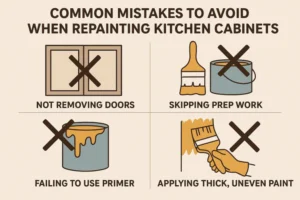
Even experienced DIYers can make mistakes when repainting cabinets. Here are a few common errors to watch out for:
- Skipping the sanding step: This is one of the biggest mistakes you can make. Sanding ensures the paint adheres properly and helps smooth out imperfections.
- Using the wrong type of paint or primer: Make sure you’re using products specifically designed for cabinetry to ensure durability.
- Not allowing enough drying time between coats: Rushing through the drying times can lead to smudging and uneven finishes.
- Overloading the brush or roller with paint: Applying too much paint at once can lead to drips and an uneven coat.
How Long Does It Take to Repaint Kitchen Cabinets?
The time it takes to repaint your kitchen cabinets depends on several factors, including the number of coats applied, the type of paint used, and the drying times. Generally, the process can take anywhere from three to five days. Here’s a breakdown of the time involved:
- Cleaning and sanding: 3-4 hours
- Priming: 2 hours (plus drying time)
- Painting: 2-4 hours per coat (including drying time between coats)
- Reassembly: 2-3 hours
Tips for a Professional-Looking Finish
- Avoid streaks: Use a high-quality brush or foam roller to avoid brush marks.
- Use painter’s tape: Apply painter’s tape around edges for clean, crisp lines.
- Thin coats: Apply multiple thin coats of paint rather than one thick coat for a smoother finish.
Choosing the Right Paint Colors for Your Kitchen Cabinets
Selecting the right color is crucial for achieving the desired look. Some popular kitchen cabinet color trends in 2025 include bold hues like navy blue, muted greens, and classic white. If you’re unsure, choose a color that complements your countertops, backsplash, and flooring.
Satin vs. Semi-Gloss Finishes
For kitchen cabinets, semi-gloss and satin finishes are the best choices. Semi-gloss is durable and easy to clean, making it ideal for high-traffic areas like the kitchen. Satin finishes are a bit more subtle but still provide a good level of durability.
How to Maintain Your Newly Repainted Kitchen Cabinets
Once your cabinets are painted, proper maintenance will ensure they stay looking great. Clean your cabinets regularly with a mild soap solution to prevent grime buildup. If you notice any chips or scratches, touch them up with a little extra paint.
FAQs
How much does it cost to repaint kitchen cabinets?
Repainting your kitchen cabinets typically costs between $200 and $600, depending on the quality of paint and materials you use. Hiring a professional can cost $1,000 or more.
Can I repaint cabinets without sanding?
Sanding is crucial for good adhesion, especially for glossy finishes. Skipping this step can result in paint peeling off over time.
How long should I let the paint dry between coats?
Drying time varies, but generally, you’ll want to wait 2-4 hours between coats, depending on the paint type.
Can I use chalk paint to repaint kitchen cabinets?
Chalk paint can be used to achieve a rustic or vintage look, but it isn’t the best choice for kitchen cabinets due to its soft texture and limited durability in high-traffic areas.
How can I avoid brush strokes when painting kitchen cabinets?
To avoid brush strokes, use a high-quality brush or foam roller, and apply thin coats of paint.
Should I use oil-based or water-based paint for kitchen cabinets?
Oil-based paint provides a more durable finish, but it takes longer to dry and has a stronger odor. Water-based paint is easier to work with and dries faster, making it a great choice for most kitchen cabinets.
Can I repaint kitchen cabinets without removing them?
While it’s possible to paint cabinets in place, removing them allows for a more thorough paint job and better results.