
Are you tired of your old, worn-out kitchen cabinets but don’t want to spend a fortune on new ones? Don’t worry—painting your kitchen cabinets is one of the easiest and most cost-effective ways to give your kitchen a fresh, updated look. Whether you’re a DIY beginner or someone with more advanced skills, this guide will walk you through various methods, including painting kitchen cabinets without sanding, using a sprayer, and even painting previously painted cabinets.
In this post, we’ll cover:
- How to paint kitchen cabinets for beginners
- Tips for professional finishes
- Techniques for painting without sanding or removing doors
- How to use a paint sprayer and plastic coating
- Solutions for cabinets that are already painted
Let’s dive in!
What You Need to Know Before You Start
Types of Paint and Finish Options
When painting kitchen cabinets, choosing the right paint is crucial. There are several types of paints to choose from, each with its benefits.
- Latex Paint: Renowned for its ease of cleaning and rapid drying, latex paint is a popular choice. It’s also environmentally friendly and low in VOCs.
- Oil-Based Paint: Offers a durable, smooth finish but takes longer to dry and requires more effort for cleanup.
- Chalk Paint: This is a great option for a rustic or vintage look. It’s easy to apply, requires minimal prep work, and provides a matte finish.
When it comes to finishes, you have a few options:
- Matte Finish: Perfect for a subtle, modern look, but it can show fingerprints and smudges more easily.
- Satin Finish: Offers a nice balance between gloss and matte, making it a great option for kitchens.
- Gloss Finish: Highly durable and easy to clean, but it can sometimes highlight imperfections on the surface.
Tools and Supplies Needed
Before you start painting, make sure you have the right tools. Here’s a list of what you’ll need:
- Brushes and Rollers: Use high-quality, synthetic brushes for latex paints, and foam rollers for a smooth finish.
- Paint Sprayer: For a professional, smooth finish, a paint sprayer is the ideal choice.
- Primer: A bonding primer or oil-based primer is essential, especially for cabinets made of laminate or other non-porous materials.
- Painter’s Tape and Drop Cloths: Protect your countertops, backsplash, and floors from paint splatters with painter’s tape and drop cloths.
Preparing Your Kitchen for the Job
Proper prep is essential for a flawless paint job. Begin by Healthy Cooking Gadgets Every Home Should Have clearing out the kitchen and removing all items from your cabinets. Use painter’s tape to cover any areas that you don’t want to paint, like your countertops, floors, or backsplash. Finally, set up drop cloths to protect your surfaces.
Safety Considerations
Ensure proper ventilation when painting by opening windows and using fans. If you’re using oil-based paints or products with strong fumes, consider wearing a respirator. Don’t forget to wear gloves and protective eyewear to keep yourself safe.

How to Paint Kitchen Cabinets for Beginners
Step 1: Remove Cabinet Doors and Hardware
For the best results, remove the cabinet doors and hardware. Label each door and its corresponding hardware to make reinstallation easier. Place all screws and handles in a safe container to avoid losing them.
Step 2: Clean the Cabinets Thoroughly
Cabinets accumulate grease, dirt, and old paint over time. To ensure the new paint sticks properly, start by cleaning the surfaces with a degreaser or a mild soap solution. Use a scrub brush to remove any grime or residue.
Step 3: Sand and Prep the Surfaces
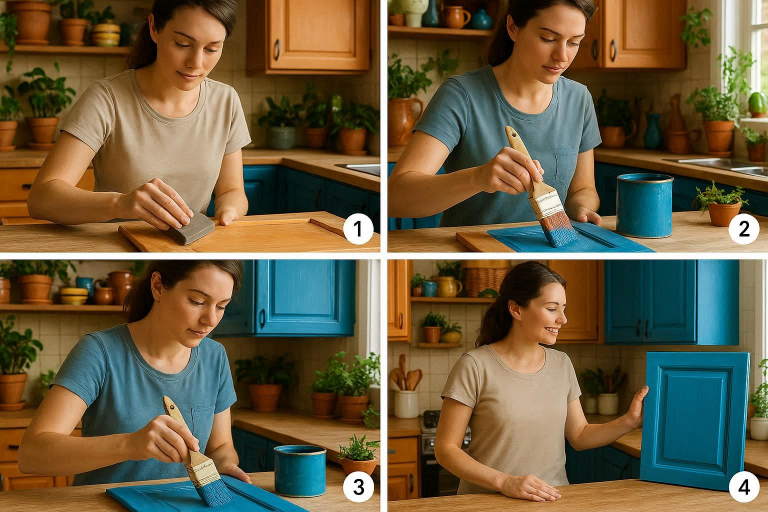
Sanding helps smooth out the surface and ensures good paint adhesion. If your cabinets are made of wood, lightly sand the surfaces using a medium-grit sandpaper. If you want to skip sanding, you can use a deglosser to rough up the surface slightly.
Step 4: Apply Primer
Priming is an essential step, especially if you’re working with wood, laminate, or glossy surfaces. A bonding primer is your best bet, as it ensures the paint adheres well. Apply a thin, even coat of primer and allow it to dry completely before moving on to the next step.
Step 5: Apply the Paint
Now it’s time to apply the paint. Use a high-quality brush for smaller areas and a foam roller for larger, flat surfaces. Apply multiple thin coats of paint, allowing each coat to dry completely before applying the next. This will help avoid streaks and drips.
Step 6: Reassemble and Cure the Cabinets
Once the paint has dried, carefully reattach the hardware and cabinet doors. Allow the paint to cure for at least 48 hours before using the cabinets to ensure a durable finish.
How to Paint Kitchen Cabinets Professionally
Step 1: Preparation for a Professional Finish
To achieve a professional look, take your time with the preparation. Clean, sand, and prime the surfaces thoroughly. A smooth, clean surface will make all the difference in the final result.
Step 2: Choosing the Right Tools for a Professional Finish
Using high-quality brushes and rollers is key to achieving a professional finish. A paint sprayer is also an excellent option for a flawless, smooth coat of paint. Invest in a good-quality sprayer for an even and efficient application.
Step 3: Applying Thin Layers for a Smooth Finish
The secret to achieving a smooth, professional-looking finish is applying multiple thin layers of paint rather than a single thick coat. Thin layers help prevent drips, streaks, and bubbles. Always sand lightly between each layer to ensure the paint adheres properly.
Step 4: Finishing Touches
After applying the final coat, use a fine brush to smooth out the edges and corners, ensuring the paint is evenly applied. Don’t forget to remove painter’s tape carefully while the paint is still a bit tacky to avoid peeling.
How to Paint Kitchen Cabinets Without Sanding
Using Deglosser or Liquid Sandpaper
If you want to skip sanding, a deglosser or liquid sandpaper is a great alternative. These products remove the glossy finish of the old paint and make the surface ready for new paint without the need for sanding.
Choosing the Right Primer and Paint
To ensure good adhesion without sanding, choose a high-quality bonding primer and chalk paint. These products are specifically designed to adhere to glossy surfaces and provide excellent coverage.
Techniques for Smooth Coverage
When applying the paint, make sure to use long, even strokes to avoid brush marks. You can also use a foam roller for a smoother finish.
How to Paint Kitchen Cabinets Without Removing Them
Preparing the Kitchen and Cabinet Doors
To paint kitchen cabinets without removing them, you’ll need to thoroughly protect your kitchen: cover countertops, floors, and backsplashes with painter’s tape and plastic sheeting.
Using a Paint Sprayer for Easy Coverage
A paint sprayer is an ideal tool for this job. It allows you to paint the cabinets quickly and evenly without needing to remove the doors. Just be sure to mask off areas you don’t want to paint.
Efficient Drying and Curing
Since you won’t be able to remove the doors, it’s important to allow ample drying time between coats to prevent smudging or sticking.
How to Paint Kitchen Cabinets with a Sprayer
Choosing the Right Paint Sprayer
There are two main types of sprayers: HVLP (High Volume Low Pressure) and airless sprayers. HVLP sprayers are perfect for smaller, detailed work, while airless sprayers work better for large surfaces like cabinets.
Preparing the Cabinets for Spraying
Before spraying, ensure the cabinets are clean and sanded. Mask off areas you don’t want to paint, including floors and walls.
Spraying Techniques
Hold the sprayer about 10-12 inches from the surface and spray in even, sweeping motions. Overlap each stroke slightly to ensure an even coat of paint. Always spray in a well-ventilated area.
Post-Spraying Tips
After spraying, let the paint dry completely. If there are any drips or runs, lightly sand them once the paint is dry and apply another coat to smooth out the surface.
How to Paint Kitchen Cabinets with Plastic Coating
Understanding Plastic Coating for Cabinets
Plastic coating gives your cabinets a durable, sleek finish. It’s a great option for modern kitchens and provides a smooth, high-gloss finish that resists scratches and stains.
Step-by-Step Guide for Applying Plastic Coating
Start by cleaning and sanding the surface. Apply a plastic primer, then follow up with the plastic coating. Use a sprayer for the most even application.
Finishing Touches
After the plastic coating has dried, smooth out any imperfections with fine sandpaper. You can apply additional coats for a deeper, glossier finish.
How to Paint Kitchen Cabinets That Are Already Painted
Assessing the Current Paint Job
Before painting over an existing paint job, check if the current paint is peeling or damaged. If the paint is still in good condition, you can skip sanding but make sure to clean and degross it.
Cleaning and Deglossing
To ensure the new paint sticks well, clean the cabinets thoroughly and use a deglosser to remove any shine from the old paint.
Choosing the Right Paint
A bonding primer is essential when painting over previously painted cabinets. For the final coat, choose a high-quality paint that adheres well to the existing finish.
Touch-Up Techniques
When painting over cabinets that have already been painted, pay close attention to any areas with peeling or chipped paint. Sand those areas before applying fresh paint.
FAQ
Can I paint kitchen cabinets without sanding?
Yes, using a deglosser or bonding primer can help you skip the sanding step while still ensuring good paint adhesion.
How long does it take to paint kitchen cabinets?
It can take anywhere from a few days to a week, depending on the method used and drying time between coats.
Do I need to remove the cabinet doors to paint them?
While removing the doors makes the process easier and more precise, it’s not absolutely necessary.
What is the best paint for kitchen cabinets?
Oil-based or latex paints with a satin or semi-gloss finish are best for their durability and ease of cleaning.
How can I avoid streaks when painting my kitchen cabinets?
Apply multiple thin coats and lightly sand between layers for a smooth finish.
Conclusion
Painting kitchen cabinets is a fantastic way to breathe new life into your kitchen without breaking the bank. Whether you’re a beginner or a professional, the right techniques and tools can help you achieve a beautiful, long-lasting result. From choosing the right paint to understanding the importance of proper prep, this guide has you covered. Pick the method that best fits your needs, and enjoy the process of transforming your kitchen!