
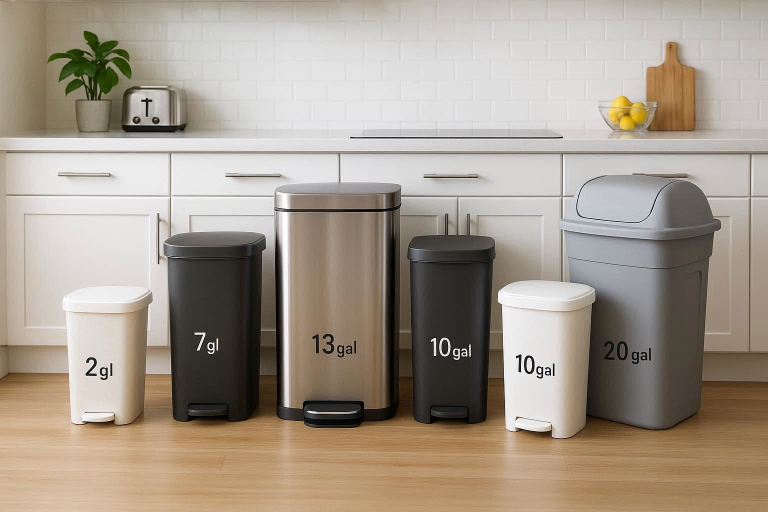
When it comes to kitchen essentials, there are a few items we take for granted. We don’t often think twice about how much space our trash can takes up or how often we need to empty it. But choosing the right size kitchen trash can is more important than you might think. The size you select directly impacts the cleanliness of your home, the convenience of trash disposal, and even your environmental footprint.
In this guide, we’ll break down the different trash can sizes and explain how to choose the best one for your home. From understanding gallon capacities to measuring your kitchen space, we’ll cover everything you need to make an informed decision.
Why Gallon Capacity Matters When Choosing the Ideal Kitchen Trash Can
When selecting a kitchen trash can, the capacity Cleaning Guide for Home & Kitchen (usually measured in gallons) is the most important factor. The size you choose will directly affect how often you need to take the trash out, the space it occupies in your kitchen, and how efficiently it fits into your daily routine.
The right size can help prevent overflow, reduce odors, and keep your kitchen organized. On the other hand, selecting a can that’s too small will mean frequent trips to the trash bin, while a trash can that’s too large might take up valuable kitchen space and encourage waste accumulation.
Understanding Kitchen Trash Can Sizes
What is the Standard Size of a Kitchen Trash Can?
When it comes to kitchen trash cans, there isn’t a one-size-fits-all answer. However, there are some common sizes you’ll find in most kitchens. Trash cans generally range from 2.5 gallons to 13 gallons in capacity.
- 2.5-5 Gallons: These are the smallest trash cans and are typically found in apartments or small kitchens.
- 7-10 Gallons: These are ideal for small families or kitchens with moderate space.
- 13 Gallons: This is by far the most common size, perfect for average households with standard waste output.
- 20 Gallons and Above: Larger sizes are generally used in kitchens with higher waste production, like those with large families or significant food waste.
How Are Kitchen Trash Cans Measured?
Trash cans are measured based on their gallon capacity, but understanding the dimensions of the trash can is equally important. The gallon size refers to how much volume the can holds, but height, width, and depth will determine how well it fits in your kitchen.
For example, a 13-gallon trash can might be a perfect fit for one kitchen, while a different kitchen might need more space for the same size. That’s why it’s crucial to also measure your available space to ensure your new trash can fits comfortably in the designated area.
How Many Gallons Should a Kitchen Trash Can Be?
Choosing the right trash can size depends on a few key factors. Here’s what you need to consider:
Factors to Consider When Choosing a Trash Can Size
- Household Size and Daily Waste Generation
- Larger households typically generate more waste, so a bigger trash can might be necessary. A smaller household, on the other hand, won’t require as much capacity.
- Frequency of Taking Out the Trash
- If you take out the trash often, you can probably get away with a smaller can. However, if you prefer to wait a few days before taking out the trash, you may need a larger can to avoid overflow.
- Space Available in the Kitchen
- The space in your kitchen plays a major role in choosing the right trash can. Some kitchens may only have a small spot under the counter, while others have dedicated trash areas that can accommodate larger cans.
Choosing the Right Size for Different Household Needs
- Single-Person Homes: If you live alone, a 2.5 to 5-gallon trash can is likely sufficient. These smaller cans take up less space and are perfect for minimal waste generation.
- Small Families or Couples: A 7 to 10-gallon trash can would likely meet the needs of a couple or a small family. These cans are large enough to accommodate a day or two of waste without needing to be emptied too frequently.
- Large Families or Homes with Significant Food Waste: For larger families or households that generate a lot of waste (especially food scraps), a 13 to 20-gallon trash can is a good option. It allows you to store more trash without frequent emptying.
The Most Common Kitchen Trash Can Sizes and Their Uses
Now that you know how to evaluate your needs, let’s dive deeper into the most common kitchen trash can sizes and what they’re best used for:
Small Kitchen Trash Cans (2.5 – 5 Gallons)
- Ideal For: Single-person households or those living in smaller spaces like apartments.
- Use Case: These are perfect for low-waste lifestyles or those who produce very little trash. It’s also a good option if you don’t mind taking out the trash frequently.
Medium Kitchen Trash Cans (7 – 10 Gallons)
- Ideal For: Small families or couples who generate a moderate amount of waste.
- Use Case: This size works well for homes with limited kitchen space, offering a balance of capacity and size. It’s perfect for stowing under the counter or in a cabinet.
Large Kitchen Trash Cans (13 – 20 Gallons)
- Ideal For: Larger families or those with high waste output.
- Use Case: If your family cooks a lot at home, hosts gatherings, or has several kids, this size can accommodate more waste and reduce the number of times you need to empty it.
Benefits of Choosing the Right Kitchen Trash Can Size
Improved Cleanliness and Organization
When your trash can is the right size, you’ll find that your kitchen stays cleaner and more organized. No more overflowing trash bags or unpleasant smells. The proper size also makes it easier to manage waste disposal by reducing the frequency of trips to your outdoor bin.
Space Efficiency
The right-sized trash can fits neatly into your kitchen, whether that’s tucked under the counter, beside the pantry, or in an unused corner. This maximizes space, especially in smaller kitchens where every inch counts.
Environmental Impact
By selecting the correct size trash can, you can reduce unnecessary waste accumulation. For instance, having a large enough trash can prevents trash from piling up on the counter, which can result in packaging waste. It also helps you keep recyclables and compost separated, contributing to more sustainable habits.
How to Measure Your Kitchen Space for a Trash Can
Before buying a trash can, it’s important to measure the space where you plan to place it. Here’s how to do it:
- Measuring the Space Available
- Measure the height, width, and depth of the area where the trash can will go. If it’s under a counter, make sure to account for clearance with the cabinet doors and any mechanisms like pedals or lids.
- Choosing the Right Shape
- The shape of your trash can matters too. Round trash cans are often ideal for tight spaces, while rectangular or square cans fit neatly into corners or cabinets. Consider the layout of your kitchen before selecting a shape.
- Allow Room for Lids or Pedals
- If your trash can has a lid or pedal, you’ll need extra space for these features. It’s easy to overlook this when measuring, so make sure to factor in some clearance for easy operation.
FAQs
What is the average size of a kitchen trash can?
The standard kitchen trash can size is around 13 gallons, ideal for average household waste.
Can a 20-gallon trash can fit under a kitchen counter?
It depends on the available space, but 20-gallon trash cans are typically too large for most standard kitchen counters.
How do I know if I need a larger or smaller trash can?
Consider the number of people in your household and how often you generate trash. Larger households with more waste will need a bigger trash can.
What size trash can do restaurants use in their kitchens?
Commercial kitchens typically use larger trash cans, ranging from 20 to 55 gallons, due to the higher volume of waste produced.
Are there trash cans with built-in composting or recycling compartments?
Yes, some trash cans come with compartments for separating recyclables or compostable waste. These range in size, with larger models generally having more compartments.
What size trash can is best for a single person?
A 2.5 to 5-gallon trash can is ideal for a single person, as it reduces the need for frequent emptying while fitting in smaller spaces.
Conclusion
Choosing the right kitchen trash can size isn’t just about picking the biggest or the smallest option—it’s about finding the one that fits your lifestyle and kitchen space. Whether you’re living solo, as a couple, or as part of a large family, the right trash can makes a world of difference. It improves cleanliness, enhances organization, and even makes waste management more eco-friendly.
Before making your purchase, take the time to measure your available space and think about your household’s waste production. By doing so, you’ll ensure your kitchen stays tidy and your waste disposal process is as efficient as possible.
Ready to pick the perfect trash can for your kitchen? Take measurements, evaluate your needs, and choose wisely—your kitchen will thank you!