
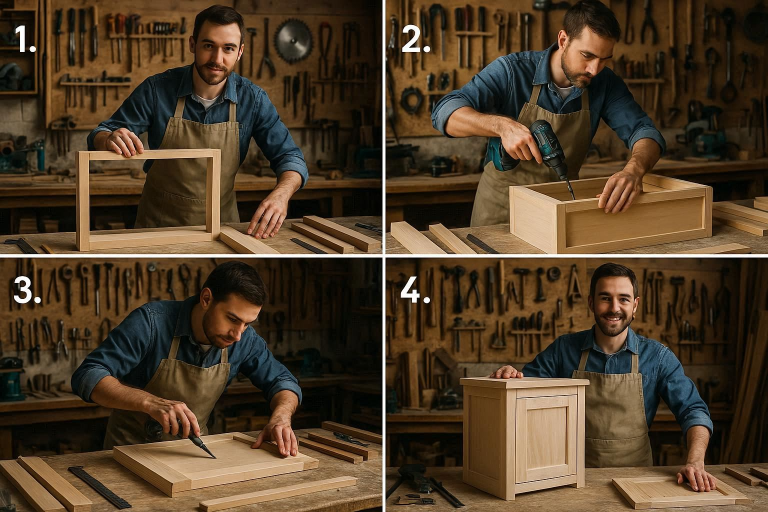
Kitchen cabinets play a crucial role in home design and functionality. They are not just about storing utensils, dishes, and food; they also contribute to the overall aesthetic of the kitchen. Whether you’re remodeling your kitchen or starting from scratch, choosing the right cabinets is essential to creating a space that’s both functional and stylish.
While ready-made cabinets may seem like a convenient option, building your own kitchen cabinets comes with numerous benefits. Customization, cost savings, and personal satisfaction are just a few reasons why DIY cabinetry can be a rewarding experience. Not only do you get the exact design and functionality you want, but you also save money compared to purchasing high-end cabinets.
This guide will walk you through the entire process of making your own kitchen cabinets—from planning and choosing materials to installing the final product. Let’s get started!
Planning Your Kitchen Cabinets
Why Planning Is Crucial
Before jumping into the project, it’s essential to plan. The quality of your kitchen cabinets depends on how well you organize the project. Careful planning ensures everything from measurements to material Cleaning Guide for Home & Kitchen selection and design layout is thought through, leading to a smooth construction process.
Importance of Measurements, Design Layout, and Functionality
The most critical step in planning is accurate measurements. It’s essential to measure your kitchen space carefully, paying attention to wall dimensions, height, and available space for each cabinet. If you’re building upper and lower cabinets, consider the typical heights and depths that fit your kitchen layout.
Along with measurements, determine your design layout. Do you want modern, shaker-style cabinets, or do you prefer a traditional or rustic look? Think about how much storage space you need and how you use your kitchen. For example, if you’re an avid cook, more drawers for utensils or deeper cabinets might be more useful than wide, open shelving.
Deciding on the Cabinet Style
There are many cabinet styles to choose from, such as modern, shaker, traditional, or farmhouse. Your choice should reflect both the look and feel of your kitchen and your personal preferences. If you’re not sure, sketch out a rough idea or use design software to visualize how the style will fit your space.
Choosing the Right Materials for Kitchen Cabinets
Types of Wood for Cabinets
Choosing the right material for your cabinets is a big decision that affects the durability, appearance, and cost. Here are the most common wood options:
- Solid Wood: This is a high-quality option for cabinet construction. It’s durable, long-lasting, and has a natural beauty. Common types include oak, maple, cherry, and walnut. However, solid wood can be expensive.
- Engineered Wood:
- MDF (Medium Density Fiberboard): Smooth and dense, MDF is excellent for painted finishes. However, it’s not as durable as solid wood and can be prone to chipping.
- Plywood: Strong and stable, plywood is an excellent choice for cabinet boxes and is less prone to warping than MDF. It’s affordable and versatile but may not have the same aesthetic appeal for cabinet faces.
- Particleboard: The least expensive option but often used for budget cabinets. It’s prone to damage over time and may not be as sturdy as plywood.
Other Material Options
- Veneer: A thin slice of wood applied to a less expensive material like plywood, giving the appearance of solid wood.
- Laminate: A plastic surface that comes in a wide variety of colors and patterns. It’s easy to clean but can be prone to scratching.
- MDF Finishes: Popular for their smooth surface, MDF can be veneered or laminated for a more polished look.
Sustainable Materials
If you’re concerned about the environment, consider using eco-friendly materials like reclaimed wood or low-VOC finishes. These options are better for the planet and can help you achieve a more sustainable home improvement project.
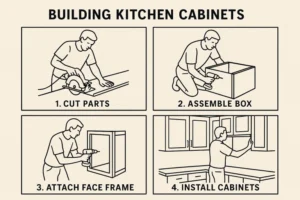
Step-by-Step Process for Building Kitchen Cabinets
Step 1: Cutting the Cabinet Pieces
The first step in cabinet building is cutting the pieces. You’ll need to cut the sides, back panels, shelves, and doors accurately. Be sure to measure twice before cutting to avoid mistakes.
For precise cuts, a circular saw or table saw will work best. If you don’t have these tools, some home improvement stores offer wood cutting services.
Step 2: Assembling the Cabinet Frames
Now that you have all your pieces, it’s time to assemble the cabinet frames. Use wood glue and screws to secure the pieces together. For added support, consider using corner brackets or braces.
Ensure the frame is square, as this will affect the fit of the doors and the overall look of your cabinet.
Step 3: Installing the Shelves and Doors
After assembling the frame, the next step is installing the shelves. If you want adjustable shelves, use metal brackets and make sure to drill holes for them at the correct intervals.
When it comes to mounting the doors, attach the hinges, ensuring they are level and aligned correctly. It might take a little adjusting to get them just right.
Step 4: Sanding and Preparing for Finish
Once everything is assembled, it’s time to sand the surfaces for a smooth finish. Use a sanding block or electric sander to smooth out any rough spots.
This is also the stage where you prepare for painting or staining. Clean the surfaces thoroughly to remove any dust or dirt before applying a finish.
Step 5: Painting or Staining the Cabinets
Painting or staining your cabinets can significantly enhance their look. When applying paint or stain, make sure to do so evenly. Use long strokes and allow the first coat to dry before applying additional layers.
To ensure durability, finish the cabinets with a clear protective sealant.
Step 6: Installing the Cabinet Hardware
Finally, install the hardware like handles, knobs, and pulls. Be sure to position the hardware in a way that enhances both functionality and aesthetics. Measure the placement of the knobs carefully, as uneven hardware placement can affect the look of the cabinet.

Installing Your Kitchen Cabinets
Preparing the Wall for Installation
Before installing your cabinets, it’s essential to prepare the wall. Use a level to mark where the cabinets will be installed, ensuring they are straight and even.
It’s also essential to find the studs in the wall, as this is where you’ll secure the cabinets. Use a stud finder to locate the studs and mark them on the wall.
Attaching the Cabinets
If you’re installing multiple cabinets, start by securing the upper cabinets first, then work your way down to the base cabinets. Use cabinet screws to attach the cabinets, making sure they’re flush with each other.
Ensuring Proper Alignment
To ensure everything is aligned correctly, use a level to check for straightness. Adjust the hinges and shelves as needed to make sure everything fits perfectly.
Common Mistakes to Avoid When Making Kitchen Cabinets
Incorrect Measurements
One of the biggest mistakes DIYers make is incorrect measurements. Always double-check your measurements before cutting any wood. A small measurement error can have a significant impact on the entire project.
Poor Material Choices
Choosing the wrong material can lead to durability issues in the long run. For instance, using particleboard for cabinet doors may save you money initially, but it can wear out quickly.
Overcomplicating the Design
While it’s tempting to create a complex design, sometimes simplicity is best. Simple cabinet designs are easier to build, and they often look more elegant and timeless.
How to Maintain Your Kitchen Cabinets
Cleaning and Caring for Wooden Cabinets
To keep your wooden cabinets looking their best, clean them regularly. Use a soft cloth and mild soap to wipe down the surfaces, and avoid abrasive cleaners that can damage the finish.
Dealing with Wear and Tear
Over time, cabinets may develop scratches or dents. You can repair minor damage by sanding and reapplying paint or stain to the affected area.
Regular Inspections
Check your cabinets periodically for issues like loose hinges, faulty hardware, or misaligned doors. Addressing these problems early on will ensure your cabinets last longer.
Conclusion
Building your own kitchen cabinets can be a fun, rewarding project. With careful planning, the right materials, and the right tools, you can create custom cabinets that fit your style and needs. Whether you’re looking to save money or want to personalize your kitchen, the effort you put into making your cabinets will pay off in the long run.
Take your time to plan, measure, and build with precision, and you’ll have cabinets that not only look great but are built to last.
FAQ Section
How long does it take to make kitchen cabinets?
The time it takes to build kitchen cabinets can vary, but on average, it takes 2-4 weeks , depending on the complexity of the design and the builder’s experience.
What type of wood is best for making kitchen cabinets?
For high-quality cabinets, solid wood is the best choice. If you’re on a budget, plywood or MDF can be good alternatives. Each material has its pros and cons, so choose based on your budget and desired look.
Can I build kitchen cabinets without professional experience?
Absolutely! Start with a simple design, take your time, and follow step-by-step instructions. As long as you’re patient and pay attention to detail, you can build your own cabinets.
How much does it cost to make kitchen cabinets?
The cost to make kitchen cabinets can vary widely, depending on the materials and tools you choose. Expect to spend anywhere from $300 to $1,500 or more for materials, depending on the size of the project.
What tools do I need to make kitchen cabinets?
Essential tools include saws, drills, measuring tape, clamps, sanders, and wood glue. If you don’t have these tools, consider renting or borrowing them.
How can I make sure my cabinets are level when installing them?
Use a spirit level to ensure your cabinets are straight and level. Adjust the hinges or install shims as necessary to achieve perfect alignment.