
If you’re looking to refresh your kitchen without the hefty price tag of a full remodel, painting your kitchen cabinets might just be the perfect solution. It’s a popular DIY project for homeowners who want to give their kitchen a makeover on a budget. But before diving in, one of the most common questions that arise is: How long does it really take to paint kitchen cabinets?
The answer isn’t as straightforward as you might think. Several factors influence the amount of time required, from the size of your kitchen to the type of paint you use. But don’t worry – in this guide, we’ll break down exactly what you need to know to estimate the time it’ll take to complete the job, whether you’re doing it yourself or hiring a professional.
Factors That Affect the Time It Takes to Paint Kitchen Cabinets
Before we get into the step-by-step process, let’s explore the factors that can affect how long it will take to paint your kitchen cabinets.
Size and Number of Cabinets
The size of your kitchen and the number of cabinets you need to paint will naturally impact the time needed for the project. A small kitchen Cleaning Guide for Home & Kitchen with just a few cabinets will take significantly less time than a large kitchen with numerous cabinets and drawers. For example, painting 10 cabinets may take only a couple of days, while 30+ cabinets could stretch the timeline to a week or more.
Impact of the Kitchen Layout and Total Number of Cabinets
The layout of your kitchen can also play a role. If your cabinets are in tight spaces or feature intricate designs (like moldings), they’ll require more time and care to paint. Similarly, if you have open shelves or cabinets with many parts, such as pull-out trays or intricate hardware, expect to add extra time to your project.
Type of Finish
The finish you choose will directly affect how long it takes to paint your cabinets. A basic paint job might take less time compared to a high-gloss or detailed finish that requires multiple coats and additional drying time. Refinishing cabinets (i.e., stripping them back to their original wood before painting) can also extend the timeline compared to simple repainting.
Experience Level of the Painter
Whether you’re a DIY enthusiast or hiring a professional painter will have a big impact on the time it takes. A seasoned professional can complete the job much faster than someone with less experience. If you’re doing it yourself and it’s your first time painting cabinets, expect to spend more time learning as you go, which will stretch the timeline.
Type of Paint Used
Fast-drying paints can significantly reduce the overall time it takes to paint your cabinets. However, traditional paints may require longer drying and curing times between coats. If you’re working with a slow-drying paint, you’ll need to account for additional waiting time between coats.
Preparation Work
Preparation is key to achieving a professional-looking finish. Cleaning, sanding, and priming the cabinets are crucial steps that should not be rushed. This step is often the most time-consuming part of the process but ensures that your paint adheres properly and lasts longer. Depending on how well you prepare the cabinets, this stage can take anywhere from a couple of hours to a full day.
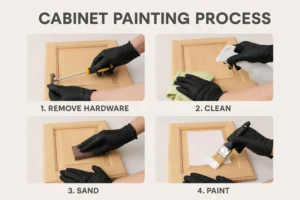
Step-by-Step Breakdown of the Cabinet Painting Process
Now, let’s break down the cabinet painting process and the time each step typically requires.
Step 1: Preparation
Preparation is everything when it comes to painting cabinets. This involves removing all hardware (like handles and knobs), cleaning the surfaces, and sanding them down. If you’re working with old paint or a glossy surface, you’ll need to use a de-glosser or sandpaper to make sure the new paint sticks.
- Time required: For a small kitchen, expect to spend 3-5 hours on preparation. Larger kitchens might take up to a day or more, especially if sanding is involved.
Step 2: Priming
Priming is an essential step to ensure the paint adheres well and to provide a smooth surface for the finish. This step can’t be skipped, even if you’re using high-quality paint. The primer will also help seal any stains or discolorations on the wood.
- Time required: Priming usually takes about 1-2 hours to apply, but you’ll need to wait 1-4 hours for it to dry before applying the first coat of paint. Drying time will depend on the type of primer and the humidity levels in your home.
Step 3: Painting the First Coat
Once the primer is dry, it’s time to apply the first coat of paint. Use a high-quality brush or a sprayer for a smooth finish. Be sure to work in thin layers to avoid streaks and runs.
- Time required: The first coat usually takes 2-3 hours to apply, depending on the size of the cabinet doors and how much area you’re covering. Be mindful of applying the paint evenly for the best result.
Step 4: Drying and Curing Between Coats
After applying the first coat of paint, you’ll need to allow adequate drying time before applying the next coat. Rushing this process could result in imperfections, so patience is key here.
- Time required: Depending on the paint type, you’ll need to wait 4-6 hours for each coat to dry. For oil-based paints, this could take even longer (up to 12 hours). Don’t skip this step – it’s essential for a smooth, durable finish.
Step 5: Final Coats and Touch-Ups
Once the second coat of paint is applied and dried, inspect your cabinets for any areas that need touch-ups. Sometimes a third coat is necessary for full coverage, especially if you’re using a lighter color on a dark base. Touch-ups can usually be completed in 30-60 minutes.
- Time required: A third coat and touch-ups will take an additional 1-2 hours.
Step 6: Reassembly
Once the paint has fully dried and cured, it’s time to reassemble your cabinets. This means reattaching hardware, placing shelves back, and ensuring everything is back in place.
- Time required: Reassembly typically takes 1-2 hours, depending on how many cabinets and drawers you have.
Average Time to Paint Kitchen Cabinets
Let’s break down the total time required for both DIY and professional cabinet painting projects.
For DIY Projects
For a small kitchen (with 10-15 cabinets), the entire process might take around 3-4 days if you’re working on it over the weekend. A larger kitchen with more cabinets (30+), or a more detailed project, can take upwards of a week or more, especially if you’re doing it in your spare time.
- Estimated total time: For a small to medium-sized kitchen, expect 3-7 days. Larger kitchens or more intricate finishes could stretch it to 1-2 weeks.
For Professional Painters
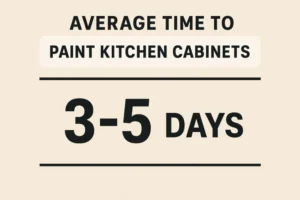
A professional cabinet painting service can typically complete the job in about 3-5 days for a standard kitchen. Pros are skilled in the process and have the necessary tools to speed up the work, including advanced sprayers for smooth, even coats.
- Estimated total time: 3-5 days for a medium-sized kitchen.
Tips to Speed Up the Cabinet Painting Process
While painting your cabinets is a time-consuming job, there are ways to speed up the process without sacrificing quality.
Use Faster-Drying Paints
Opting for fast-drying paints can shave hours off the total time. Many water-based paints, for example, dry quicker than oil-based paints, allowing you to apply multiple coats in a day.
Preparation Shortcuts
Streamlining your preparation by using liquid sandpaper (instead of sanding by hand) or a power sander can save a significant amount of time. Just make sure you clean the surfaces properly afterward to remove any dust.
Hiring a Professional
If you need the job done quickly and don’t want to spend your weekends painting, hiring a professional may be the best option. Pros can complete the job much faster due to their experience and specialized equipment.
Common Mistakes That Slow Down the Cabinet Painting Process
To avoid delaying your project, steer clear of these common mistakes:
Skipping Preparation Steps
Skipping proper sanding, cleaning, and priming will likely result in poor paint adhesion and a rough finish, forcing you to redo sections of the project.
Using the Wrong Tools or Techniques
Using low-quality brushes or rollers can lead to uneven coverage, drips, and streaks. Invest in the right tools for the best finish.
Not Allowing Proper Drying Time
Impatience is a major culprit. Rushing between coats or not allowing the paint to cure properly can ruin the finish and require you to redo parts of the job.
Can You Paint Kitchen Cabinets in a Weekend?
Yes, it’s possible to paint kitchen cabinets in a weekend if you plan the project carefully. With fast-drying paint and efficient preparation, you can complete the sanding, priming, and first coat of paint in the first two days, leaving the second weekend for touch-ups and reassembly.
However, for larger kitchens or if you’re aiming for a detailed, high-quality finish, it might take a bit longer than two days.
FAQ Section
How long does it take to paint kitchen cabinets if I do it myself?
A DIY project can take anywhere from 3 days to 2 weeks, depending on the size of the kitchen, the complexity of the cabinets, and your experience level.
How long should I let kitchen cabinets dry between coats?
Generally, you should wait 4-6 hours between coats of paint. For oil-based paints, allow 12 hours for drying.
Can I paint kitchen cabinets without sanding?
Sanding helps the paint adhere better, but if you’re in a rush, you can use a liquid de-glosser to avoid sanding. However, skipping sanding can affect the final result.
What’s the fastest way to paint kitchen cabinets?
Using fast-drying paints, employing a spray gun, and preparing the surfaces properly can all help speed up the process.
How long will the paint on my cabinets last?
With proper preparation and quality paint, your cabinets should last anywhere from 5 to 10 years before needing a touch-up.
Conclusion
Painting your kitchen cabinets is a great way to refresh your space, but it’s essential to manage your time expectations. Whether you’re taking the DIY route or hiring a professional, understanding the factors that influence the time it takes to paint your cabinets will help you plan better. Keep in mind that preparation, quality materials, and patience are key to achieving a professional-looking finish.